Pedro Almodóvar didn’t know the finer points of film festival standing ovations when he first showed a movie in competition at Cannes in 1999. As the credits began to roll for his acclaimed melodrama “All About My Mother,” the audience inside the Grand Théâtre Lumière rose and applauded. The acclamation continued to build, and the Spanish auteur was overcome with gratitude — for a few moments.
But after about five minutes of cheering and clapping, Almodóvar didn’t know what to do. He’s not a filmmaker given to false modesty, but how long can you bask in that kind of adoration? You can only smile and wave and clasp your hands for so long. Finally, he motioned the audience to stop, like, “OK. OK. Enough. Let’s go have dinner and a drink.”
“Big mistake,” Almodóvar tells me, laughing. “[Actor] Marisa Paredes leaned over and told me, ‘Never stop an ovation!’ I didn’t have the experience and didn’t know the number of minutes of an ovation is very important and counted. For me, five minutes was more than enough. It’s humbling.”
Almodóvar will be bringing his new movie, “Bitter Christmas,” to Cannes this year, his seventh competition appearance, a remarkable run that includes masterworks like “Volver,” “Broken Embraces” and “Pain and Glory.” Another film, the dark, audacious drama “Bad Education,” opened the festival in 2004, earning so much acclaim (and, yes, another long ovation) that Quentin Tarantino, serving as jury president that year, told Almodóvar, “Why are you not in competition? This is a f— masterpiece! I would give you the award!”
As it stands, Almodóvar’s films have a celebrated history at Cannes. “All About My Mother” earned him an honor for directing; “Volver” won screenplay and a collective actress prize for its cast in 2006; and frequent collaborator Antonio Banderas won for his lead turn in 2019’s “Pain and Glory.”
No Palme d’Or — yet. But at 76, Almodóvar shows no signs of slowing down or creative stagnation.
“Bitter Christmas,” which opened in Spain in March, is an elegantly structured, self-aware movie about artistry, following Raul, a filmmaker struggling to finish a screenplay about a cult director dealing with migraines and panic attacks as she attempts to jump-start her stalled career. The movie toggles between the two narratives, slyly exploring the ways creators plunder the lives of those they know in the quest for a good story.
Almodóvar says it’s the film “where I’ve been cruelest with myself.”
“I was looking at my own creative process and asking questions about inspiration,” Almodóvar says, talking via Zoom from his Madrid home. “I had a little bit of fun doing it.”
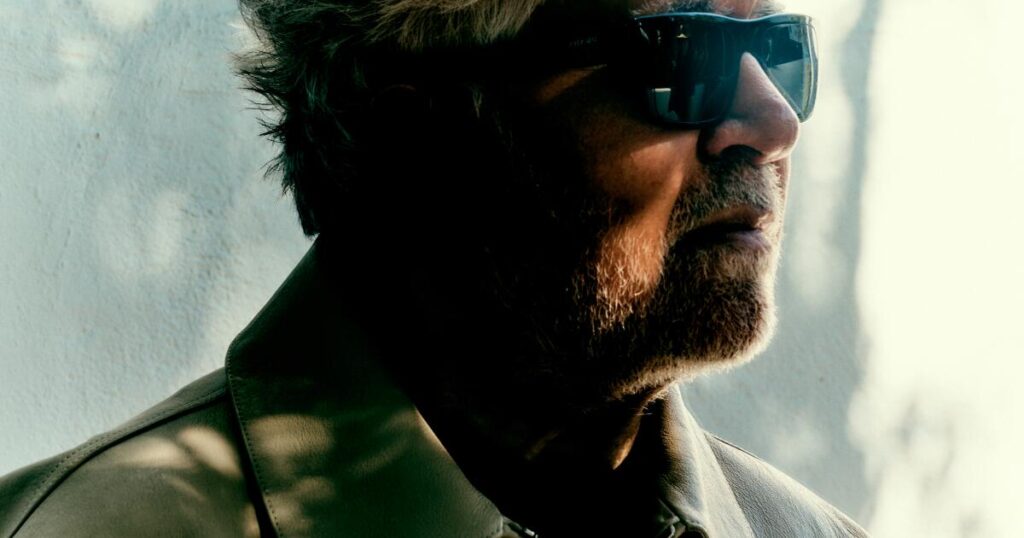
Almodóvar is seated behind his desk, wearing a crisp white T-shirt under a tan chore coat. It’s late afternoon, and the sun warmly filters through the windows of the room, a space he calls his “sanctuary,” the place he has written his last 15 movies. Behind him is a wall of bookshelves, the closest one housing two Oscars, a British Film Academy prize and the Golden Lion he won at the 2024 Venice Film Festival for his first English-language feature, “The Room Next Door.” The prizes surround a framed photo of his beloved mother, Francisca Caballero.
“I don’t need awards,” Almodóvar says, “but they are here, protecting me over my shoulder.”
“You’d be hard-pressed to find many filmmakers that have had the run of quality that he has,” says Michael Barker, co-president and co-founder of Sony Pictures Classics, Almodóvar’s long-standing North American distribution partner. “Like [Jean] Renoir in the ‘30s and ‘40s, he’s really one of the masters, someone who continues to make films that are consistently smart and also really entertaining.”
Over the years, Almodóvar has developed rituals to help him navigate Cannes. Some have gone by the wayside, like the now-closed restaurant on the beach that served the best bouillabaisse. Other traditions, fortunately, remain intact.
“I feel trapped in a tuxedo, like I have claustrophobia,” Almodóvar says, hugging his body as if he’s wearing a straitjacket. “So dressing up before the red carpet, my brother, my nephews, some friends will help. It’s an intimate moment you share with loved ones, this ritual of getting dressed for the ceremony.”
“The other ritualistic moment,” he continues, “is ascending those red stairs that lead up to the grand Palais. There’s a long hallway there where I’ve met people who have later become my friends, people like Tilda Swinton and Jeanne Moreau. And then you have that touching moment when you emerge from that hallway and take your first step into the theater and you receive one of the warmest welcomes you will ever receive in your life. They haven’t even seen the film and already they are showering you with love.”
It’s not a stretch to think that “Bitter Christmas” will earn the same warm reception when it plays at the festival. The film takes its title from an achingly beautiful ranchera by the late Mexican singer Chavela Vargas, a friend of Almodóvar’s. When the song plays in the movie (and, yes, it’s during Christmas), it prompts one character to alter the course of her life.
“Songs are miraculous in the sense that they can seem to talk to the person who’s listening,” Almodóvar says. “When that song plays, my film becomes a kind of musical, and in musicals it’s possible that a song changes someone.”
Like Stanley Kubrick in “Eyes Wide Shut,” Almodóvar uses the season’s festive lights to contrast the turmoil the film’s characters feel inside. He says he understands their melancholy, as he finds Christmas depressing and annually looks forward to its end.
“I felt that even as a child,” Almodóvar says. “I don’t believe in the things that Christmas celebrates, so these moments of huge happiness leave me very melancholy. Also, I live alone, and these festive moments, where people are gathering on the streets, make me feel lonely. I don’t have any familial obligations necessarily and work is interrupted, which is hard on me. Sometimes I will start writing, almost desperately, just to fill up the time. I’m bound in my home in solitude.”
“Bitter Christmas” contains a couple of sharp notes on the economics of movies today, with Raul refusing a lucrative offer to appear at a film festival in Qatar, saying, “not everything has a price.” Almodóvar has found himself in a similar position, turning down an overture from a Saudi festival. (“I am almost embarrassed to say how much they were offering me,” he says.)
For Almodóvar, success is defined as much by what he can reject as the freedom to pursue what fulfills him.
“I will never have to become a character on a reality show in order to make ends meet,” Almodóvar says. “I have the luxury of saying no.”
Later in the movie, Raul’s former assistant critiques his script, suggesting he remove a subplot he took from her personal life. Cut it out, she says, and give it to Netflix. They’ve always wanted to work with him.
“I don’t mean any offense toward Netflix,” Almodóvar says, noting that streaming platforms have created a lot of work in Spain and opportunities for directors. “Again, it’s a measure of my success that I can say no.”
Almodóvar has been asked about the Netflix reference often since “Bitter Christmas” opened in Spain.
“I think the reason people keep remarking on that line is that there’s a fear about Netflix and a generalized fear about criticizing the online platforms,” he says.
And you don’t have that fear, I ask.
“Not at all,” Almodóvar answers quickly. “I don’t have many fears. In a generalized Spanish sense, here we’re not afraid to call things for what they are. We have a government that has called Gaza a genocide and the Spanish people in general are not afraid to call these wars out for what they are.”
Accepting the Chaplin Award at New York’s Lincoln Center last year, Almodóvar demonstrated that spirit, saying that he didn’t know if it was appropriate to come to a country “ruled by a narcissistic authority, who doesn’t respect human rights” and later declaring that Donald Trump would go down in history as a “catastrophe.”
Almodóvar says he felt obliged to say something, but also notes that he can return to Spain where he lives and works.
“That makes it easier for me to be clear in the moment,” he says. “I’m a foreigner.”
“You know, I’m not really blaming anyone in particular, but it was quite notable watching the Oscar telecast where there were not many protests against the war or against Trump,” Almodóvar continues. “Maybe he wasn’t the only one, but the only real example I can remember came from a European, a friend of mine, Javier Bardem, who did directly say, ‘Free Palestine.’”
“People are obviously very frightened. The U.S. is not a democracy right now. Some people say it’s maybe an imperfect democracy, but I really don’t think the U.S. is a democracy right now. The heartbreaking and ironic thing is that democracy has given rise, through the proper, right voting mechanism, to this kind of totalitarian regime. And it’s both a paradox and it’s also incredibly sad.”
The post Pedro Almodóvar sounds off on refusing Saudi money, the apolitical Oscars and more appeared first on Los Angeles Times.