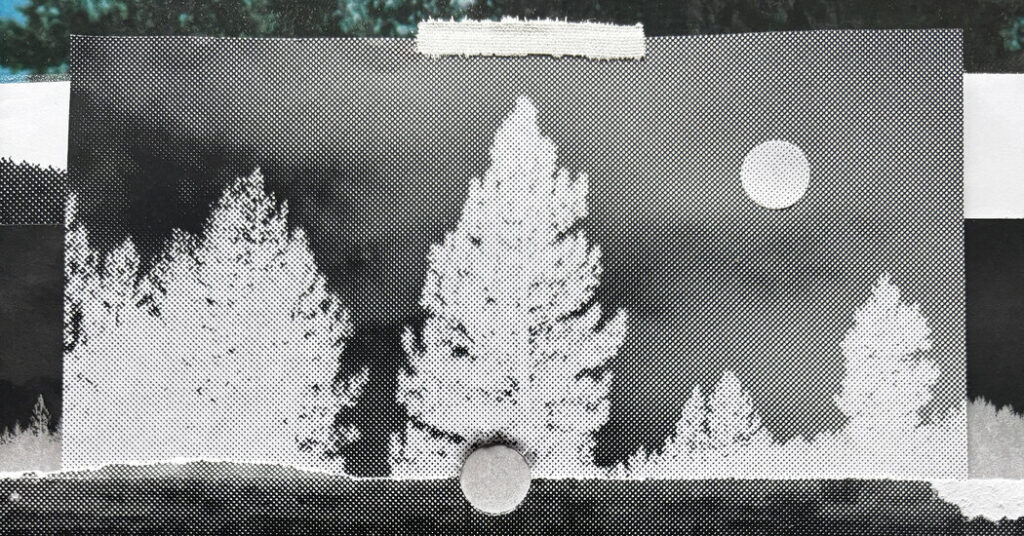
In much of the Southwest, the ponderosa pine is the one and only truly big tree, thriving in dry heat and poor soils. The painter Georgia O’Keeffe captured the beauty of a stately ponderosa north of Taos, N.M., in one of her most stunning works, “The Lawrence Tree.” The creators of the television show “Yellowstone” were so taken with ponderosa forests that they did much of their filming within one far from Yellowstone in western Montana.
But after about 26 years of exceptionally high heat and drought, hundreds of million of these trees in lands stretching from New Mexico and Colorado to the southern Sierra Nevada of California have died. And in many places, something even more startling is happening: The trees aren’t coming back.
Ecologists warn that in just 25 years, more than 70 percent of the Southwestern needle leaf evergreen forests, which include ponderosa pines, may be replaced by grass in what might qualify as the first significant post-climate change landscape in America.
One of the biggest consequences is the loss of shade. Without the forest canopy overhead, snow can evaporate quickly instead of trickling into rivers, streams and aquifers. In the mountainous parts of the West, where roughly 70 percent of freshwater runoff originates as snowpack, that’s a huge deal, a sign of a catastrophic feedback loop beginning to form.
Lands that are no longer covered by snow also absorb more heat from the sun, drying them out and leaving them more vulnerable to large wildfires. Those fires in turn put more carbon into the atmosphere, warming the climate even more. In 50 or so years, by some estimates, snow could virtually disappear from the West, making life there exceedingly difficult.
There are two culprits behind the loss of the Southwestern forests. The first has to do with the drought conditions humans have helped create by putting greenhouse gases in the atmosphere. With insufficient moisture, bubbles can form in columns under tree bark, leading to a collapse of the tree’s entire system. Drought also weakens trees, leaving them easy prey for tree-boring insects, as well as blight and parasitic dwarf mistletoe.
The other culprit is our disastrous efforts for much of the 20th century to suppress all wildfires. Without regular, low-intensity fires, fallen trees and branches and other natural debris accumulate, becoming fuel for much hotter, more devastating conflagrations.
The 70-year war on wildfire also meant that young trees, which sometimes grow in tight bunches, were no longer being thinned out by small low-intensity fires. As a result, an acre of ponderosa forest that in the late 19th century might have contained 150 large, mature trees may today be packed with 1,500 far smaller and more vulnerable trees. Take this tight bunch of trees, stress them with heat and a shrinking supply of water, then wait for the pine beetles to attack. When the beetles have moved on, wildfire can come with ferocity that sometimes even seasoned firefighters can barely comprehend and decimate whatever is left.
There are certainly efforts underway to help the forests. Land management agencies have been using intentional, or “prescribed,” burns to clean debris and thin overcrowded trees. Some are even partnering with Native Americans who embrace this ancient practice on their lands in an effort to learn the finer points of prescribed burning.
But in any given year, forest managers are able to burn only a tiny fraction of the forests that need the fire. Meanwhile, tree nurseries have been doing their best to grow more ponderosa seedlings to replant at least some of the forests that can no longer regenerate on their own. Just the task of growing hundreds of millions of seedlings is overwhelming. At full production, the nation’s nurseries typically manage to grow only a small proportion of the seedlings needed.
The government should treat this situation as deeply threatening to the habitability of the West. But as heat and drought battered the region this spring, the federal government, utterly dismissive of climate change, was shredding an astonishing number of forest-related conservation efforts. At the end of March, the Trump administration introduced a reckless plan to restructure the Forest Service, gutting much of the scientific research into how we might mitigate the effects of climate change on public forests. The threatened (or in some cases, abandoned) studies looked at climate-related insect and tree disease and wildfire behavior essential to public safety.
Efforts to make prescribed burns more effective in the face of climate change have also been slashed. Designated roadless areas are poised to be opened for giant commercial logging operations, further degrading the natural healing capacity of the land.
Given the ponderosa’s striking reputation for resilience, it’s possible that in a century or two some of these lost forests might make a comeback. But that depends on whether we humans can muster some resilience of our own. It will mean keeping alive our commitment to find more sustainable ways of living: increasing solar and wind power, retrofitting commercial buildings to make them more energy efficient and transitioning to electric vehicles.
But we also need the kind of resilience to reject politicians who endanger science. We need to build a resilience tough enough to push back against those who would abuse the ecological systems that give life to us all.
Gary Ferguson is the author of “The Twilight Forest: An Elegy for Ponderosa in a Changing West.”
The Times is committed to publishing a diversity of letters to the editor. We’d like to hear what you think about this or any of our articles. Here are some tips. And here’s our email: [email protected].
Follow the New York Times Opinion section on Facebook, Instagram, TikTok, Bluesky, WhatsApp and Threads.
The post A Water Doom Loop Is Coming appeared first on New York Times.