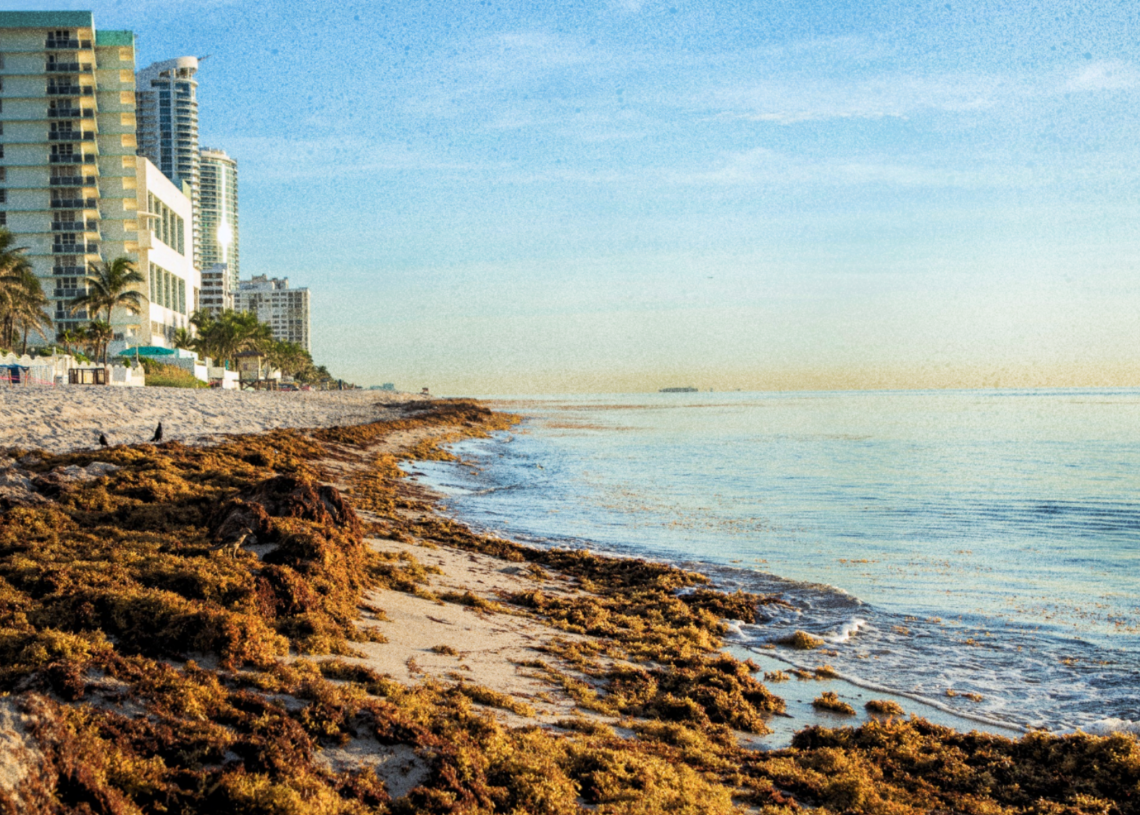
Seaweed, once considered a menace intent on ruining your beach day, has undergone a cultural and culinary makeover. The food world turned the once-derided plant pest into crunchy snacks, ramen toppings, and even a source of MSG-like umami boost that can supercharge a dish’s flavor.
Now, researchers from Florida State University and Florida International University say they may have found another use for the mountains of seaweed clogging beaches across the Caribbean and Gulf Coast. They can turn it into a natural thickening agent for foods like ice cream and salad dressing.
According to a study published in Food Hydrocolloids, the scientists are experimenting with ways to extract alginate from huge blooms of floating brown seaweed known as Sargassum. The blooms are part of what researchers call the Great Atlantic Sargassum Belt. They’re an ecological and economic disaster. They wreak havoc on marine ecosystems and smother coastlines, rendering otherwise beautiful beaches into unappealing muddy messes that force local governments to spend millions on cleanup.
Eating Seaweed on a seaweed-free beach
Luckily, hidden inside that mass of rotting weed is a naturally occurring compound called alginate, which is already used in foods as a thickening agent to smooth out and stabilize mixtures. Without these kinds of stabilizers, the oil and water, for instance, in your favorite pre-bottled salad dressing might unappetizingly separate. These kinds of agents keep them bonded together to form a single unified creamy dressing. Or ice cream. Or aioli.
Since Sargassum can contain heavy metals and other contaminants absorbed from seawater, the researchers put special care into extracting and purifying the alginate through a series of experiments that involve all sorts of processes, like applying heat, pressure, and even sound waves, all while preserving alginate’s gelling powers.
This means that there may be a day when the disgusting, foul-smelling blobs of seaweed choking Gulf and Caribbean beaches may one day be collected and converted into a useful, natural food additive that you might unconsciously add to a Publix sub in the form of a creamy dressing that you’ll eat on a now beautiful, seaweed-free Florida beach.
The post Scientists Found a Strange Use for All That Gross Seaweed Choking the Beach appeared first on VICE.