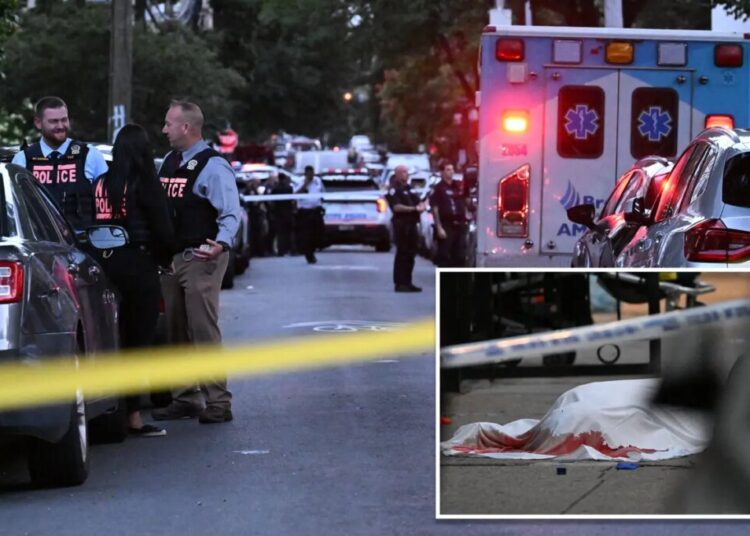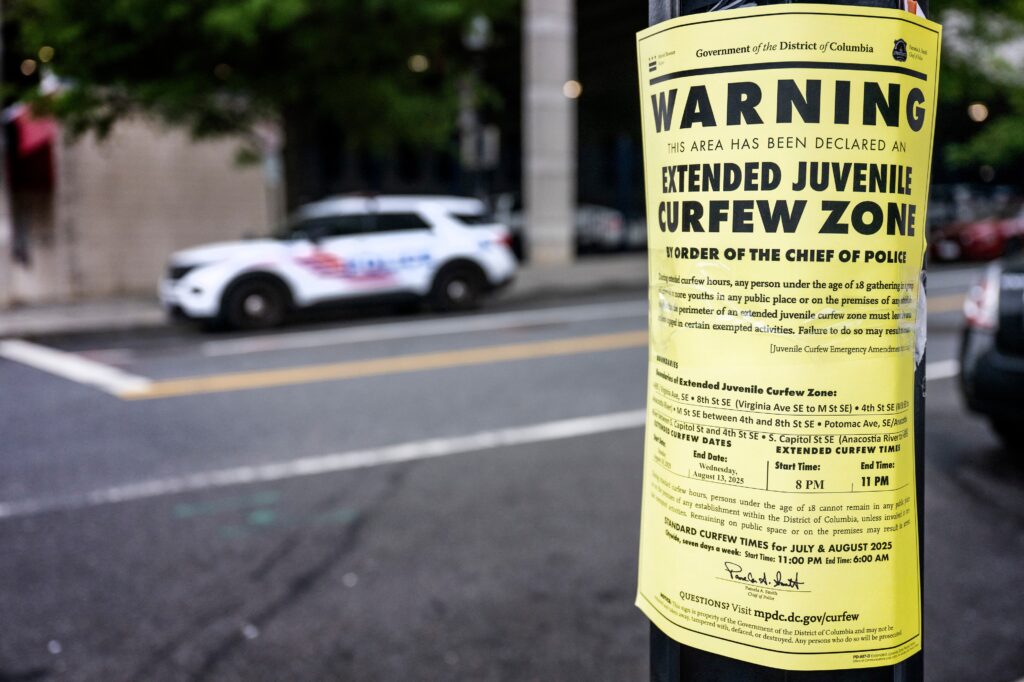
Over a year after D.C. began experiencing the phenomenon of “teen takeovers ” — a national trend of large crowds of dozens or hundreds of teens meeting in buzzy nightlife areas and sometimes causing a ruckus — city lawmakers passed long-term youth curfew legislation as a tool to respond.
On Tuesday, after months of hand-wringing, the D.C. Council agreed 8 to 5 to extend the police chief’s power to declare special 8 p.m. youth curfew zones through 2028, while adding guardrails to how police can enforce the measure. At the same time, Mayor Muriel E. Bowser (D) promised expanded youth programming, responding to calls from lawmakers and community members who say teens don’t have enough to do at night.
The legislation is not expected to go into effect until late summer, however, as it must still go through congressional review. Lawmakers once again could not reach consensus on an emergency version of the curfew that would have taken effect immediately — and chose to table it for a third time in recent months.
The debate over the curfew has been one of the most divisive on the D.C. Council, with Bowser pushing lawmakers to act and as federal scrutiny over the city’s response to teen takeovers hovered over discussions. Opponents held firm, however, believing a police-enforced curfew was an inappropriate response, preventing passage of the emergency bill.
Late Tuesday, Bowser said the council’s inaction on the emergency measure was leaving the city “without one of the few tools we have for addressing disruptive and dangerous gatherings.”
Here’s what you need to know about the longer-term policy — and why lawmakers have been so divided.
How does the curfew policy work?
The police chief would have the power to declare special 8 p.m. curfew zones for anyone under 18. Teens have organized meetups in areas like Navy Yard and the U Street corridor in recent months, sometimes resulting in violence or disorder. The law would also have a citywide youth curfew of 11 p.m. on most nights and midnight on weekends.
“The youth curfew zones are just one limited, effective, preventative tool to reduce the chances of our young people finding themselves in dangerous situations,” said council member Brooke Pinto (D-Ward 2), the bill’s sponsor.
In the special curfew zones, which would last for four days, youth would only be found in violation if they are in groups of nine or more and don’t obey police warnings to disperse.
An amendment from council member Brianne K. Nadeau (D-Ward 1) sunsets the law at the end of 2028, which she said offers time for the city to work out alternative solutions that don’t include police. “It’s a total failure if our first option is MPD,” she said.
Another Nadeau amendment prohibits police from transporting teens to a youth detention facility if they are found in violation of the curfew. Instead they would take teens home, to any government-sponsored youth events that are happening, an alternative safe place or — as a last resort — to a Child and Family Services Agency facility where a parent or guardian could pick them up.
Critics voice concerns about enforcement
Council members who opposed the curfew — including mayoral candidate Janeese Lewis George, Nadeau, Robert C. White Jr., Zachary Parker and Trayon White Sr. — repeatedly raised concerns that the policy could lead to more encounters between police and young people and ultimately decrease teens’ trust in authorities.
Lewis George urged lawmakers to leave the “ivory tower of the Wilson Building” and see how kids were feeling about seeing increased police presence, including armed National Guard troops, in and around the curfew zones.
Council member Doni Crawford (I-At Large) successfully pushed amendments that she said were intended to reduce unnecessary interactions. Among them: Police can’t question or stop kids who are merely present in a curfew zone if it’s not yet 8 p.m., and can’t begin issuing verbal warnings until a half-hour before the curfew begins.
City to add more youth programming
Teens who testified at the Wilson Building have on several occasions said they want more investment in spaces where they can hang out later at night and that there aren’t enough options for them in the city — which has made the so-called “takeovers” enticing.
The curfew policy will require the city to host an event for young people any time police declare a youth curfew zone. Recent late-night events hosted by the Department of Parks and Recreation have received positive feedback, and the mayor agreed to absorb costs associated with doing more under the curfew policy.
Late Tuesday, Bowser said her administration was working on developing a full calendar of events for young people this summer. “But those events are one part our responsibility; a sensible and effective curfew that addresses dangerous trends is another part of our responsibility,” she said in a statement.
Lawmakers are also weighing extending hours at rec centers. Parker, who chairs the council’s youth affairs committee, proposed requiring DPR to open four rec centers late at night on weekends, an idea he said came directly from the young people during a recent roundtable. He withdrew the amendment after Lewis George said she was working on a bill that would more broadly address expanded programming and hours at rec centers.
Why can’t lawmakers enact a curfew now?
To put a curfew in effect now, an emergency measure requires nine votes to advance. Because they repeatedly only come up with eight, the council has postponed votes, in part to avoid giving federal officials in the White House or Congress ammo to say that they are “rejecting” the bill.
But that ire has come anyway. U.S. Attorney Jeanine Pirro said last month that the D.C. Council’s repeated delays on the emergency measure amounted to “coddling” teens. “The D.C. Council doesn’t take this stuff seriously enough,” she said, standing alongside Bowser at an unrelated news conference as the mayor also expressed disappointment.
Some lawmakers have been resentful of the mayor’s public criticism, while Parker also asked colleagues not to “shame” those who oppose the bill, arguing the infighting played into the federal government’s hands “if they want to attack the District.”
Pinto urged colleagues not to give federal officials a reason to ramp up any intervention, saying she was “absolutely fearful of the response.”
Curfew opponents were unmoved.
“I don’t do anything as a token to the White House,” Nadeau said.
The post Responding to ‘teen takeovers,’ D.C. passes youth curfew through 2028 appeared first on Washington Post.