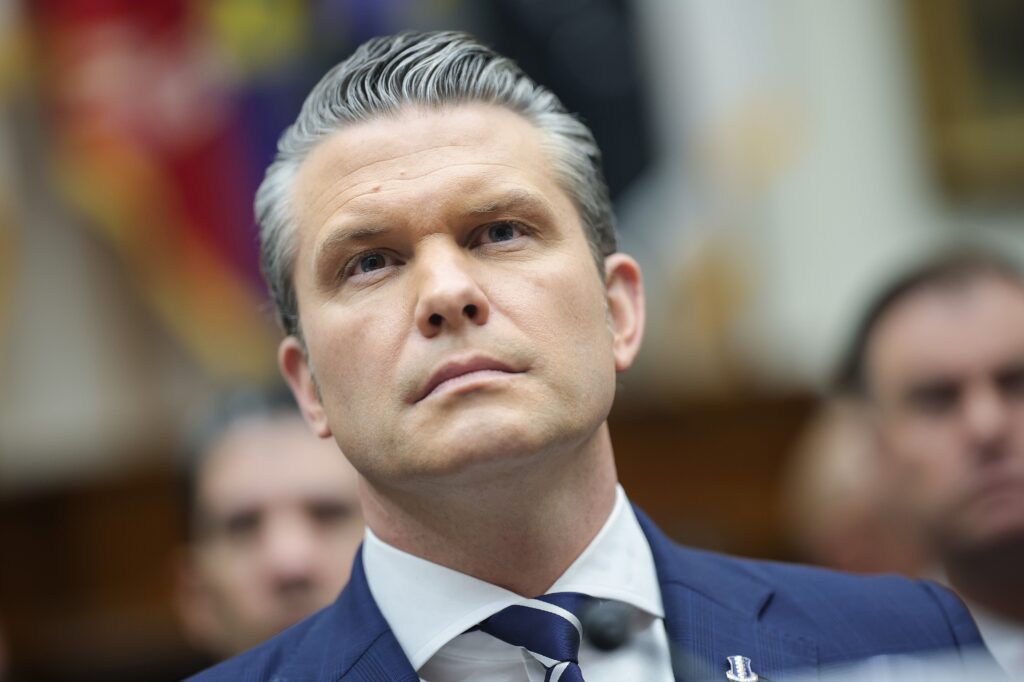
Defense Secretary Pete Hegseth on Thursday is back on Capitol Hill, where Senate lawmakers are eager to question him about the Trump administration’s handling of the war in Iran, dismissal of senior Pentagon officials and repeated verbal attacks on core U.S. allies.
The hearing before the Senate Armed Services Committee follows Hegseth’s combative appearance Wednesday in the House, where he sparred with Democrats whom he labeled “the biggest adversary we face at this point” because of their scrutiny of the Iran war.
Hegseth is joined by Gen. Dan Caine, chairman of the Joint Chiefs of Staff, and Jules W. Hurst III, the Pentagon’s acting comptroller.
During the six-hour hearing Wednesday, Democrats accused Hegseth of lying to the American public about the conflict in Iran, which they framed as a burden on ordinary taxpayers and as lacking a clear path to victory. The defense secretary, often attempting to speak over the lawmakers, defended the military operation as crucial to denying Iran a nuclear weapon — one of the Trump administration’s several justifications for starting the conflict alongside Israel.
Hegseth faces a similar reception from Democrats in the Senate, where even some Republican lawmakers have grown frustrated with his management of the Pentagon and insults against U.S. allies.
Lawmakers from both parties have openly criticized Hegseth’s recent personnel decisions, including the firing of Navy Secretary John Phelan and the forced early retirement of the Army chief of staff, Gen. Randy George. Multiple Republicans raised the dismissals Wednesday, and Rep. Austin Scott (R-Georgia) said he disagreed with the choice to fire George and had sent Hegseth a letter in response.
This week’s hearings were intended to be a chance for Hegseth and Caine to defend the Trump administration’s record $1.5 trillion defense budget proposal. Republicans have mostly welcomed the massive spending plan, saying it’s necessary to increase the production of critical weaponry further drained during the Iran war and to remain competitive with American adversaries, such as China.
Democrats, including some who support higher military spending, have argued that the sum is unrealistic given the nearly $40 trillion federal debt.
Hurst, the Pentagon’s acting comptroller, said during Wednesday’s hearing that the war in Iran has cost about $25 billion since it began in late February.
Meanwhile, peace talks between Washington and Tehran have stalled, though a ceasefire has mostly held for the past few weeks. President Donald Trump has demanded that Iran reopen the Strait of Hormuz and completely end its nuclear program. The Iranians have ruled out any commitments until the United States lifts its naval blockade of the country’s ports.
The post Hegseth faces Senate lawmakers split over Iran war, Pentagon firings appeared first on Washington Post.