Divisions within the Federal Reserve over President Donald Trump’s push to deregulate Wall Street could present a major challenge for his pick to become the next Fed chair, Kevin Warsh, who would arrive at an institution unaccustomed to the kind of partisan splits it is now facing.
Senators weighing Warsh’s nomination have focused largely on whether he would yield to Trump’s pressure to lower interest rates. But the Fed board’s internal split over deregulation could present another vexing problem, an issue that looms larger as Warsh’s confirmation clears a critical hurdle and now faces a committee vote on Wednesday.
The Fed has historically been known for its consensus-oriented culture, setting it apart from other agencies run by bipartisan panels. But a 4-3 split on the Fed board last month over a request by Morgan Stanley for a regulatory exemption could be a sign of fights to come, and was the first time a regulatory matter had so publicly divided the board along partisan lines.
Those divides have slowed Trump’s agenda, since overhauling Wall Street often requires sign-off from the Fed as well as two other agencies — the Federal Deposit Insurance Corp. and the Office of the Comptroller of the Currency. The Fed’s internal gridlock is effectively gumming up the works, according to regulators and lobbyists familiar with the internal deliberations at the central bank. Trump has made little secret of his desire to install a working majority on the Fed’s seven-member board, which could help him avoid any long-term bottleneck.
“Any reluctance by the board to take up further deregulatory measures to avoid these splits will slow down the president’s agenda,” said David Wessel, director of the Hutchins Center on Fiscal and Monetary Policy at the Brookings Institution. “This is one reason why the president seems so eager to get a majority on the Federal Reserve Board.”
Warsh’s Senate confirmation cleared a crucial roadblock Friday when the Justice Department closed its investigation of current Fed Chair Jerome H. Powell, a probe that a bipartisan group of lawmakers and a federal judge criticized as an abuse of power by the Trump administration. Sen. Thom Tillis (R-North Carolina), a key holdout on the Senate Banking Committee, said Sunday he would back Warsh’s confirmation.
The Fed’s board plays a key role in Wall Street regulation, in addition to its role helping to determine the cost of money. Those regulations are important because they shape how freely banks extend credit to businesses and consumers, and on what terms.
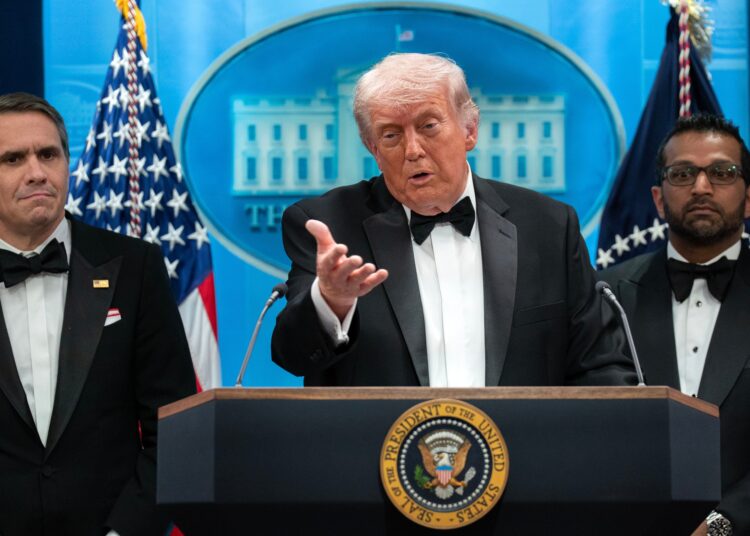
Trump has aggressively pushed to reshape the Fed, pressuring it to cut rates and moving to narrow itsindependence on regulatory policy. Deregulation is also central to his economic priorities.
Although regulators spent years after the 2008 financial crisis seeking to tighten big-bank rules, the pendulum has now swung away from additional regulations. Many regulators say they want to ensure that banks are focusing on real financial risks rather than check-the-box paperwork drills.
To be sure, the Fed’s board has not ground to a halt. It has already approved significant pieces of the administration’s agenda, including proposals last month that would reduce the biggest banks’ capital buffers by about 5 percent, a victory for the industry. That came months after all three banking agencies finalized another rule allowing big banks to hold less capital against low-risk assets such as Treasury securities. The Fed has also moved on its own in some cases by, for instance, retooling how it determines banks are “well managed,” in another industry-friendly revamp.
But on other measures, the board appears divided — unable to move at the pace of the OCC, which is housed at the Treasury Department, or the FDIC, where Trump-appointed officials control the agenda without any Democrats on its board. That owes partly to the Fed’s unusual position — its bipartisan board is drawn from multiple administrations, whose members divide their time between helping to set interest rates and Wall Street regulation.
Some Fed outsiders have speculated that Powell, whose term as chair expires May 15, is leaving any additional thorny fights over regulation for his successor rather than scheduling votes that would split the board.
Powell said last month that he is only one vote on that board and leaves the regulatory agenda to Michelle Bowman, the Fed’s vice chair for banking supervision. Bowman, through a Fed spokesman, didn’t comment for this article. At a board meeting last month, she thanked her colleagues for their “willingness to engage in extensive briefings and discussions” on the capital proposals.
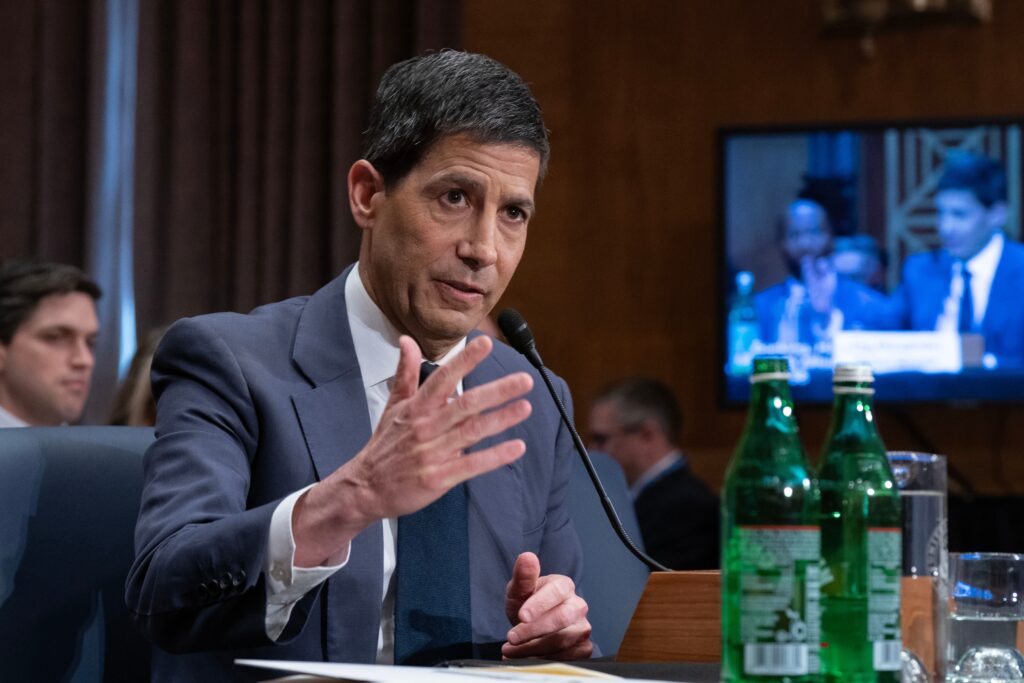
At his confirmation hearing last Tuesday, Warsh committed to maintaining the central bank’s independence in setting short-term interest rates but said that this independence does not extend to bank supervision and regulation — areas where, in his view, the administration should have more sway.
“I’m … equally committed to work with the administration and Congress on nonmonetary matters that are part of the Fed’s remit,” Warsh said.
That has led many Fed watchers to assume that the central bank’s board will eventually support the bulk of the deregulatory agenda that it has been slower to advance, including steps to allow banks to lend more to heavily indebted companies and narrow what regulators can penalize as a risky banking practice.
“There are signs of some internal resistance at the Fed, but I don’t know how hard they’re actually going to fight in the end,” said Kathryn Judge, a professor at Columbia Law School. Each of the outstanding measures, she added, could give banks meaningful additional breathing room while curtailing supervisors’ ability to raise concerns that have traditionally fallen within their purview.
The Fed did manage to find common ground on one major item last month, approving 6 to 1 a series of proposals to ease the financial buffers at the largest banks, the latest iteration of a regulatory plan that has gone through multiple drafts over several years. Officials across the ideological spectrum have said they were relieved to have it finally advance.
But on other deregulatory priorities, the Fed has moved glacially.
On anti-money-laundering rules, the two other banking agencies have jointly proposed an overhaul of requirements that banks have long complained are outdated and burdensome. A vote by the Fed’s board to have it join the proposal is not expected anytime soon, according to people familiar with the process, speaking on the condition of anonymity to discuss internal deliberations.
The two other banking agencies have also proposed formally defining for the first time what examiners mean when they flag a bank for unsafe or unsound practices — a change the industry has sought for years, arguing that vague standards give regulators too much discretion. The proposal would also tighten standards for lower-level supervisory warnings short of formal enforcement action against a bank. The Fed has yet to follow suit.
The OCC and the FDIC have also scrapped Obama-era guidelines on leveraged lending — loans to companies that have already taken on significant debt — that the industry argued were overly restrictive. The Fed helped write those guidelines in 2013 but has yet to withdraw the guidance. The board would likely need to vote to rescind them.
Finally, the two other agencies have finalized a rule barring examiners from citing “reputation risk” when scrutinizing banks for, say, lending to disreputable companies — a tool conservatives argued was used to pressure lenders into dropping clients in industries like guns and cryptocurrency. The Fed has proposed but not yet finalized a similar rule, though it has removed references to reputation risk from its supervisory materials.
The post A split within the Fed impedes Trump’s deregulation of Wall Street appeared first on Washington Post.