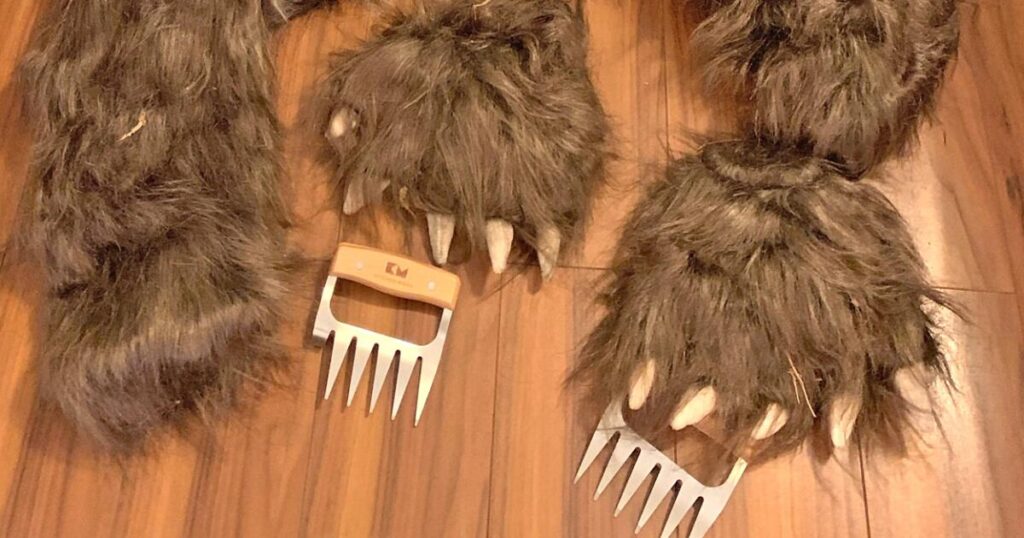
“Operation Bear Claw” was definitely a new kind of insurance fraud case.
The target: a Rolls-Royce and two Mercedes-Benzes.
The weapon: a bear suit and meat claws.
A Southern California woman and two men, who pleaded no contest this week in a scheme to rip off insurance companies by putting on a bear costume and staging fake attacks on luxury vehicles, have been sentenced to jail time.
The scam was strictly small-time. Insurance companies lost a total of $141,839. But authorities said it represented a highly unusual take on car insurance fraud that was uncovered only when an investigator from one of the insurance companies took a careful look at surveillance video of one of the orchestrated attacks.
“It’s definitely out of the ordinary,” said Capt. Eric Hood, a 20-year veteran with the California Department of Insurance who led the probe, in an interview with The Times on Friday. “I don’t think we saw anything to that extent in the past where they got a bear suit. It’s definitely unique.”
Auto insurance fraud is a costly yet common problem across the country that’s increasingly leading to higher premiums for consumers, experts say. Fraud most frequently takes the form of staged crashes, arson and people lying to get car insurance. But this case was something else.
“What may have looked unbelievable turned out to be exactly that — and now those responsible are being held accountable,” state Insurance Commissioner Ricardo Lara said in a statement.
The state’s investigation into the bizarre scheme started in 2024 after the group claimed a bear entered their 2010 Rolls-Royce Ghost, which retails for $245,000 new, in Lake Arrowhead and scratched up the inside of the car. In an attempt to bolster their story, they even submitted a video of the incident — but it ultimately would be their undoing, authorities said.
Video of the attack released by the Department of Insurance shows what appears to be, to the casual observer, at least, a person in a brown bear costume entering a car and rummaging around and pawing at the inside. The video includes photos of superficial scratches on the vehicle’s expensive leather seats and door panel.
But when an insurance company claims investigator reviewed the video footage, they noticed something odd. Aside from the fact that there hasn’t been a true brown bear, or California grizzly, in the Golden State since in the 1920s, the way the ferocious — albeit slightly skinny — beast was moving looked less ursine and more human.
Detectives enlisted help from a California Department of Fish and Wildlife biologist to review the video, and they agreed it was clearly a human in a bear suit.
Through their investigation, authorities discovered the individuals made two additional insurance claims — one for a 2015 Mercedes G63 AMG and another for a 2022 Mercedes E350 — with separate companies. All three of the claims, which authorities allege were fraudulent, had the same date of loss and the same location. And all included very similar videos.
Two of the companies fell for the ruse, officials said.
Bristol West paid out $52,268 to the group and an additional $34,000 to pay off a loan on one of the cars. Progressive shelled out $55,920 for another claim.
The third claim, filed to State Farm, was denied after the company reviewed the footage, Hood said.
“Something like this wouldn’t usually get paid,” Hood said. “Sometimes, insurance companies are just trying to pay it out quickly and may not have facts organized and haven’t looked that thoroughly.”
In November 2024, detectives executed a search and arrest warrant at the defendants’ home and discovered a head-to-claw bear costume and meat shredders they say were used in the scheme.
On the surface, the idea that even two companies believed these incidents involved actual bears may seem far-fetched, but experts say there’s reasons a claim like this could slip through the cracks.
Insurance companies are wary of bad faith lawsuits that arise when they deny claims, so they’ll often pay them out just to avoid legal problems, said Harry Kazakian, a licensed private investigator and independent claims adjuster. And scammers know exactly what to damage to get a payout, he said.
In this case, with damage to the interior of the car, insurance companies won’t just pay to repair the upholstery, they will pay to replace the entire seat, which is expensive. So those looking to make a quick buck will claim damage to a seat and, instead of having the insurance company pay a body shop to repair it, the insured will “cash out” on the claim and keep the money, Kazakian said.
“The insurance company doesn’t have to inspect the vehicle to make sure it’s been repaired. So they’ll just cash out and then move on,” he said.
Even then, this was the weirdest case he’d ever heard of in his career.
“If you look carefully, here’s a bear that’s able to unlock the vehicle door and open the door like a human and get in,” he said. “And, of course, the markings on the vehicle as bear claws being asymmetrical, I think, is what caught the company’s attention.”
Alfiya Zuckerman, 39, of Valley Village and Ruben Tamrazian, 26, Vahe Muradkhanyan, 32, and Ararat Chirkinian, 39, all of Glendale, were charged with multiple felonies including aggravated white-collar crime, presenting a false insurance claim and destroying insured property. They initially pleaded not guilty to all counts, according to San Bernardino Superior Court records.
This month, Zuckerman, Tamrazian and Muradkhanyan pleaded no contest to felony insurance fraud in a plea bargain with prosecutors and were sentenced to 180 days in jail and supervised probation, according to court records.
All three are permitted to serve their time through a weekend jail program. Zuckerman was ordered to pay $55,360 in restitution and Tamrazian will have to pay $52,268. A restitution amount hasn’t been determined for Muradkhanyan, according to the California Department of Insurance.
Chirkinian is scheduled to return to court in September for a preliminary hearing. An attorney representing Chirkinian in the case did not immediately respond to a request for comment.
Brian Darr, a senior forensic engineer for Quality Forensics who has been investigating insurance claims for more than 16 years, said it’s often not that difficult to determine whether a claim is fraudulent.
Insurance companies do consistency evaluations that can help root out fraud by determining whether the damage submitted is consistent with what you’d generally expect from the incident.
“You’d look for something that looks like a bear claw mark,” he said. “If you’re seeing tool marks, then you’d know this wasn’t actually a bear.”
The post They dressed like a bear and damaged a Rolls-Royce in an audacious insurance scheme appeared first on Los Angeles Times.