
This is an edition of the Books Briefing, our editors’ weekly guide to the best in books. Sign up for it here.
Newspapers publish the rough draft of history, as the saying goes. And what’s the rough draft of the news? I would argue that it’s gossip, as filtered by good reporters. Which means that gossip is the very rough first version of what ends up in the history books. I first thought of this syllogism while reading primary sources for my book of cultural history, and it came to mind recently as I dove into Lena Dunham’s highly entertaining new memoir, Famesick. “God bless a memoir that drops names—the more bold-faced and braggadocious the better,” my colleague Sophie Gilbert wrote this week in an essay about the book. Gilbert also laments that Dunham’s second memoir fails at what her groundbreaking HBO series, Girls, managed to do: “make broader meaning out of her experiences.” It’s true that the book cannot compete with the show’s ability to explain members of a generation to themselves. And yet, as primary source material about the making of Millennial art, Famesick is hard to beat.
First, here are five stories from The Atlantic’s Books section:
- If you want a better world, act like you live in it.
- The publishing mystery no one wants to talk about
- The paradox of modern medicine
- The eighth deadly sin
- “Byzantine Room,” a poem by Patricia Lockwood
“For everything that was written about Girls across its six seasons—and it was a lot,” Gilbert writes, “nothing has offered the access and insight that Dunham provides in Famesick.” The opening chapters describe Dunham’s arty, privileged Manhattan upbringing; her struggles to master the challenges—technical, physical, and emotional—of filmmaking in her early 20s; and her first encounters with the transactional creatures that operate Hollywood and the trolls that drive social media. Her material is tightly packed but lightly delivered, her writing funny and vulnerable. But as a memoir, her account is also by definition self-involved—the product of a single perspective. As Dunham’s alter ego, Hannah Horvath, says so memorably in the Girls pilot, she is, if not the voice of her generation, then maybe “a voice of a generation.”
Hannah’s statement of purpose gets at both the promise and the limitation of memoirs by public figures. In the hands of a skilled and thoughtful writer (or, in some cases, a ghostwriter), these books can be powerful distillations of what it felt like to live and work in a specific moment. Famesick reveals a great deal about how Hollywood worked in the 2010s, how America’s economic and social networks functioned, and how some Millennials responded to a set of opportunities and dangers specific to them. Dunham’s gossip about colleagues, friends, and enemies adds up to a generational portrait, a feast for cultural historians to come.
The book’s major limitation, meanwhile, is a common one. This is only “a voice”: one person’s account, colored by score-settling, self-justifications, and blind spots. Yet sometimes these qualities can be exactly what make a book compelling. The fun of reading a memoir by Cher or Barbra Streisand or (to cite one of my own primary sources) Sammy Davis Jr. comes from feeling enmeshed in a gossip session with an unreliable but charismatic narrator. You hang on every word in part because you don’t always believe them; if you’re a journalist or a critic, you consult other sources. Reality as we know it is made up of subjective experiences, none of which would feel complete on its own. Gilbert writes, “I’m not quite sure what the meaning of Famesick is, beyond getting certain things on the historical record.” Sometimes, that’s enough—especially if you can’t stop reading it.
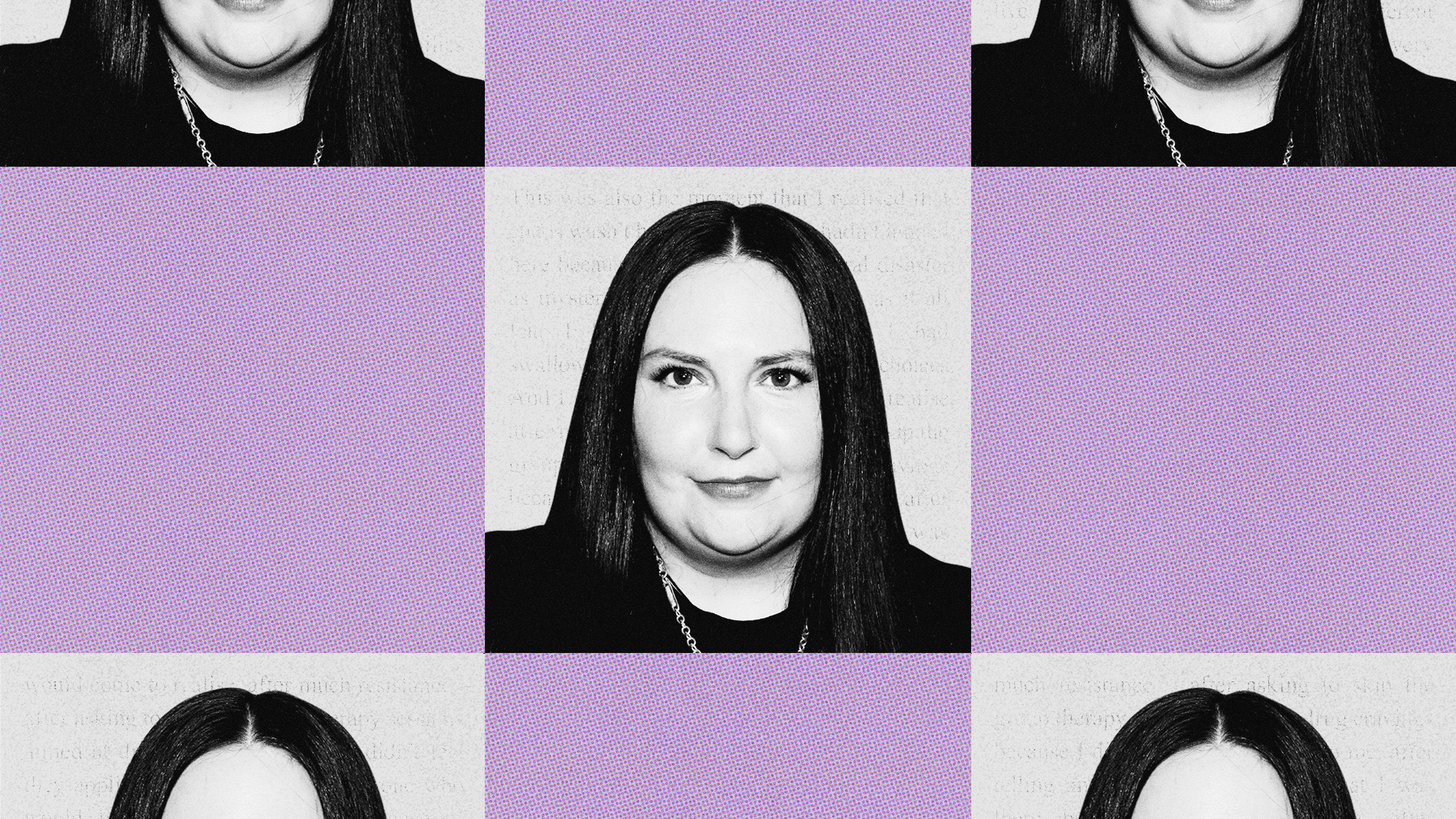
What Does Lena Dunham Want to Tell Us?
By Sophie Gilbert
Her new memoir captures the cost of being an impossibly popular target.
What to Read
Party of Two, by Jasmine Guillory
Picking a favorite book by Guillory is like picking a favorite cookie. They’re all sweetly satisfying; it just depends on what flavor you’re in the mood for. Perhaps you’re interested in a fake-dating ruse that turns into real love. Maybe you want two rivals to realize how thin the line is between hate and love. In Party of Two—the fifth novel in a series featuring the same group of friends—the protagonist, Olivia, has to navigate the spotlight that comes with dating a senator without dulling her own ambitions. What makes Guillory’s characters shine is their passion: for their work (some, including Olivia, are lawyers, as the author herself once was), for improving their communities, and for the simpler pleasures in life, which here mostly take the form of good food. Olivia and Max meet at a hotel bar, where she’s enjoying an ice-cold martini with her Caesar salad and fries. They strike up a conversation about dessert. Later, he sends a cake to ask her on a date. The whole book offers a feast for both the heart and the stomach. — Karen Ostergren
From our list: Eight romance novels for romance skeptics
Out Next Week
 The Rolling Stones: The Biography, by Bob Spitz
Small Town Girls: A Writer’s Memoir, by Jayne Anne Phillips
A Room in Bombay, by Manil Suri
Your Weekend Read

What I Saw Inside the Kennedy Center
By Josef Palermo
On the day I was laid off from the Kennedy Center, I felt a little like Dolley Madison saving the Stuart portrait of Washington before the British sacked the capital. I was the staffer in charge of the artworks in the building. A crucial difference is that my institution, unlike the White House in 1814, had been on fire for months.
When you buy a book using a link in this newsletter, we receive a commission. Thank you for supporting The Atlantic.
Sign up for The Wonder Reader, a Saturday newsletter in which our editors recommend stories to spark your curiosity and fill you with delight.
Explore all of our newsletters.
The post The First Draft of Cultural History appeared first on The Atlantic.