Television is 2,500 years younger than theater, but what a bratty kid brother it has been. The mocking! The undermining!
At least it has been loyal. From the earliest kinescopes to cable and beyond, TV has never stopped offering stories about theater. “The Billy Rose Show,” an anthology of Rialto tales, including one in which Judith Anderson plays a stage actor on the skids, ran for 25 episodes on ABC starting in 1950. “American Classic,” starring Kevin Kline, also playing a stage actor on the skids, just finished its first season on the MGM+ streaming service.
Despite so much practice, television still manages to get a few things wrong, specifically the process, the product and the people. (It occasionally manages to nail the excitement.) As seen on TV, plays are assembled in days, not years. Productions are unmitigated fiascos unless they’re star-making masterpieces. Actors are ridiculous, pathetic, needy and occasionally homicidal.
This even though so many TV writers, directors and performers cut their teeth onstage. Sometimes it seems as if they are enacting a kind of revenge by absurdity. They probably know, for instance, that production assistants do not poison stars with peanuts so that understudies can take over. Yet guess what happens on “Smash”?
The gap between actual theater life and how it looks on TV suggests the distortions that arise when the spirit of an art form tailored to a small, specific live audience is recut for a larger, broader, remote one. Naturally, TV storytelling tropes prevail. During a month I spent bingeing 11 series from the past 44 years — sitcoms, dramedies, mysteries and high-school soaps — I noticed five archetypes emerging in mostly unflattering yet sometimes revealing ways.
The Blowhard
It’s not hard to see why Kline, an expert at preening gasbaggery, was drawn to “American Classic.” He plays Richard Bean, an actor who responds to a withering New York Times review of his “King Lear” by physically assaulting the critic. Exiled after a video of the incident goes viral, Bean discovers that his hometown, as well as the theater built there by his family, is in dire straits. His plan to save both (and maybe himself), by directing a locally cast production of “Our Town,” is played for laughs, yet all is redeemed by the season’s payoff, when Bean, as the Stage Manager — which is to say Kline — finally has material worth the fuss. Even the Times critic likes it.
No one is likely to praise Sandy Kominsky (Michael Douglas) in “The Kominsky Method,” which ran from 2018-21 on Netflix. In his mid-70s, with a prostate problem and three ex-wives, he isn’t even a has-been, never having achieved much success. Nor do the students he teaches at a storefront acting studio in Hollywood seem destined to fare better. Like eager pupils in most such shows, they are merely props in the drama of their teacher’s self-regard, eagerly lapping up his pronouncements about “our craft.” In the end, “The Kominsky Method” isn’t even very interested in theater; the “method” it successfully dramatizes is the one all people use to face down disappointment and mortality. Too bad it gets to that solid point by pumping hot air into some already overblown stereotypes.
Stream “American Classic” on MGM+, and “The Kominsky Method” on Netflix.
The Wannabe
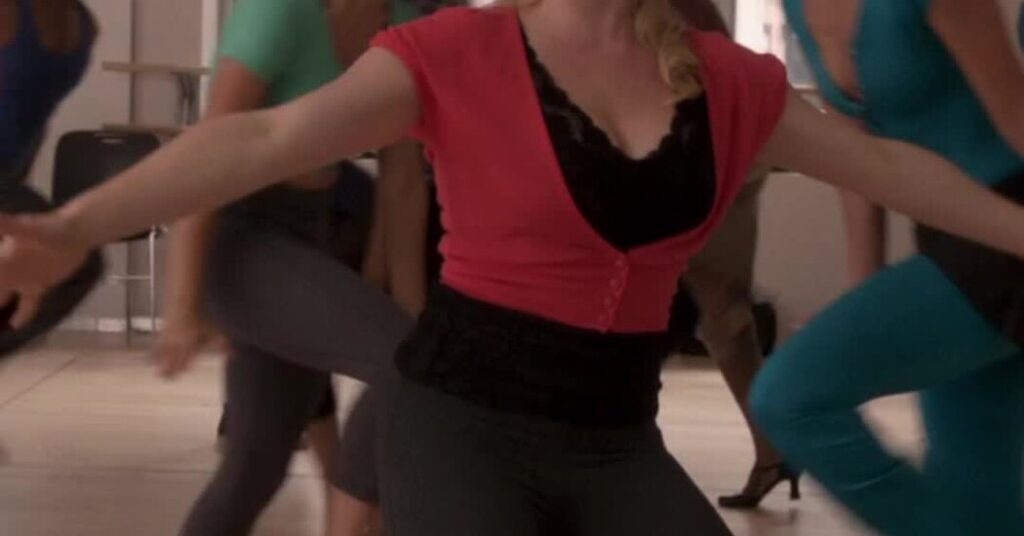
Student performers are stereotyped even more broadly than teachers. NBC’s “Fame” (1982-87) established the pattern with its portrayal of manic adolescents swimming in a sea of amped-up ambition and danger. Since then, every high-school theater series seems obliged to feature a tasting menu of bullied nerds, snarky goddesses, quirky outcasts and shy dreamboats.
“Glee,” on Fox from 2009-2015, certainly complies, upstaging its supersized battles among Midwestern show choirs with vicious student rivalries that approach the psychological cruelty of a slasher film. In later seasons, an unlikely brand extension to Broadway ups the absurdity ante, confusing raw talent with fully cooked artistry.
In both cases, the soap opera entanglements eventually swamp the exciting performances — a problem that “Rise,” on NBC in 2018, compressed into one season because one season is all it got. Over the course of 10 episodes, a soulful English teacher (Josh Radnor) handles more drama offstage at the high school in his working-class Pennsylvania town. One of his drama club members is homeless, another is maybe-gay with disapproving parents, the inevitable quarterback turned thespian has a dying mother at home. If all young performers were as perpetually on the brink of disaster as those on television, there would be no young performers left to portray them.
Stream “Glee” on Disney+ and Hulu, and rent or buy on Amazon and Fandango at Home; “Rise” and “Fame” are not currently available to stream, rent or buy.
The Viper
The adults are no less disasters. NBC’s tumultuous “Smash” (2012-13), about the competition between two actresses to play Marilyn Monroe in a Broadway-bound musical, featured so many backstage affairs, intrigues, collapses and binges that it required a flowchart or a psychiatrist to follow. Initially tightly focused and basically believable, it soon devolved into a showcase for diva drama and catty slap-downs, making you wonder how its often excellent songs and performance sequences could ever have emerged from such a snake pit.
Not that the theater is always, in real life, a loving place to work. As FX’s 2019 biographical mini-series “Fosse/Verdon” trenchantly demonstrated, the hothouse environment in which some shows are created can make artists snap. Not just Bob Fosse, the brilliant, abusive director-choreographer played by Sam Rockwell, but also the great dancer Gwen Verdon, his muse and wife. As Verdon, Michelle Williams demonstrates that loving a monster must always rub off a little.
Stream “Smash” on Amazon and Peacock, and rent or buy on Fandango at Home; stream “Fosse/Verdon” on Hulu.
The Killer
There are monsters and then there are murderers. Though the theater has produced a few of the latter over the centuries — John Wilkes Booth, for one — Hollywood’s vision of the stage approaches death row. In Hulu’s ongoing “Only Murders in the Building,” which debuted in 2023, three amateur detectives, including Oliver, a flamboyant director played by Martin Short, investigate deaths in their Upper West Side building. The show’s innate theatricality comes fully to the fore in Season 3 with the killing of an actor in Oliver’s Broadway-bound mystery, “Death Rattle.” The motive, once it emerges from the murky plot, is baroque, hanging on the premise that ambition in the theater is a very close cousin to homicidality.
That premise is taken to its logical extreme in HBO’s “Barry” (2018-2023), a tragicomedy starring Bill Hader as a depressed hit man. After following a mark into a class taught by, you guessed it, a gasbag acting coach (Henry Winkler), Barry finds solace in the way performing onstage can both channel and discharge emotion. The series is not content with that soft landing, though: Barry soon learns that the techniques he’s learning in acting class can help him become a better assassin. That makes the show the most damning of television’s many portraits of the theater, echoing Plato’s objection to it as an essentially amoral art, as content to facilitate bad behavior as good.
Stream “Only Murders in the Building” on Hulu, and “Barry” on HBO Max.
The Real Deal
Good, bad or totally ludicrous, few television shows about theater feel real, because the real life of the stage is mostly hard work. That’s not incompatible with a certain amount of soap opera, as “Slings & Arrows,” which ran on Canadian cable channels from 2003 to 2006, bears out. Set at a theater festival a lot like the one in Stratford, Ontario, it follows the tangled emotional lives of actors and directors. But it also does justice to their talent, passion and good humor. With glamour at a minimum, the real grind — balancing budgets, jiggering schedules, buttering up donors and bucking up casts — gets pride of place.
“What I see when theater is depicted on television is: ‘Oh, it’s so weird to be in a show,’” Bob Martin, a creator and showrunner on both “Slings & Arrows” and “American Classic,” said. “And I’m not interested in that at all. I’m interested in the fact that theater is a participatory art form, as opposed to, say, just looking at a painting. When people work on a play, they see themselves in it, and it’s a very powerful thing.”
“Submissions Only,” a comedy about casting agents that ran intermittently on You Tube from 2010 to 2014, respects that power while also teasing it. What they have to sit through as the wannabees audition — each episode opens cold with a mortifying song or monologue — is enough to make a theater lover howl with recognition. Because, admit it, some of TV’s stereotypes of the stage are true. It’s just that, in real life, they’re not the whole story.
Stream “Slings & Arrows” on Spectrum on Demand; “Submissions Only” is available free on YouTube.
Jesse Green is a culture correspondent for The Times.
The post How Television Sees Theater Is Quite a Drama appeared first on New York Times.