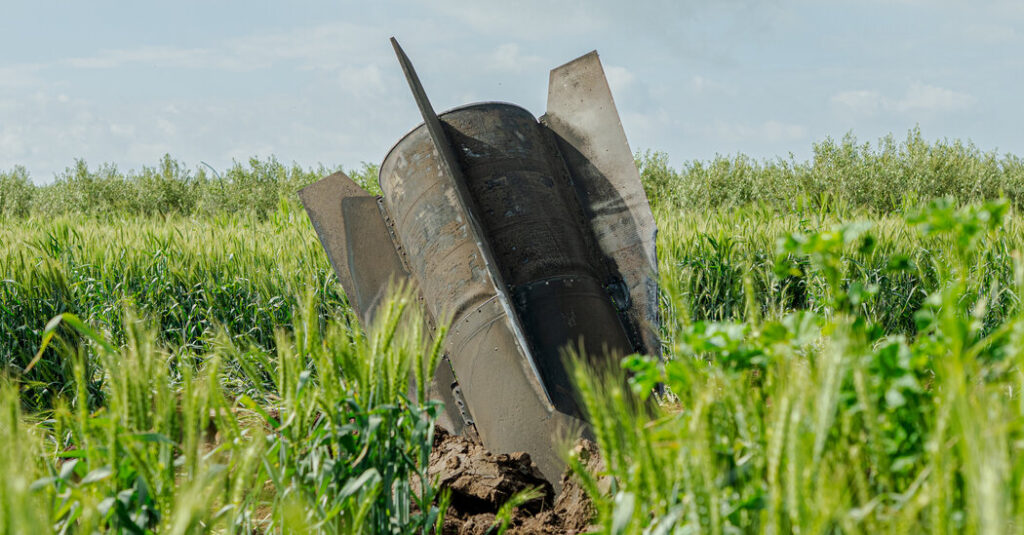
As the United States’ and Israel’s war with Iran grinds to an uncertain conclusion, observers have been quick to label it a win for China. The war has damaged American prestige around the world and angered countries and their populations whose economies face inflation and disrupted supply chains. But a closer look at Iran’s methods in resisting the United States reveals uncomfortable lessons for China as it weighs whether to follow through on its threats to take Taiwan.
Iran prevented the far more powerful United States from winning a war that, on paper, it should have walked away with. Iran weathered decapitation strikes and continued to counterattack, despite heavy bombing and inferior weapons. Iran’s ability to close the Strait of Hormuz is particularly instructive. Its navy had only dilapidated surface ships, a small number of diesel-powered submarines, and numerous small, fast-attack speedboats. Iran’s air force had no advanced attack aircraft and no true bombers.
What Iran did have, however, was a large stockpile of drones and missiles — including anti-ship cruise missiles — capable of striking vessels in the strait and hitting military and commercial targets across the Middle East. Iran also decentralized its command and control network and dispersed and concealed its weapons in multiple locations to make it difficult for the United States and Israel to find and destroy all of them.
China’s military is less lethal than that of the United States and hasn’t engaged in major combat operations in nearly a half-century, but it also has advantages over Taiwan. Its navy has the most ships of any in the world, including advanced aircraft carriers, destroyers, guided-missile corvettes and nuclear-powered submarines. It has an arsenal of attack aircraft, bombers, drones, as well as ballistic, cruise and hypersonic missiles.
Taiwan has significant capabilities, too, such as anti-ship cruise missiles and drones, that can create what the U.S. Indo-Pacific commander, Adm. Samuel Paparo, calls a “hellscape” for China — a lethal 50-mile “kill zone” in the Taiwan Strait. It has built up its sea and air defenses, extended conscription and otherwise responded to China’s massive military growth. It plans to do more. The Trump administration has assembled a $14 billion arms package for Taiwan that is likely to include drones, anti-ship cruise missiles, uncrewed underwater vehicles, air defense systems, high-mobility artillery rocket systems, mines and other systems.
These hoped-for weapons are critical because they could help Taiwan defend itself against China. They can help repel an invasion force by destroying part of it before it leaves China’s ports, sinking ships as they transit the strait, and hitting forces as they try to land. The U.S. LUCAS system, a reverse-engineered copy of Iran’s cheap Shahed drone, is an example of a “good enough” system that, when used in large quantities, can threaten amphibious forces and targets on the Chinese mainland.
Survival requires more than hardware. Iran weathered massive strikes against its political and military leaders by quickly replacing them and by decentralizing military command and control. It maximized deception and concealment, stored weapons in underground bunkers to increase survivability and relied on mobile systems that could be quickly rolled out, launched and rolled back into bunkers.
Taiwan needs to prepare similar moves to survive the potential disruption of its command networks and to be ready to fight in the face of decapitation strikes, space and counterspace attacks and offensive cyberoperations. Doing this will require plans for succession, decentralized command and control, deception and survivability.
The Iran war highlighted the lesson that air power alone cannot win wars. To avoid casualties or getting dragged into a protracted conflict, America relied on air power against Iran. While China is probably willing to take more casualties in a Taiwan conflict, the Iran war is a reminder that China would most likely have to deploy ground troops and risk heavy losses to seize Taiwan.
The Iran war may yet turn out to be a geopolitical windfall for Beijing, but it also serves as a warning — and an opportunity — for Washington and Taipei. Iran’s ability to frustrate a superior military underscores that determined defenders, armed with the right mix of asymmetric capabilities and resilient command structures, can deny even the most powerful adversaries a quick or decisive victory.
If the United States and its allies internalize these lessons — prioritizing quantity over exquisite high-tech systems, investing in survivable and decentralized defenses and encouraging dispersal, concealment and mobility — they can help Taiwan transform itself into a far more formidable obstacle to Chinese aggression. That may be enough to deter a Chinese attack from occurring in the first place.
Daniel Byman is director of the Warfare, Irregular Threats, and Terrorism Program at the Center for Strategic and International Studies (C.S.I.S.) and a professor at Georgetown University. Seth G. Jones is president of the Defense and Security Department at C.S.I.S. and author of “The American Edge: The Military-Tech Nexus and the Sources of Great Power Dominance” (Oxford).
The Times is committed to publishing a diversity of letters to the editor. We’d like to hear what you think about this or any of our articles. Here are some tips. And here’s our email: [email protected].
Follow the New York Times Opinion section on Facebook, Instagram, TikTok, Bluesky, WhatsApp and Threads.
The post Iran Resisted a Powerful Attacker. Taiwan Can Too. appeared first on New York Times.