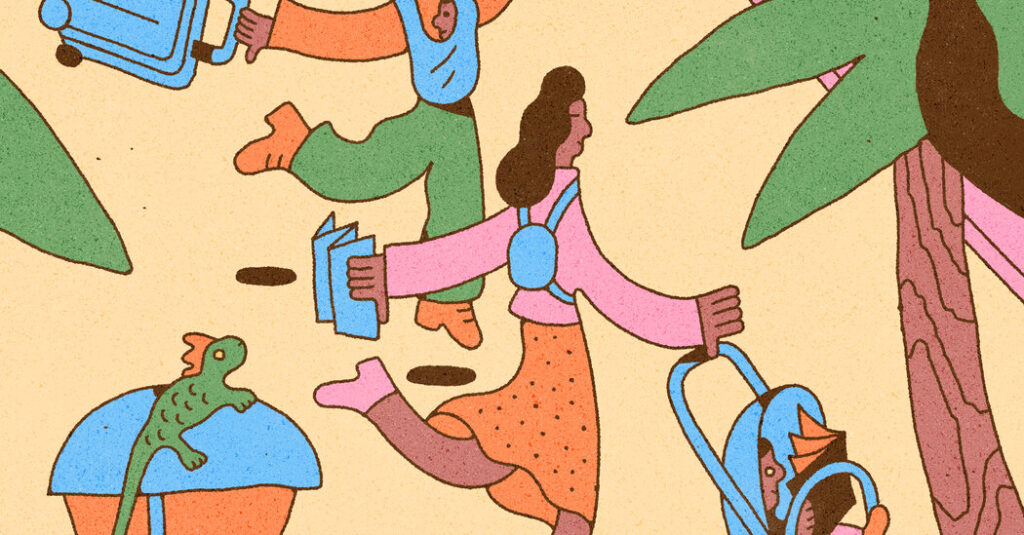
The first time my husband, George, and I flew internationally with our almost 1-year-old daughter, we packed as if we were going to Mars. For a two-week trip, we brought a travel crib, a stroller, a car seat and three large, checked suitcases. After landing and hauling our gear to the rental car, George threw out his back and couldn’t get out of bed for two days. Thankfully, since then, this lifelong overpacker has found many ways to travel lighter as a family.
Plan ahead
Think about what might be available at your destination before lugging around bulky items. If you are visiting friends or family, see what you can borrow. Many hotels and home stays have big-ticket items on site, such as foldable cribs and playpens. Call to ask what is offered, including what’s not listed on their website, and whether the items are guaranteed upon arrival.
Renting is possible for just about anything, including sound machines, baby activity centers and toys, from companies with international reach such as BabyQuip and Babonbo, as well as local vendors. Most car rental companies will offer a paid add-on for car seats.
Research where you can purchase items such as diapers, baby wipes, food, formula and laundry detergent at your destination, or even have them delivered upon arrival. You can also buy what you need inexpensively at thrift shops on the road, said Betsy Woods, of Spokane, Wash., who writes The Wandering Woods, a blog focused on ultralight family travel. In Iceland, she bought her infant son a bunting suit, which became a cherished memento.
Optimize space (and preserve your sanity)
Whether you check or carry on your luggage, the important thing is “resisting the urge to pack for every what-if situation,” said Emily Krause, of central Wisconsin, who created A Mom Explores, a family travel blog. “You will fill all the space that you’re given.” Start by asking what is crucial to bring with you. This usually falls into three categories: sleep, health and “what will cause the biggest meltdown if it’s not there,” said Stefanie Koenig, a professional organizer with Urban Clarity in New York City. This might include a favorite stuffed animal or a comfort item that helps your child sleep and smells like home.
To ease your mental load, especially if you are moving between several locations that will require repacking multiple times, create a checklist on your phone or try an app such as PackPoint. Experts suggest a suitcase or bag with zippered compartments that allow for better organization, such as separate sections for clothes, shoes and dirty laundry. Try to put kids’ things in one bag, adults’ in another and, if needed, use a third for overflow or larger items. Use mesh packing cubes so you can see what is inside, with a different color for each person, and sort by category (think daytime clothes, pajamas, swimwear).
Think about taking half as many clothes as there are days on the trip, said Ms. Koenig, plus a few extra days’ worth of clothes for kids who tend to spill. Rewear what you can, especially pants and shorts. If possible, book lodging with a washer and dryer, or do laundry by hand in the sink.
Ms. Woods and her husband, Justin, who spent years backpacking as a couple and have traveled to 25 countries with their two small children, have a more bare-bones approach. They pack three outfits for each family member, whether the trip is a few days or a few weeks. A fourth, the heaviest, is worn on the flight, along with a compressible jacket. Light, quick-drying materials and antimicrobial merino wool help keep odors away. Anything that can’t be rolled up tightly, like jeans, stays at home. When they don’t have access to laundry machines, Ms. Woods and her husband wash the family’s clothes while showering, then hang them to dry.
“We have so much more fun because we’re not having to drag all these bags around with us,” adding that she suggests making changes slowly, starting with a short trip, to see what works best for you.
Take only the essentials on the plane
What to take on the plane can cause the most stress for new parents. Some airlines, such as United and American, allow a diaper bag as an additional free carry-on.
If you are taking a stroller, consider compact models such as the UPPAbaby MinuV3 or the Joolz Aer2, both of which fit in the overhead bins of larger planes. You can check your stroller free on most airlines and use a baby carrier to free up your hands.
Pack enough supplies like diapers and formula to get you to your final stop, plus a little extra in case your luggage is delayed. Have a change of clothing for yourself and each child in a zipped plastic bag that you can seal if they get soiled; a diaper-changing pad; necessary medication, including a children’s fever reducer and a thermometer; and anything hard to replace. Older kids can be in charge of their own backpacks, stocked with snacks, lollipops for ear pressure changes and a sweatshirt. Keep entertainment to a minimum: books with multiple stories, small toys, coloring books and stickers. Chances are, your kids won’t dwell on what’s left behind.
“Your children tend to be more resilient and more malleable than you maybe give them credit for,” said Ms. Koenig.
Follow New York Times Travel on Instagram and sign up for our Travel Dispatch newsletter to get expert tips on traveling smarter and inspiration for your next vacation. Dreaming up a future getaway or just armchair traveling? Check out our 52 Places to Go in 2026.
The post Packing Light With Babies and Young Children appeared first on New York Times.