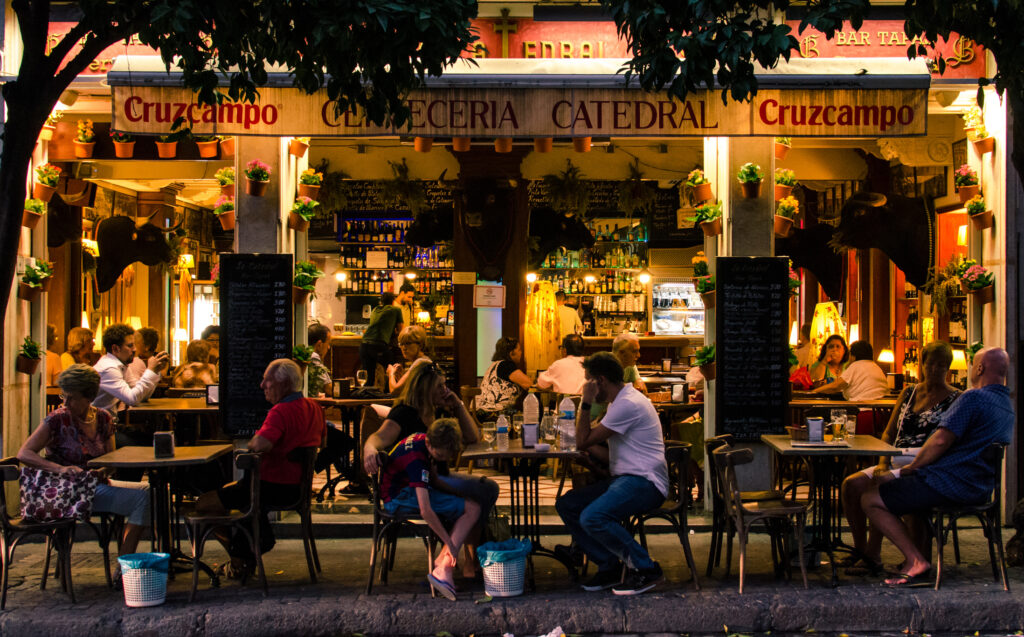
On your next trip to Spain, listen to José Andrés, not your mother.
When grabbing a bite at a bar, the Spanish American chef and restaurateur advises visitors to eat while standing up. It’s not bad form; it’s tradition.
“It’s the best way to experience [bar culture], by far,” Andrés said from his home in Bethesda. “And it’s quicker. You’re one step away from the kitchen.”
Although Andrés runs a mini-empire of restaurants in the United States, as well as the global nonprofit World Central Kitchen, his palate belongs to Spain.
The 56-year-old was born in Asturias, grew up in a small town outside Barcelona and frequently returns to Spain to, of course, eat — a subject he explores in his latest cookbook “Spain My Way: Eat, Drink, and Cook Like a Spaniard,” available May 19.
“The Spanish people really like to eat,” Andrés said, comparing their culinary quest to a pilgrimage. “They will drive forever for a meal. Sometimes long drives.”
Food pilgrims on this side of the Atlantic will go to even greater lengths, traversing a continent and an ocean for a slice of tortilla de patatas, an enriching bowl of Asturian bean stew or a spoonful of socarrat, the burned rice bits in paella.
To help travelers make the most out of every morsel, Andrés shares his top five tips for dining the Spanish way.
Map out your movable feast
Pack up your appetite and move around the country, sampling the specialities of each region.
The north, Andrés said, is the “land of butter and cheeses, milk and cream”; the south is “the land of olive oil.” The east is known for its rice and Mediterranean dishes. The inland region of Castile and León specializes in baby lambs, which are fed a healthy diet of grass, wheat or leftover chickpeas and their mother’s milk.
“Everybody is waiting for the moment the baby lamb is ready. Not before or after,” he said. “If you arrive later, there is no more.”
In the chef’s birthplace, the dish to try is fabada Asturiana, a hearty stew made of the large white beans called fabes, blood sausage, chorizo, bacon or pork belly, and a pinch of saffron.
“The simplicity of the ingredients creates such a sophisticated deliciousness,” he said.
Andrés urges visitors to venture out of the cities and into rural communities.
“In the countryside, you can eat very well,” he said. “You can always find a place in the middle of nowhere.”
Make time for breakfast
A culinary tour of Spain should always start with the first meal of the day.
Whenever Andrés flies into Madrid, he heads straight for Casa Dani, a market famous for its Spanish omelets. He said the omelet makers are highly competitive, which raises the quality level. Locals will pair the egg dish with a cafe con leche or, on the weekends when workday rules don’t apply, a glass of wine.
Nearly every little town fries up churros, which are often sold in churrerías, shops or stalls that sell the fried-dough pastry and a pot of thick hot chocolate used for dipping. You can transport them back to your hotel or, if you can’t wait, Andrés said some cafes and bars allow patrons to eat their churros on premise as long as they buy a beverage.
In the south, many breakfast places serve molletes, a spongy white bread with a crusty exterior. Andrés warns that the bread should not be cut before toasting, which will release the moisture.
“The guys that make the mollete will crucify you,” he joked.
Molletes are traditionally filled with pork loin or lomo en manteca, porked cooked in its own fat.
Lunch comes late
Spaniards typically sit down for lunch later, around 2 p.m., but you won’t be ravenous.
“La comida” falls between the midmorning snack and the late-afternoon nibble known as la merienda. (The mini-meals are to tide you over, so keep it light with a ham-and-cheese sandwich, Nutella on bread or a piece of fruit.)
Let the destination order for you. Visitors should try paella with chicken, rabbit and green beans in the Valencia area; white bean and pork stew in Asturias; and roasted baby lamb with a simple green salad in the interior region.
The one-pot stew is served countrywide, but ingredients will vary by province. The mélange may include cabbage or potatoes or turnips, white beans or chickpeas, with noodles or without.
“The one-pot in Spain is very big and very celebrated,” Andrés said. “You will need a nap after those pots.”
Some dishes may require instructions. Andrés recommends following the lead of other diners. For example, at some paella establishments, friends sharing an order will dig their spoons directly into the pan. Everyone should get a serving of socarrat.
Try a Spanish bar crawl
The Spanish bar hop is different from the U.S. version. The objective is not to heavily imbibe but to sample the tapas at a string of establishments while standing up.
In Seville, for instance, Andrés said he would bring guests on a “meal walking.”
“We will visit two, three or four places and not sit at a table,” he said. “That’s a fun way to enjoy it.”
The bars might have very limited menus — sometimes a singular dish.
On Calle Laurel in Logroño, he said bartenders will serve mushrooms a la plancha with a sprinkling of garlic and parsley, a chunk of bread and wine.
“You go there to have that and only that. Nothing else,” he said.
When Andrés visits Asturias in the late fall, he will sidle up to the bar for sea urchin and cider.
Extra spicy is off the table
Spain is not known for its tongue-torching spices, but if you want a bit more heat, try the southern cuisine, which is shaped by Moorish and Arabic influences.
“You can close your eyes and smell the pinchos morunos,” he said, referring to pork skewers seasoned with cumin, clove and paprika.
The country does love its peppers, though, which come in two versions, he writes in his cookbook. There are “eating peppers,” such as guindillas and piparras from the Basque Country, and “cooking peppers,” such as pimenton, the smoked sweet paprika from the Extremadura region.
Visitors should taste the seasoning in its native habitat and then buy some for home, so they can eat like a Spaniard even when thousands of miles away.
The post Chef José Andrés shares the secrets to dining like a local in Spain appeared first on Washington Post.