BEIRUT — A fragile calm settled over parts of Lebanon on Friday as a 10-day ceasefire brokered by the United States took hold between Israel and Hezbollah, prompting thousands of displaced families to begin the journey home — even as uncertainty, destruction and Israeli warnings against going back to parts of southern Lebanon clouded their return.
By early morning, cars were backed up for miles on the route leading south to the damaged Qasmiyeh bridge over the Litani River, a key crossing linking the southern coastal city of Tyre to the north. Vehicles piled high with mattresses, suitcases and salvaged belongings crept forward through a single reopened lane, hastily repaired after an Israeli airstrike just a day earlier.
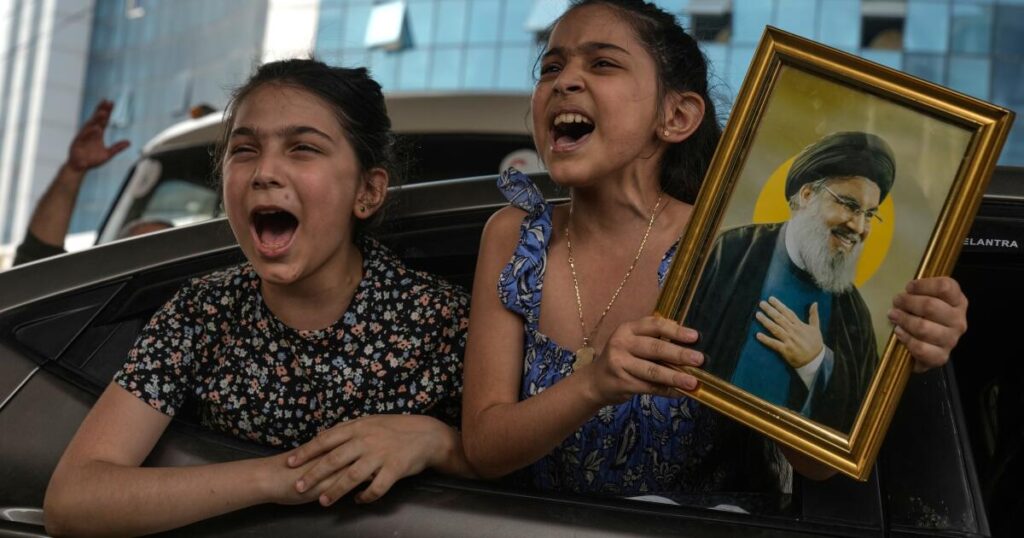
Drivers heading back to their villages along coastal highways cheered each other, flashed victory signs and exchanged blessings.
The latest Israel-Hezbollah war displaced more than a million people. Despite warnings from Lebanese officials that they should not immediately attempt to return to their homes, many began moving toward southern Lebanon in the hours after the ceasefire was declared. The truce appeared to be largely holding overnight.
Israel and Hezbollah have fought several wars and have been fighting on and off since the day after the start of the Gaza war. Israel and Lebanon reached a deal to end that war in November 2024, but Israel had kept up near-daily strikes in what it says is an effort to prevent the Iran-backed militant group from regrouping. That escalated into another invasion after Hezbollah again began firing missiles at Israel in response to its war on Iran.
Lebanese return to rubble after intense strikes
In southern villages like Jibsheet, a trickle of residents returned to flattened apartment blocks and streets littered with chunks of concrete, twisted aluminum shutters and dangling electrical wires.
“I feel free being back,” said Zainab Fahas, 23. “But look they destroyed everything — the square, the houses, the shops, everything.”
Many did not believe that their ordeal was really over.
“Israel doesn’t want peace,” said Ali Wahdan, 27, a medic walking on crutches over the rubble of the emergency services’ headquarters in Jibsheet. He was badly wounded in an Israeli airstrike that hit the building without warning during the first week of the war.
“I wish it were different,” he said. “But this war will continue.”
In the neighborhood of Haret Hreik in Beirut’s southern suburb, entire buildings had been reduced to rubble after weeks of intense Israeli strikes. Ahmad Lahham, 48, waved the yellow Hezbollah flag standing on a mountain of rubble that used to be his apartment building, which had also housed a branch of Hezbollah’s financial arm, Al-Qard Al-Hassan.
“We are at the service of the fighters,” said Lahham, pledging his loyalty to the group.
He praised Iran, saying Tehran’s pressure in its talks with the U.S. led to the truce, and condemned Lebanon’s direct talks with Israel.
“Only the Iranians stood with us, no one else,” he said, calling Lebanon’s leaders “the leadership of shame.”
A local government official in Haret Hreik said Israel struck the neighborhood 62 times over the last six weeks.
“We’ve been able to clear up the rubble of the partially damaged buildings, but for those destroyed, we will need special equipment,” Sadek Slim, the neighborhood’s deputy mayor, told a press briefing.
The area was gridlocked with traffic, with people coming back to check on their homes and Hezbollah supporters zooming on scooters, waving the group’s flag.
Wounded continued to arrive at a hospital
Meanwhile, in Al-Najda al Shaabiya Hospital in the southern Lebanese city of Nabatiyeh, officials said Thursday was one of the heaviest days of Israeli strikes since this latest Israel-Hezbollah war began.
Hospital Director Mona Abou Zeid said the wounded continued arriving from nearby Israeli strikes until around an hour after the ceasefire took effect at midnight.
Among those wounded in the bombardment on Nabatiyeh Thursday was 33-year-old Mahmoud Sahmarani, who said he stepped outside his home to buy some charcoal for his shisha water pipe when an Israeli strike hit his five-story building, killing his father and cousin as they were peeling potatoes for lunch. All that remains of his apartment is rubble, leaving him and the rest of his family homeless.
“Israel should have withdrawn from Lebanon,” he said from his hospital bed, his left eye swollen shut and his head swaddled in bandages. “If we don’t get them out, they will continue to kill us.”
Many still hesitant to go home
In downtown Beirut, tents still line some areas as some families begin to leave, while others wait, weighing the risks of returning south.
A tricycle piled with mattresses weaves through the camp, signaling the first departures after a fragile ceasefire.
“Our homes in the south are gone, destroyed,” said Ali Balhas, from Siddiqeen town in the Tyre province. “Israel is deceptive. You never really know its policies or how it will act toward people.”
“I have six children here, and I can’t leave that quickly. Once there is more safety, we will try to take the children and go back” to our village he said.
Amira Ayyash, a woman from Qaaqaiat al-Jisr in the Nabatiyeh province, decided to wait and assess the situation before returning home.
“We do not know at what hour they might strike us, for they are treacherous. So we decided to take it slowly,” she said.
Chehayeb and Debre write for the Associated Press.
The post A fragile calm in Lebanon as a U.S.-brokered truce holds and families head home appeared first on Los Angeles Times.