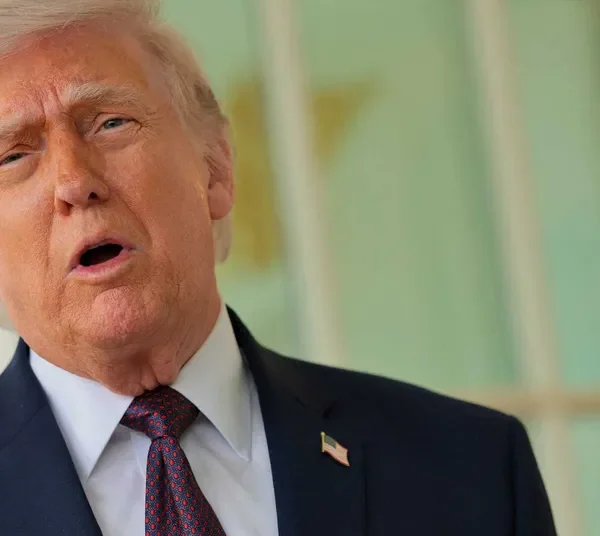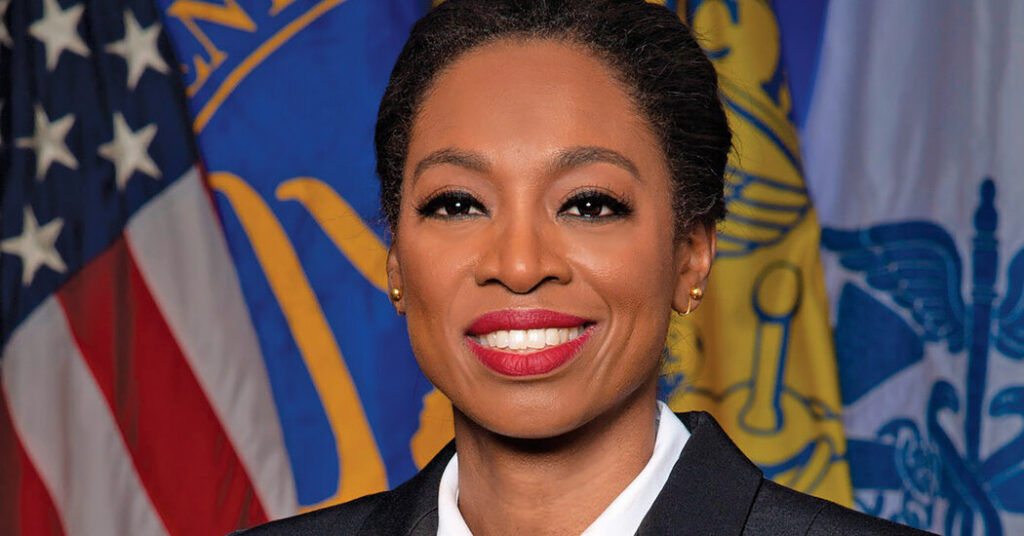
The Trump administration has selected Dr. Erica Schwartz, a physician and vaccine supporter who served as a deputy surgeon general during President Trump’s first term, to become the director of the Centers for Disease Control and Prevention.
President Trump announced the nomination in a social media post on Thursday.
If the Senate confirms her, as is now required by law, Dr. Schwartz would be the agency’s fourth leader in just over a year. She would face the formidable task of managing C.D.C. employees who have survived widespread layoffs, a shooting against the agency’s headquarters in Atlanta and plummeting public trust. Dr. Schwartz did not respond to requests for comment.
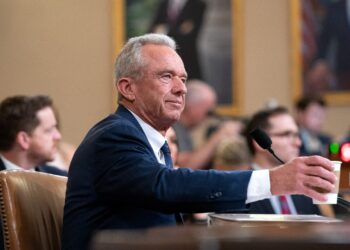
Dr. Schwartz, who holds degrees in biomedical engineering, medicine, public health and law, is a highly qualified, traditional choice for the agency’s director, and has publicly supported vaccines and preventive medicine. Tapping her is the strongest signal yet that the White House is veering away from Health Secretary Robert F. Kennedy Jr.’s vaccine skepticism leading up to the midterms.
Mr. Trump also announced Sean Slovenski, a senior executive at Walmart, as the C.D.C.’s deputy director and chief operating officer; Dr. Jennifer Shuford, health commissioner for Texas, as the agency’s deputy director and chief medical officer; and Dr. Sara Brenner, who briefly served as the Food and Drug Administration’s acting commissioner, as a senior counselor to Mr. Kennedy.
The new team members replace political appointees currently at the agency who are more closely allied with Mr. Kennedy’s vaccine skepticism.
Several other candidates for the job of C.D.C. director were also staunch supporters of vaccines. Dr. Daniel Edney, Mississippi’s state health officer, withdrew his name from consideration, but said the vetting process “was professional and encouraging” and did not include a litmus test for vaccines.
Mr. Kennedy and his allies have sought to reshape the childhood vaccine schedule, rescinding recommendations for several shots and questioning the safety of administering multiple vaccines at once. Last month, a federal judge ruled that Mr. Kennedy and his advisers had made “arbitrary and capricious” changes to the schedule that were not backed up by scientific evidence.
The Trump administration has not appealed the ruling, but the Health Department has taken other steps that might allow Mr. Kennedy to skirt the judge’s decision and reclaim his revisions to vaccine recommendations.
Dr. Schwartz is a Navy officer and a retired rear admiral in the Commissioned Corps of the U.S. Public Health Service. She is also among very few Black women in leadership roles in the second Trump administration. During the coronavirus pandemic, she ran the federal government’s testing program. She was polite but firm when she disagreed with Dr. Brett Giroir, then the assistant secretary of health and her boss, on the program’s specifics.
“She’s not a wallflower, and she’s not afraid to speak truth to power,” recalled Dr. Giroir, a retired four-star admiral and pediatrician.
“She’s really wicked smart, and is not subject to rumor and conspiracy theories,” he added. “I’m very pleased that a person with her experience, credentials and dedication to public health and prevention is a candidate for this position.”
The agency has been without a permanent leader for all but 29 days of the second Trump administration. The White House withdrew its first pick, Dr. Dave Weldon, a Republican and former congressman, when it became clear that his anti-vaccine views would not pass muster with the Senate.
Susan Monarez, the previous permanent director, was confirmed by the Senate in July. About a month later, Mr. Kennedy fired her amid a dispute over vaccine policy and her refusal to accept the recommendations of his handpicked panel of vaccine advisers.
After Dr. Monarez’s ouster, Mr. Kennedy placed Jim O’Neill, a science and biotechnology investor who had no experience in public health, as the agency’s acting director. The administration reorganized the top leadership of the health department in February and moved Mr. O’Neill aside.
The White House then named Dr. Jay Bhattacharya, the director of the National Institutes of Health, as acting director of the C.D.C., but that position ended after the administration failed to choose a new director within 210 days of Dr. Monarez’s exit. Despite the lack of an official title, Dr. Bhattacharya, however, still oversees the C.D.C.’s operations.
Apoorva Mandavilli reports on science and global health for The Times, with a focus on infectious diseases and pandemics and the public health agencies that try to manage them.
The post Trump to Nominate Doctor Who Has Publicly Supported Vaccines as C.D.C. Director appeared first on New York Times.