In Iran and in the Arab world, Pakistani diplomacy has risen to the forefront of efforts to broker peace between the United States and Iran, as the top leaders of Pakistan tried to preserve a shaky cease-fire between the combatants and to offer their country up, again, as the venue for potential peace talks.
Pakistan’s powerful army chief, Field Marshal Asim Munir, arrived in Tehran on Wednesday, becoming the first regional player to visit Iran since the United States and Israel began attacking it on Feb. 28. He carried with him the praise of the White House.
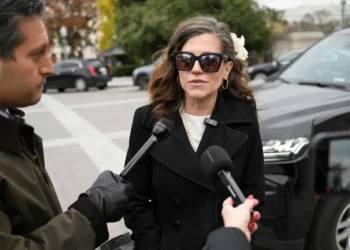
“Pakistanis have been incredible mediators,” Karoline Leavitt, the White House press secretary, said after the army chief’s arrival in Iran. “The president feels it’s important to continue to streamline this communication through the Pakistanis.”
Pakistan helped negotiate a two-week cease-fire last week, scoring a major diplomatic victory. That cease-fire is set to expire on April 21.
Pakistan’s military said Field Marshal Munir was visiting Iran to sustain ongoing peace efforts. On Thursday, Tahir Andrabi, a spokesman for Pakistan’s foreign ministry, said that a second round of talks between the United States and Iran was expected to take place in Islamabad, though he declined to provide a date. Neither U.S. nor Iranian officials have confirmed that, though both sides have said that indirect negotiations were continuing.
A Pakistani official speaking on condition of anonymity to discuss ongoing negotiations said Field Marshal Munir was still in Iran as of Thursday morning local time.
Gen. Muhammad Saeed, a former Pakistani chief of general staff and former deputy to the field marshal, said: “Pakistan is helping with an exit strategy that must be a respectable outcome for both” countries.
The diplomatic push is a pivot for Pakistan, which has spent more time as a combatant over the past year in its own conflicts than as a peace broker.
When the United States and Israel began their war in Iran, Pakistan was conducting a series of airstrikes against another neighbor, Afghanistan. They have stopped for now, but only after the deaths of hundreds of civilians in Afghanistan. And last spring, Pakistan and India were embroiled in a tense military conflict that ended after a diplomatic push by the United States.
After President Trump took credit for ending that war, Indian officials bristled, but Pakistani officials drew closer to the White House. Field Marshal Munir personally met with Mr. Trump twice last year, and the American president has referred to him as his “favorite field marshal.”
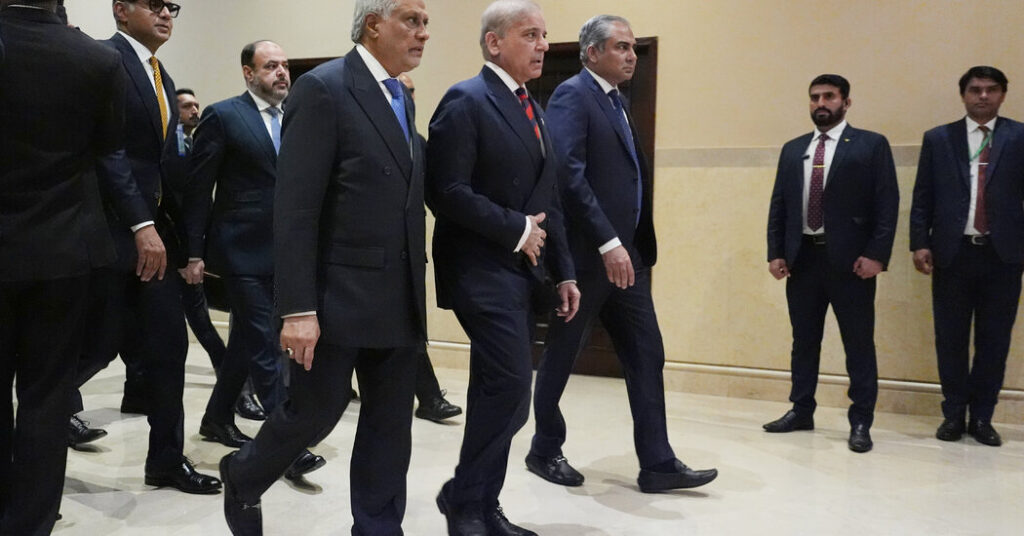
While Field Marshal Munir was traveling to Iran, Pakistan’s prime minister, Shehbaz Sharif, met with Crown Prince Mohammed bin Salman of Saudi Arabia on Wednesday. Their countries are allies and have a mutual defense agreement that was a potential source of tension between Pakistan and Iran, after Iranian forces began firing missiles at the Saudis and other Gulf countries last month.
Asif Durrani, a former Pakistani ambassador to Iran, said that unlike other countries involved in the war, Pakistan didn’t have major conflicts with Iran. On Saturday, Mr. Sharif greeted Iran’s Parliament speaker, Mohammad Bagher Ghalibaf, in Islamabad with a warm embrace.
“Iran would not trust any other country,” Mr. Durrani said about Pakistan’s role as a mediator between the United States and Iran. “Pakistan is the only candidate.”
Elian Peltier is The Times’s bureau chief for Pakistan and Afghanistan, based in Islamabad.
The post Pakistan Looks to Play Peacemaker Between U.S. and Iran, Again appeared first on New York Times.