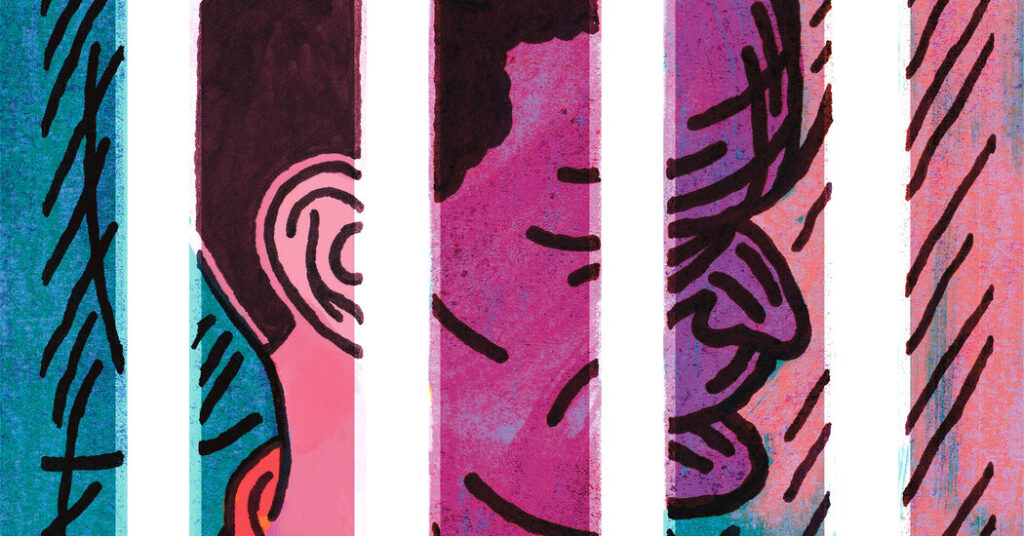
I came of age as a prosecutor at the onset of the most punitive period in modern American history. It was the 1970s in Chicago and President Richard Nixon spoke often of the urgency of getting drugs off our streets. Crime rates were high. Communities were under strain.
When prosecuting cases, my colleagues and I treated harsh prison sentences as common sense. We believed people who committed serious crimes would remain dangerous for decades. We believed long prison terms protected the public. The political and legal culture rewarded severity. Long sentences felt not only justified, but necessary.
We were wrong. I have seen people change behind bars in ways the criminal justice system did not anticipate. Some of the people I prosecuted decades ago remain in prison today. They are in their 60s and 70s, and their health has declined. They move slowly. Whatever risk these prisoners once posed has changed with time.
When I started out as a prosecutor, there were roughly 200,000 people in prison in the United States. Today, there are over one million. The number of elderly people behind bars has also risen rapidly over the past several decades, a trend fueled by tough-on-crime sentencing practices that I helped perpetuate.
Research shows that the older someone is, the less likely he is to commit crimes. It is exceedingly rare for elderly prisoners who are released back into society to reoffend. And yet a generation of elderly men and women who were sentenced decades ago under old assumptions remain behind bars.
I see now that sentences can be much harsher than what is needed to protect the public. I have come to believe that a system that cannot reassess its own decisions risks losing sight of its purpose: to hold people accountable, to protect the public and to ensure that punishment remains fair and proportionate over time.
I have been reflecting on this with renewed urgency in recent weeks because Larry Hoover, a former gang leader whom I first encountered as a prosecutor, has asked Gov. JB Pritzker of Illinois for clemency after serving over five decades in prison. Mr. Hoover was convicted in 1973 in state court of murder for the killing of William Young, a local drug dealer, and was sentenced to up to 200 years in prison. In 1997, he was convicted in federal court of drug conspiracy charges after prosecutors claimed that he was running a gang from prison. (President Trump commuted Mr. Hoover’s federal life sentences last year.)
I did not prosecute Mr. Hoover’s murder case, but I was a young prosecutor in the office that did at the time. In 1978, I prosecuted Mr. Hoover in the aftermath of a prison riot before his charges were dismissed once it became clear that they were not supported by evidence. Years later, as a lawyer in private practice, I represented him in parole proceedings. Today, I am advising Mr. Hoover’s attorney on his clemency petition. Seeing his case from both sides has given me perspective I did not have earlier in my career.
The Larry Hoover who entered prison in his early 20s no longer exists. In his place is a 75-year-old who has lived longer inside prison walls than outside them. He has suffered heart attacks while in prison and has been worn down by years of solitary confinement. It is clear to me that Mr. Hoover has reflected deeply about his past and has accepted responsibility for the harm that he has caused. He no longer poses a threat.
Clemency for Mr. Hoover will inevitably be caricatured as softness. It is not. It is a judgment about whether the purposes of punishment have already been fulfilled. Mercy in Mr. Hoover’s case would not be an invitation to ignore or erase the past, but a recognition that justice evolves over time.
Serious crimes deserve serious consequences. The question is whether punishment imposed decades ago continues to serve the purposes it was meant to serve today. Other countries have taken an approach that better acknowledges that justice must account for the fact that people change. In much of Europe, prison terms for even serious crimes are generally measured in years or decades, not lifetimes.
The United States criminal justice system needs to grow more comfortable with asking when punishment has done enough. Governors should address this by granting clemency to elderly prisoners who clearly no longer pose a threat. Prison officials, parole boards and courts should make better use of compassionate release laws, which allow elderly or terminally ill inmates to qualify for parole. Parole boards should give greater consideration to age when they assess who should be released from prison.
For elderly prisoners like Larry Hoover, justice does not require more prison. It requires the courage for all of us to say enough.
Algis Baliunas, a criminal defense lawyer, was a prosecutor at the Cook County State’s Attorney’s Office from 1973 to 1978.
The Times is committed to publishing a diversity of letters to the editor. We’d like to hear what you think about this or any of our articles. Here are some tips. And here’s our email: [email protected].
Follow the New York Times Opinion section on Facebook, Instagram, TikTok, Bluesky, WhatsApp and Threads.
The post I Was a Tough-on-Crime Prosecutor. This Is What I Got Wrong. appeared first on New York Times.