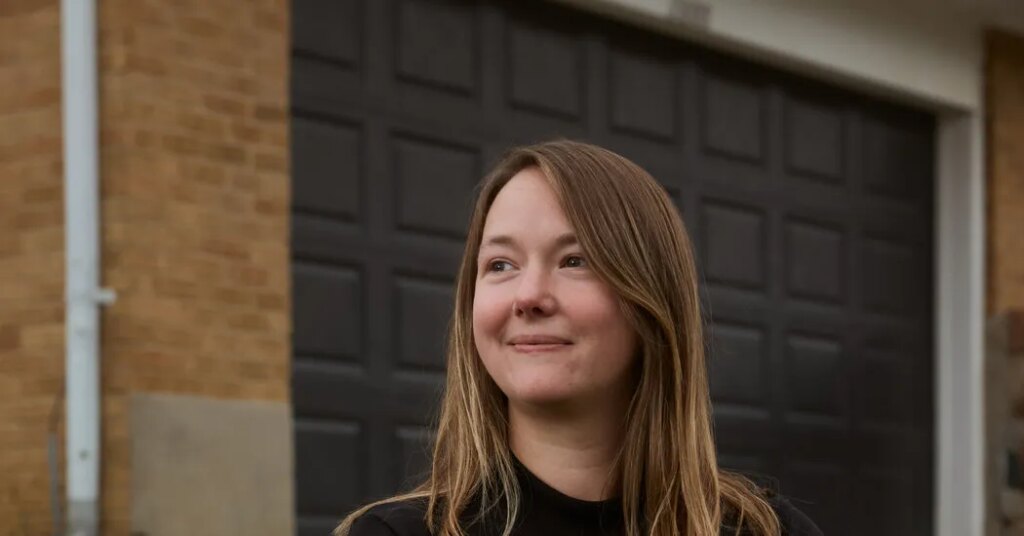
When Stephanie Malone relocated her family to Clover, S.C., last year for work, she felt the tug of nostalgia for her previous home in Miamisburg, Ohio. It was the first house she had ever bought, and she thought it would be her forever home.
Plus, she had a 3.6 percent mortgage rate on her Miamisburg home that she was unwilling to give up. So instead of selling, Ms. Malone, a payroll manager and mother of three, became a landlord.
She and her husband hired a property manager to find a renter, which offered them a level of fraud protection. The rest, they handle themselves. “I organize everything; my husband is the handyman,” Ms. Malone said. The arrangement allows them to pay the mortgage on the Miamisburg home and earn a little extra income.
Ms. Malone is not the only homeowner to look for a tenant instead of a buyer. Lawrence Yun, the chief economist at the National Association of Realtors, a trade group, estimates that about 200,000 homeowners in the United States have become “accidental landlords” in recent years, or homeowners who originally intended to sell but rented their homes instead.
Sales of existing homes slumped in October to a 16-year low, but single-family rentals grew by roughly 200,000 from 2022 to 2024, according to census data, a figure that is backed up by NAR’s survey on home buying. “Two separate sets of data are implying that we have an ‘accidental landlord’ situation,” Mr. Yun said.
In addition, Americans are sitting on more than $35 trillion in home equity, according to the Federal Reserve Bank of St. Louis, and that puts them in a strong financial position, he said.
Homeowners say the rental income helps them cover their mortgage payments, but housing experts worry that trend could be keeping homes off the market, compounding the affordability challenges facing Americans. “Because people are still holding on to their homes,” said Brent Busch, a mortgage loan officer in Minnesota, “we’ve got a little bit of a lack of supply.”
Estimates of the U.S. housing shortage range from roughly two million to 10 million homes, depending on the methodology used by economists.
“Accidental landlords” are not a new trend. In the past, they were primarily homeowners who could not sell for financial reasons. Now, a growing number of them are unwilling to sell because they want to hang on to their ultralow mortgage rates.
The average rate on a 30-year, fixed-rate mortgage is 7.28 percent, according to the mortgage finance giant Freddie Mac. But during the pandemic, that rate dropped below 3 percent, drawing buyers to the market. Nearly half of the nation’s homeowners still have a mortgage rate below 4 percent, according to Realtor.com, a real estate marketplace.
“The low interest rate from the pandemic was hard to give up,” said Anthony Omosule, a 41-year-old health care consultant in St. Louis who landed a 3 percent mortgage. When it came time to move his wife and two children to a larger home, he decided to keep the original home and hire a property manager to maintain it. But costs can add up: The middleman takes a 10 percent cut, and repairs still have to be made.
“What we’re hoping for is, at the end of Year 1, money won’t be coming out of our pocket to fix the house and the tenant is helping to pay for the mortgage and we have some equity in it,” he said.
Becoming a landlord is not for everyone, said Jessica Benge, a mortgage broker in Cincinnati. More homeowners are curious, only to opt out after learning they would have to juggle home improvements and unruly tenants.
“You have to have an appetite for it,” she said. “Can you kick people out?”
Ms. Benge recommends testing the waters with a short-term contract with, say, a traveling nurse. “They are on 13-week contracts,” she said. “And they are never there.”
Having a renter provides a steady source of income for the Malones at a time of economic uncertainty: Ms. Malone’s husband, who works in commercial flooring, wants to go back to school. “It gave us an extra cushion,” Ms. Malone said.
She added that her experience was positive, but she plans to put the Miamisburg home on the market next year after the tenant moves out.
Some homeowners who are not ready to move end up staying put and renting out their new home instead.
Cindy Nelson, a 64-year-old graphic designer who lives in Takoma Park, Md., bought a new home in Lancaster, Pa., two years ago as part of her retirement plan, but she still had a few years left to work. “I wasn’t planning on renting it,” she said.
She found that short-term contracts were lucrative, but the constant vetting became a burden, so she signed a deal with a long-term renter, giving up some revenue for stability.
Now Ms. Nelson says she can better manage her retirement. “Whenever I decide to pull the trigger on retiring,” she said, “I should have some extra money in the end.”
The post One Byproduct of a Challenging Housing Market? Accidental Landlords. appeared first on New York Times.