Editor’s Note: David Hume Kennerly, who served as chief White House photographer for President Gerald Ford, has spent decades working as a photojournalist, covering everyday life, politics, wars, and other pivotal world events, winning a Pulitzer Prize by age 25. Below are excerpts from his upcoming book, In The Room: 60 Years On The Front Lines of History, a collection of his most iconic images.
To figure out where we’re going, we have to understand the road that brought us to where we are. I’ve been walking along that path for more than 60 years, a camera slung over my shoulder, driven by a sense of curiosity. I have watched history through a viewfinder and documented what I saw every step of the way. In the Room gathers moments that burned our politics and culture into a collective memory. It isn’t meant to be a definitive history of the United States, just the record of one guy who kept showing up with a camera, and sometimes a flak jacket—a guy who has tried to make sense of it all one frame at a time.
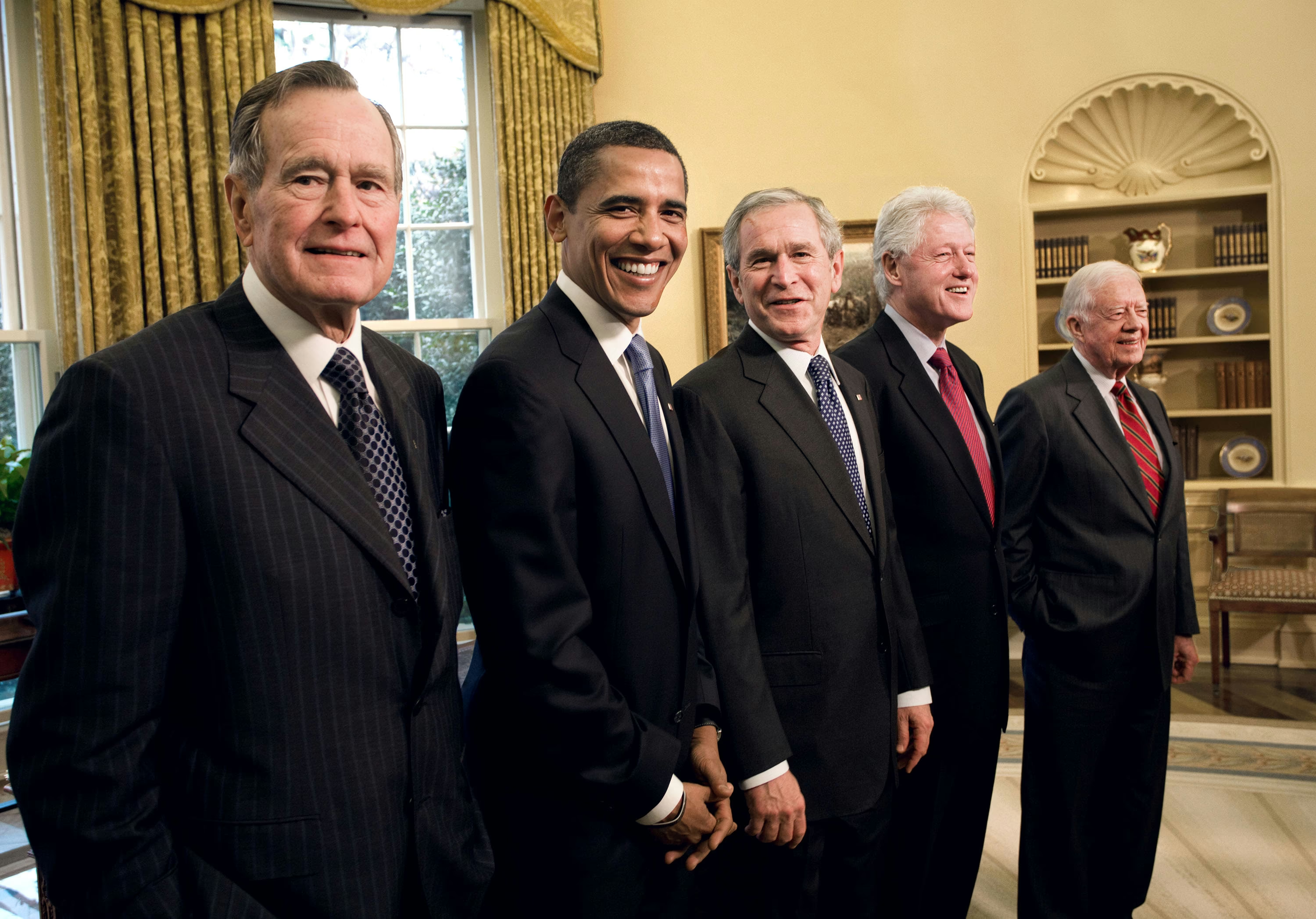
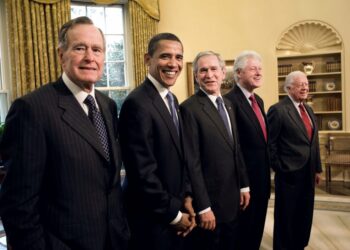
Meeting of Five Presidents. White House, January 7, 2009. President George W. Bush assembled the “president’s club” in the Oval Office to meet President-elect Barack Obama on January 7, about two weeks before he was sworn in. The club included his dad, George H. W. Bush; Jimmy Carter; and Bill Clinton. This was the fifth time I had photographed five presidents together. At this moment, Bush is saying to Obama, “There’s Kennerly. Do you know Kennerly?” The president-elect had no idea who I was but smiled anyway. Part of the Obama charm.
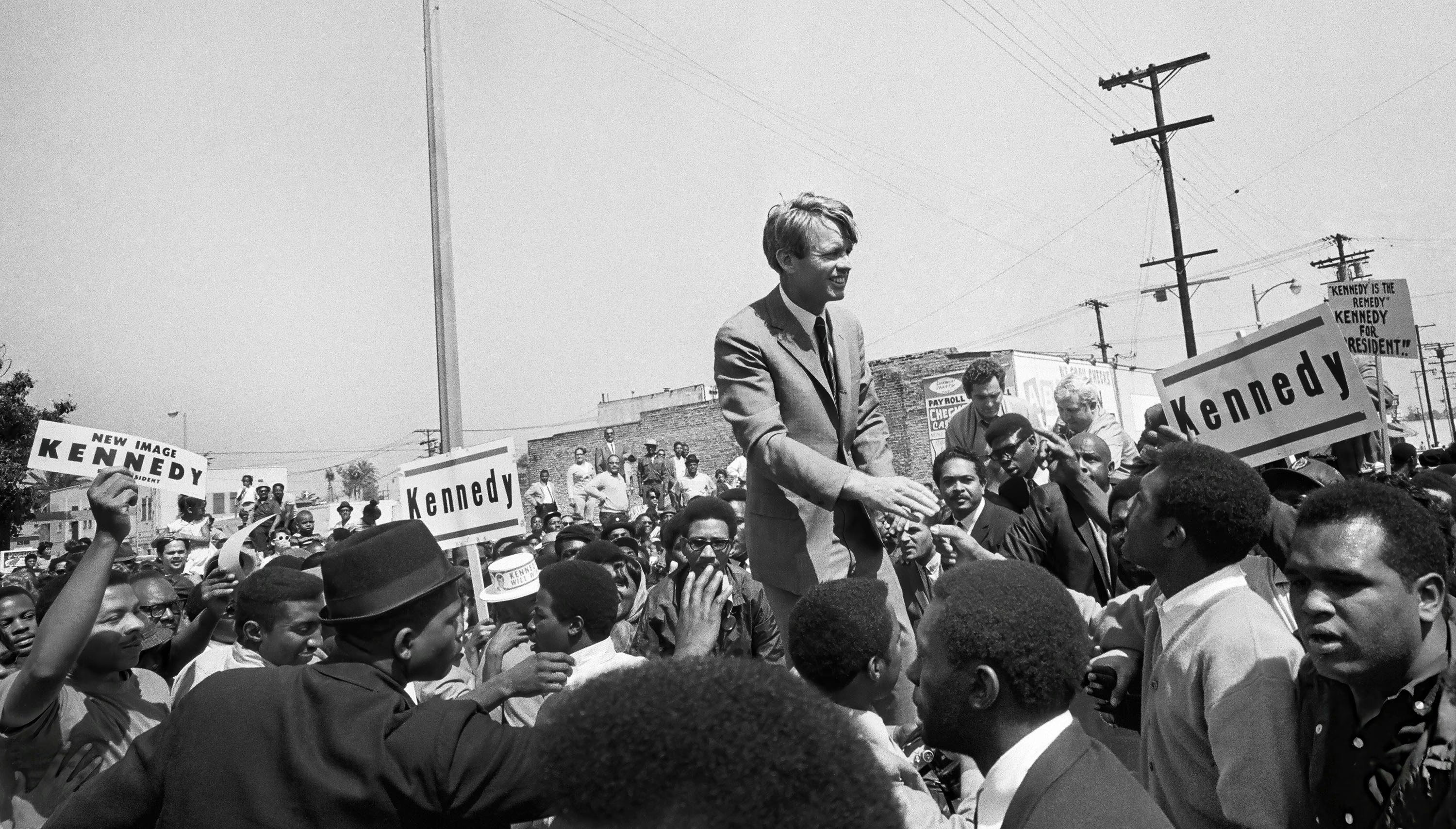
Los Angeles, 1968. Senator Robert F. Kennedy campaigns in Watts, Los Angeles, one day before the California primary and his subsequent assassination. After the Watts riots in 1965, Kennedy’s appearance there symbolized his commitment to addressing the struggles of inner-city communities as he offered hope to the residents. Ninety percent of the Black population in California voted for RFK in the 1968 primary election.
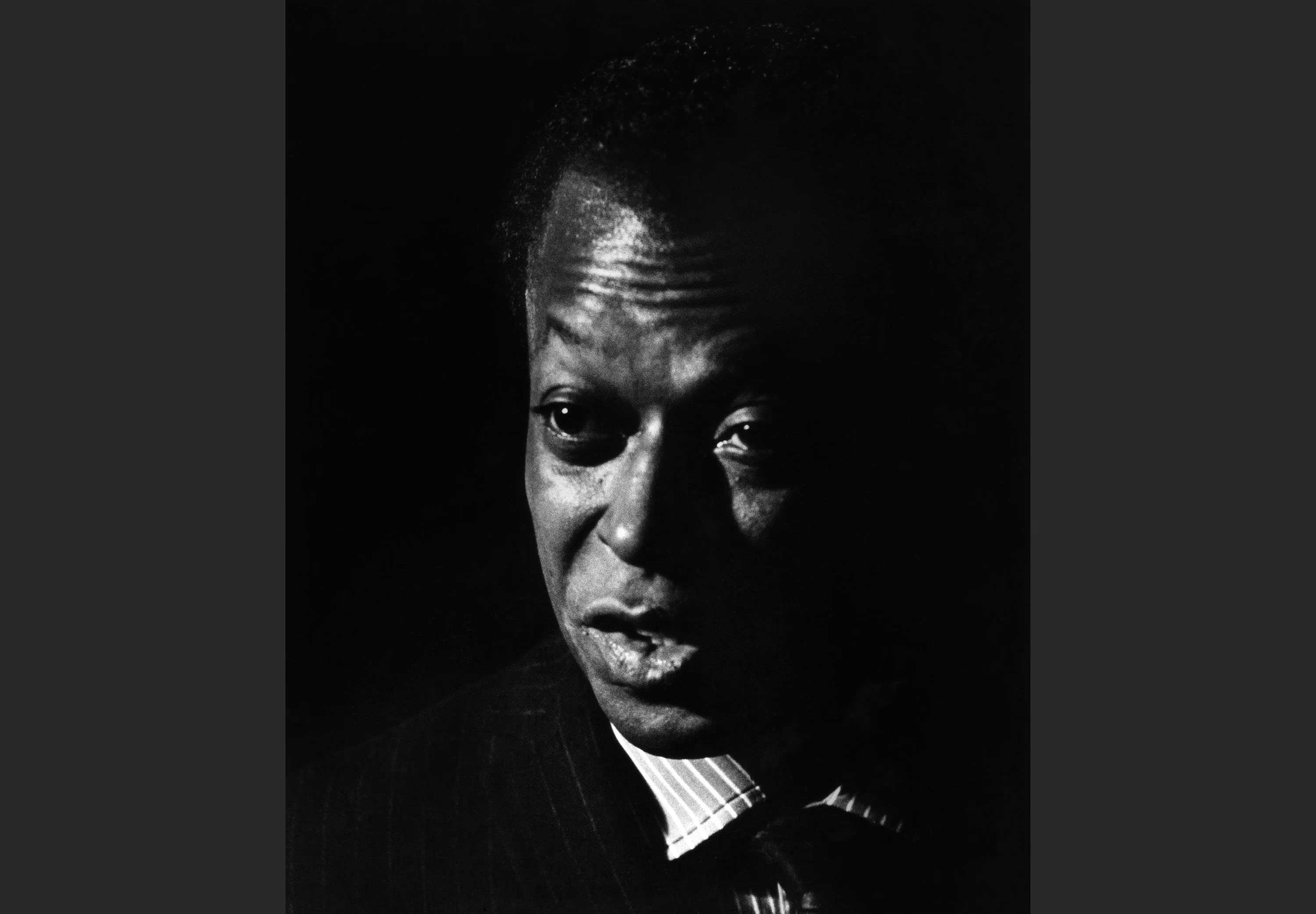
Miles Davis. Portland, Oregon, 1966. As both the youngest and newest member of the photo staff at Oregon’s biggest afternoon paper, I worked nights, a shift that allowed me to photograph some fascinating people. Among them was Miles Davis, one of the most important musicians of the 20th century. I was assigned to photograph him at the Oriental Theatre in Portland. I made my way to his dressing room without interference—until I ran into him. He was alone, horn in hand. I introduced myself.
“Get the f**k out of here,” he growled. Now that was a response I hadn’t heard up to that point in my fledgling career. “What?” I said.
“You heard me. Get lost,” he said. My career passed before my eyes, which didn’t take that long.
“But I’ve got to get a picture of you, or I’ll get fired,” I stammered.
The exasperated Davis said, “All right, boy. One shot, then out.” It was dark, and I didn’t have my flash, so I asked him to stand by a bare light bulb dangling from the ceiling. Click. One frame. I started to take another, thinking an artist-to-artist relationship was forming.
“That’s it. Now f**k off.” He walked away. Photo session and relationship over. One pic in the can. It better be good, I told myself. I then sneaked into the auditorium and grabbed a couple shots of him at work with the bassist Richard Davis and Herbie Hancock on the piano. Miles Davis was amazing. He could play almost as well as he could swear.
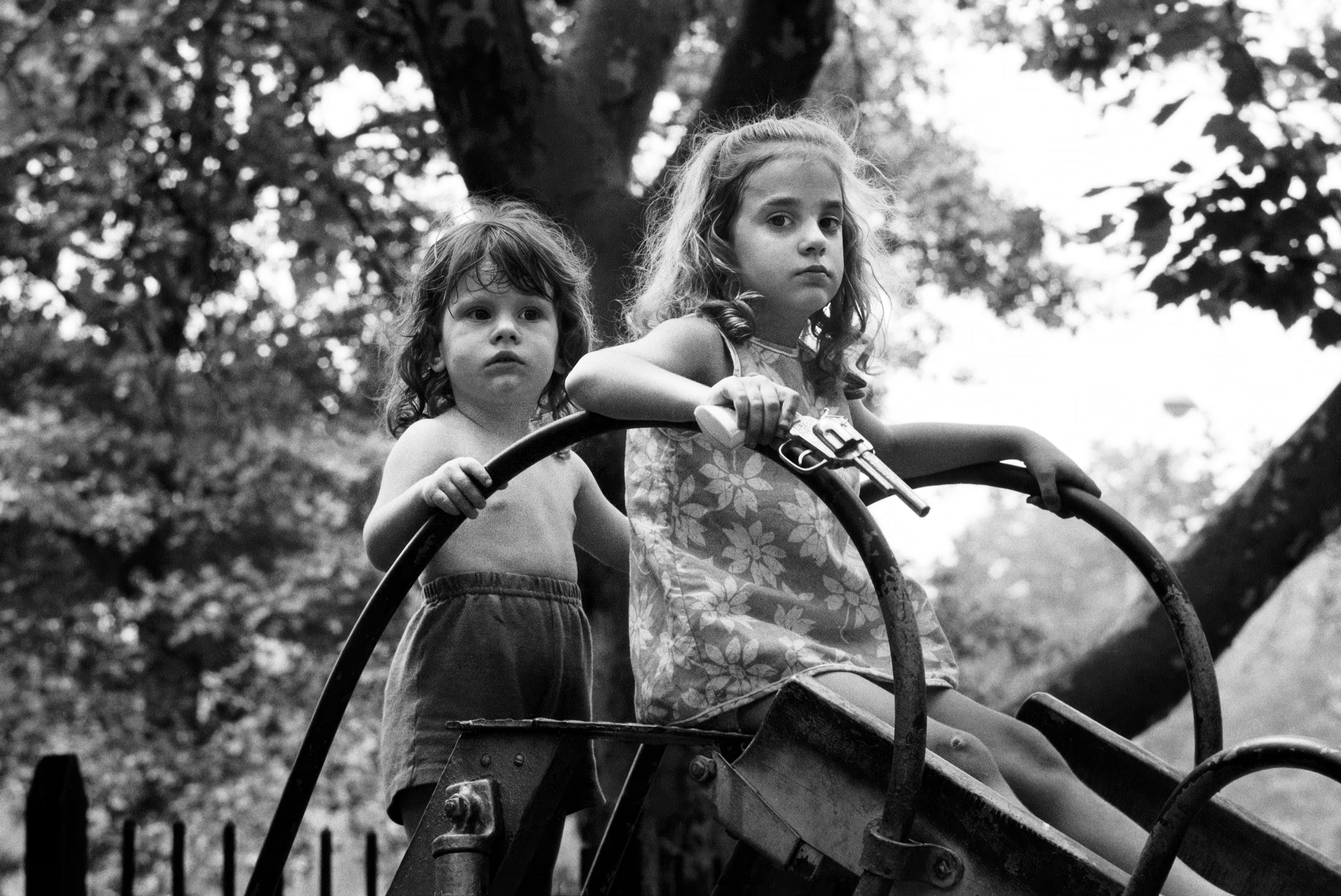
Children at Play. New York City, 1969. The street photographer in me was compelled to memorialize this moment. You don’t see kids playing with toy guns much these days, but back then it wasn’t unusual to see a child with a gun, hence the fun photo of a little Brooklyn Annie Oakley.
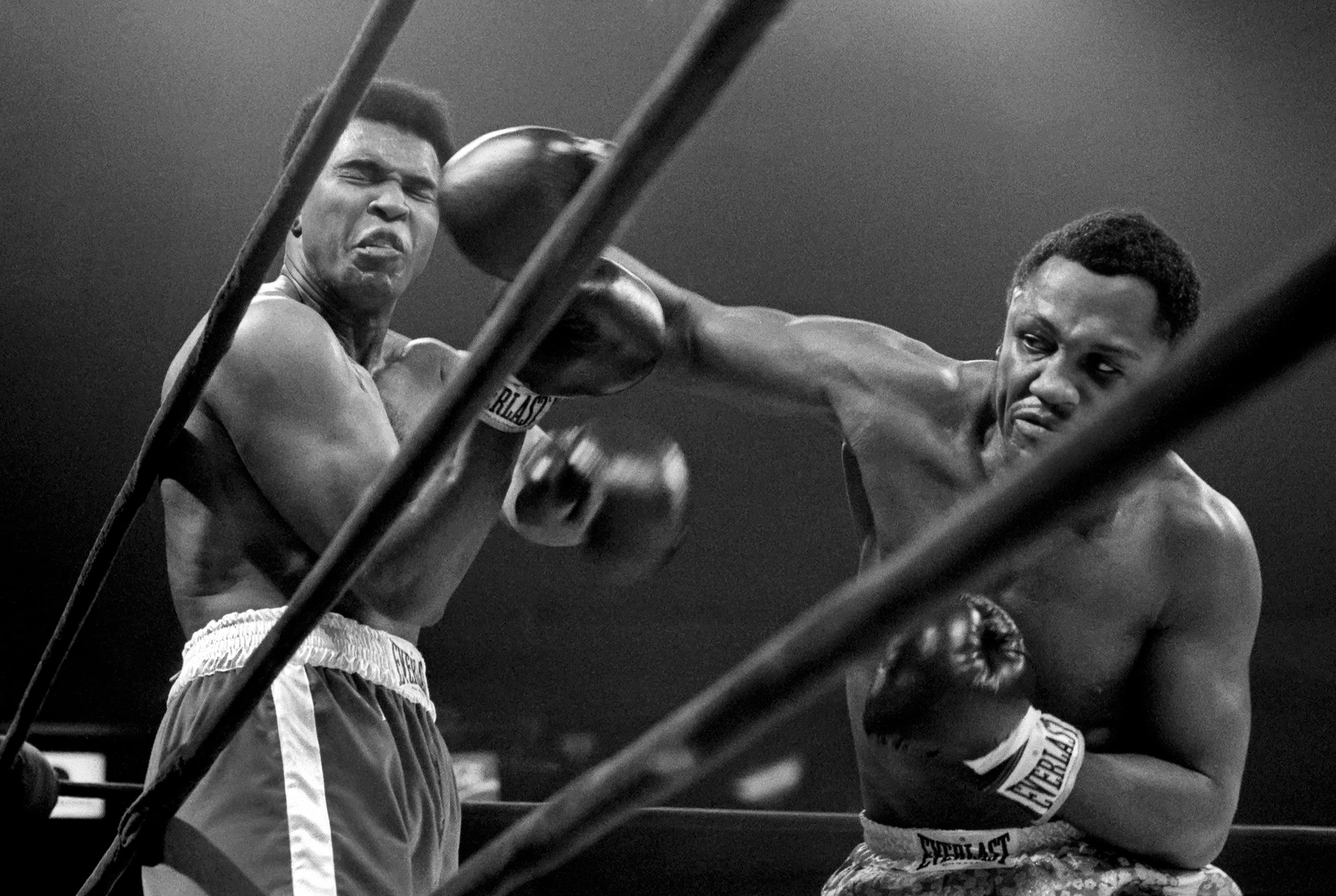
Ali-Frazier Fight. New York City, March 8, 1971. In the final months of 1970, I hounded my bosses at UPI to send me to Vietnam to cover the war; they finally agreed to transfer me to their Saigon bureau in early 1971. As a parting gift—perhaps because they thought I wasn’t going to make it back alive—they gave me a ringside seat at Madison Square Garden to cover the “fight of the century” between Muhammad Ali and Joe Frazier. The fight was the most anticipated and publicized sporting event in history, and it is still considered the biggest boxing match of all time.
That night at the Garden I was on fire. I was squeezed among three ace photographers as we all leaned over the apron of the ring, trying to shoot under the ropes. In the fifth round I froze the microsecond when Frazier drove a right hook into Ali’s head and his glove ricocheted off his face (left). Ali’s expression was contorted by the force of Frazier’s blow, a lightning-quick shot from him—and from me to catch it.
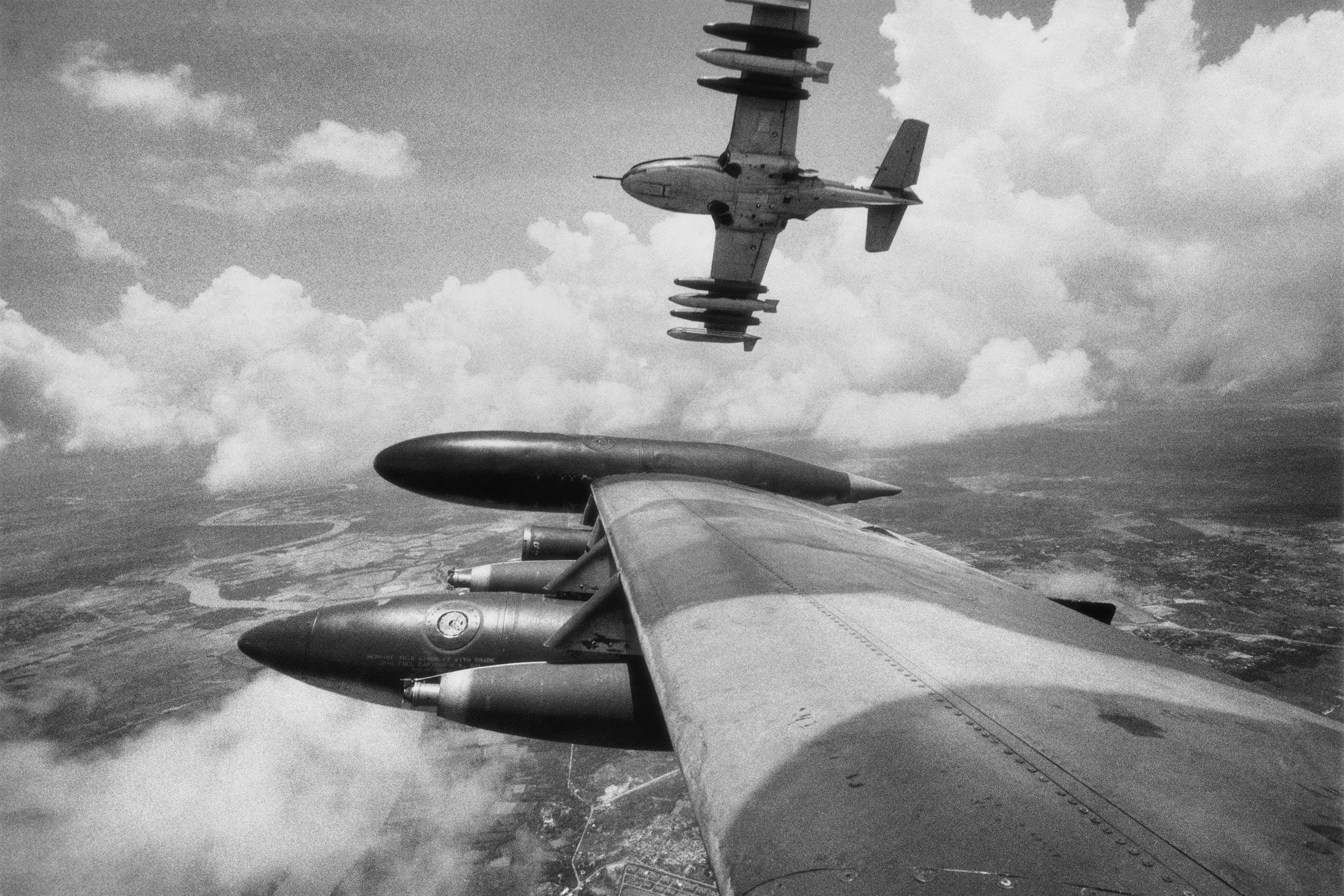
Air Combat Mission. South Vietnam, 1972. I made this photo from a U.S. Marine A-37 Dragonfly on a combat mission in the Mekong Delta. The plane was developed to provide air support for soldiers on the ground who were in close contact with the enemy. It was like flying in a zippy two-seat race car—except that cars aren’t loaded with bombs.
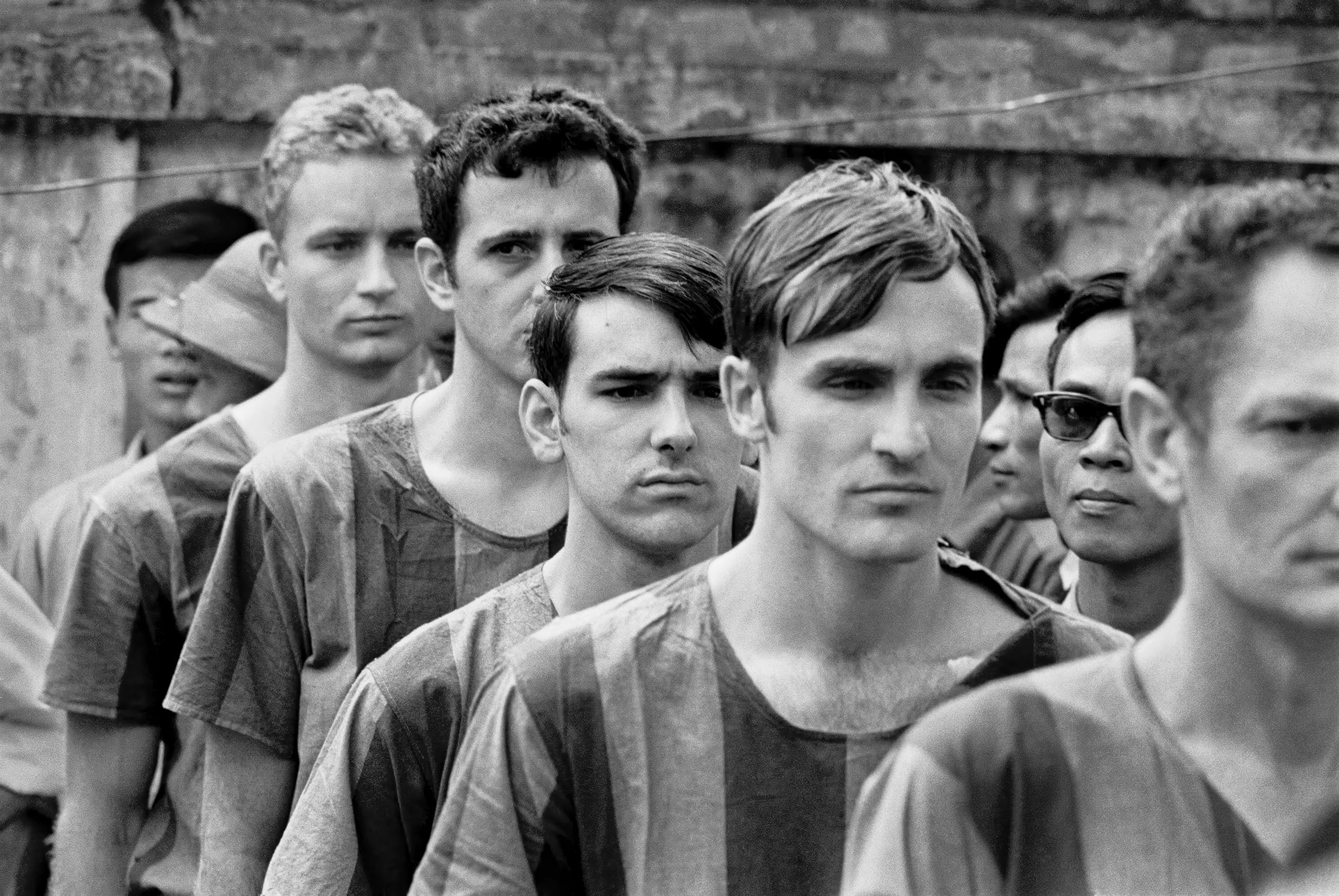
American POW Release. Hanoi, North Vietnam, 1973. One of the most moving days of my Vietnam tenure was going to Hanoi for the return of the last American POWs. The facility, called the “Plantation,” was on the outskirts of the city and appeared to be a propaganda showcase in good repair—not to be confused with the “Hanoi Hilton,” an old French jail where John McCain and others were tortured and which felt like a dungeon. I visited that place on one of my later trips to Hanoi; by comparison, the Plantation was a Club Med.
I made a photo of several prisoners who were soon to be released, still dressed in striped pajamas and lined up on what appeared to be a basketball court, and a Vietnamese jailer in knockoff Ray-Bans walking among them.
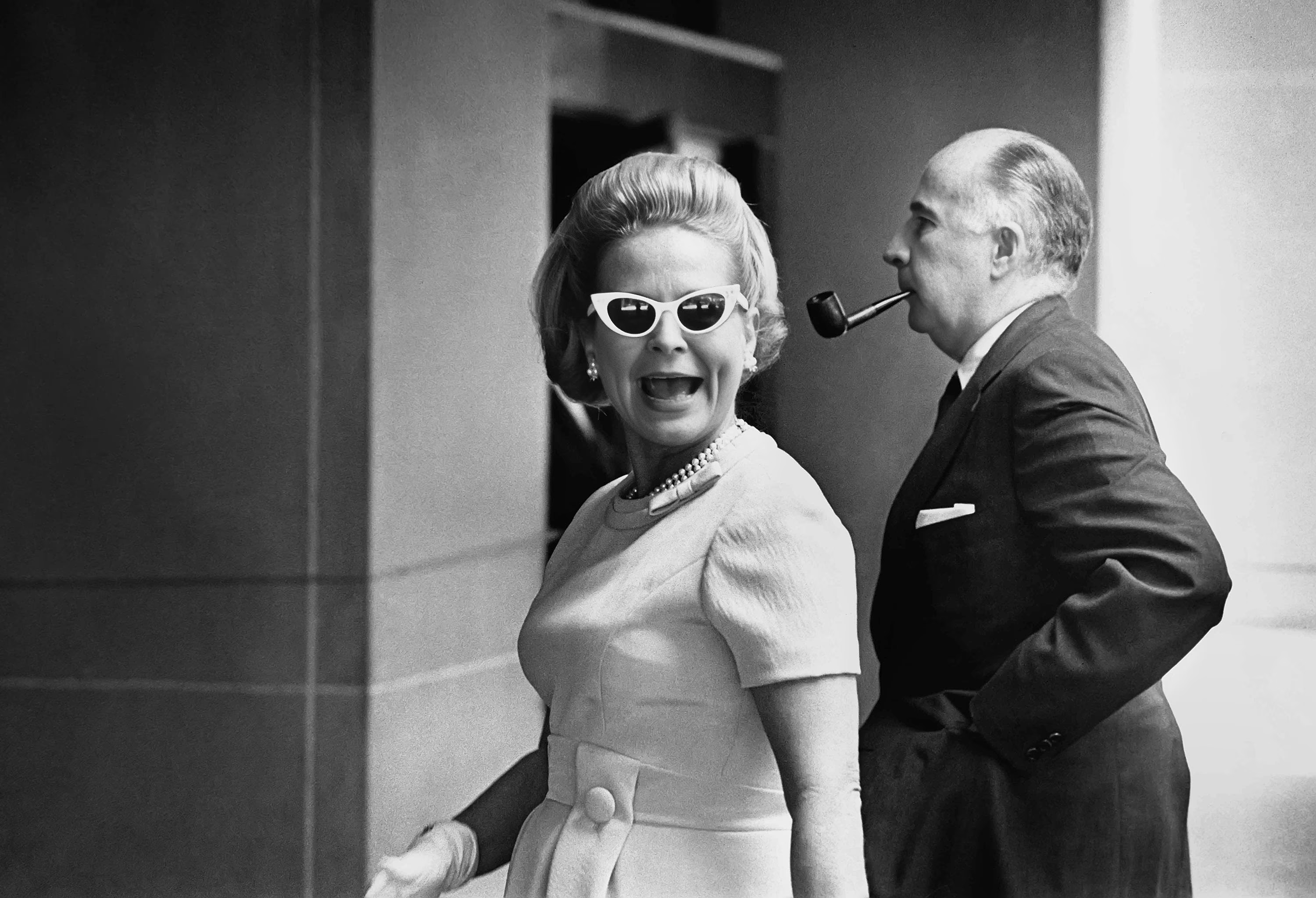
Martha and John Mitchell. Washington, D.C., 1970. This image of the Washington socialite Martha Mitchell was John F. Kennedy Jr.’s favorite political photo. Martha was the wife of then–Attorney General John Mitchell, who was also the chairman of President Richard Nixon’s 1968 and 1972 campaigns. Martha was known as “the Mouth of the South,” a moniker she acquired because she couldn’t help talking to the press, often giving away her husband’s secrets. Nixon later blamed her for his troubles. He told David Frost in an interview, “If it hadn’t been for Martha, there’d have been no Watergate.”
John Mitchell left Martha in 1973, a year after the Watergate scandal broke. He was convicted of conspiracy, obstruction of justice, and perjury in 1975 and spent 19 months in prison. “It could have been a hell of a lot worse,” he said. “They could have sentenced me to spend the rest of my life with Martha.”
Maligned and ridiculed as she was, Martha’s story gave rise to what’s now known as the “Martha Mitchell effect,” when a person’s accurate account of real, usually extraordinary events is dismissed as paranoia by medical professionals. Her “delusions” of being drugged and held prisoner turned out to be true.
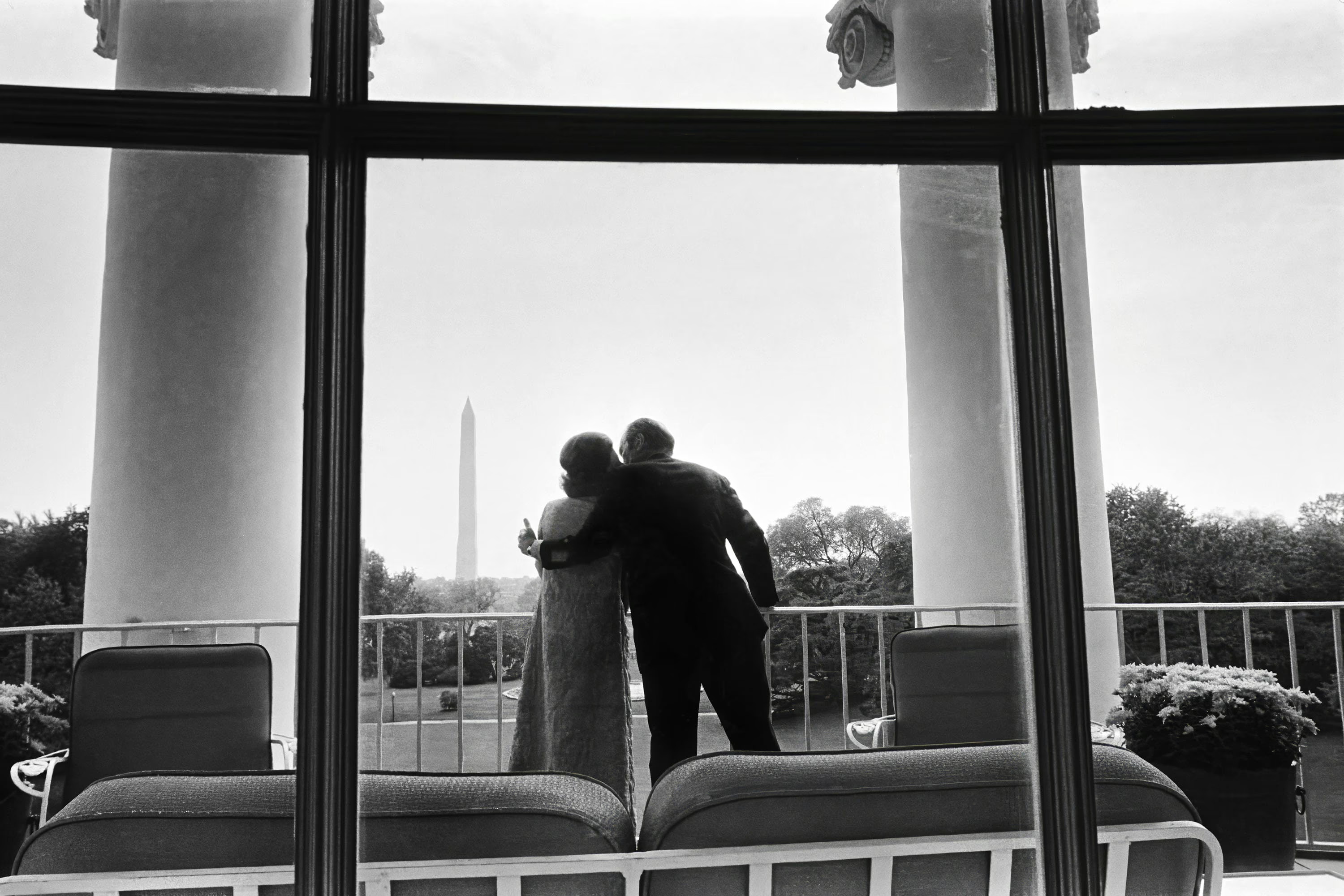
President and Mrs. Ford. White House, 1974. On the day Mrs. Ford was released from the hospital, I made this photo of her and the president on the Truman Balcony, as he gave her a kiss and a hug. They had a warm and loving relationship, but being old-fashioned, they rarely engaged in public displays of affection. President Gerald Ford would always get a little embarrassed if Mrs. Ford hugged him when others were around, which she thought was amusing and endearing. I was glad to catch this private scene through the window without interrupting the moment.
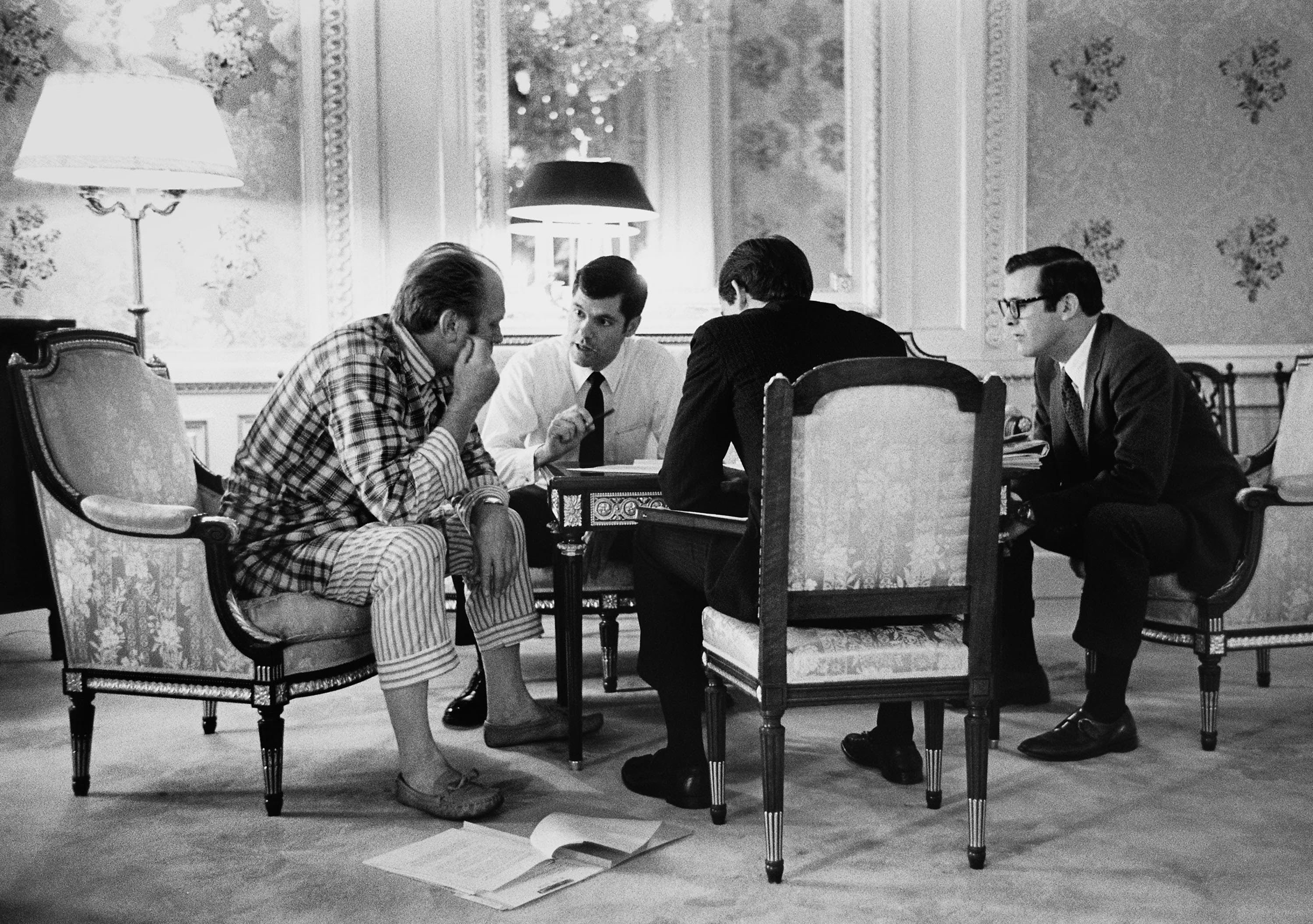
President Ford and His Advisors. Tokyo, 1974. During a state visit to Japan, President Gerald Ford leads an early morning meeting in his pajamas and moccasins in the ornate Akasaka Palace. He confers with his more buttoned-down staffers (from left to right): his military aide Steve Todd, his personal aide Terry O’Donnell, and Chief of Staff Donald Rumsfeld.
Although the president didn’t know I was making this picture, he was fine with it after he saw the photo. He did comment, “Maybe Betty is right. I should get a new bathrobe.” President Ford was a man comfortable in his own skin.
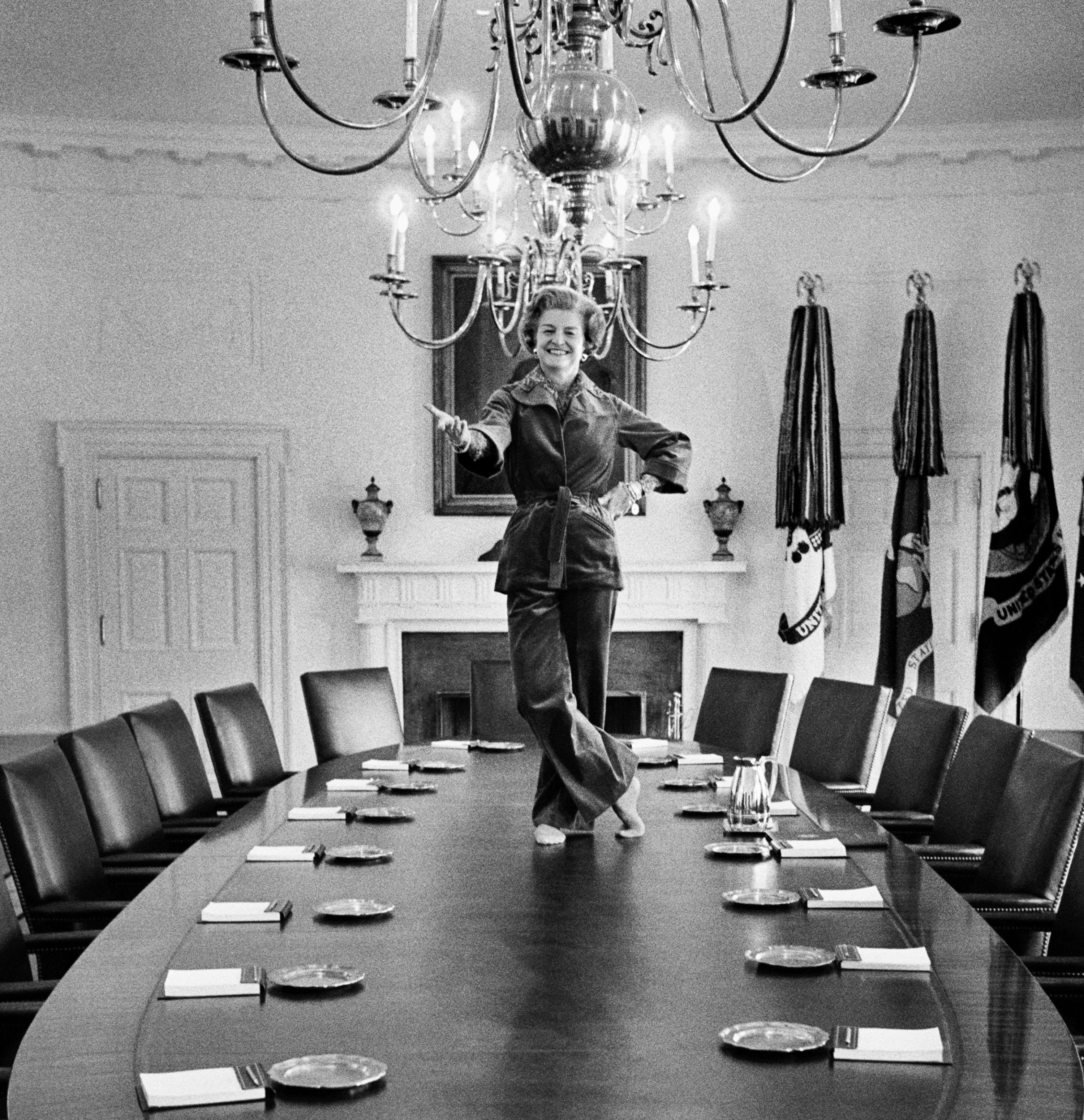
First Lady Betty Ford. White House, 1977. On her last full day as first lady, Mrs. Ford walked around the West Wing, saying goodbye to members of the staff. As we passed the empty Cabinet room, she stopped, a mischievous twinkle in her eye. Historically, that room had been inhabited mostly by white men sitting around its large table. Mrs. Ford decided she was going to symbolically plant a feminist flag right in the middle of that male domain.
“I always wanted to dance on the Cabinet Room table,” said the first lady. Her staff thought she was kidding, but I didn’t. The former Martha Graham dancer took her shoes off, leaped up on that famous table, and struck a pose. I captured the history-making moment. When Mrs. Ford jumped off, she brushed her hands together and said, “I think that’ll do it for this place.”
The next day Jimmy Carter was sworn in as president, and the Fords returned to private life.
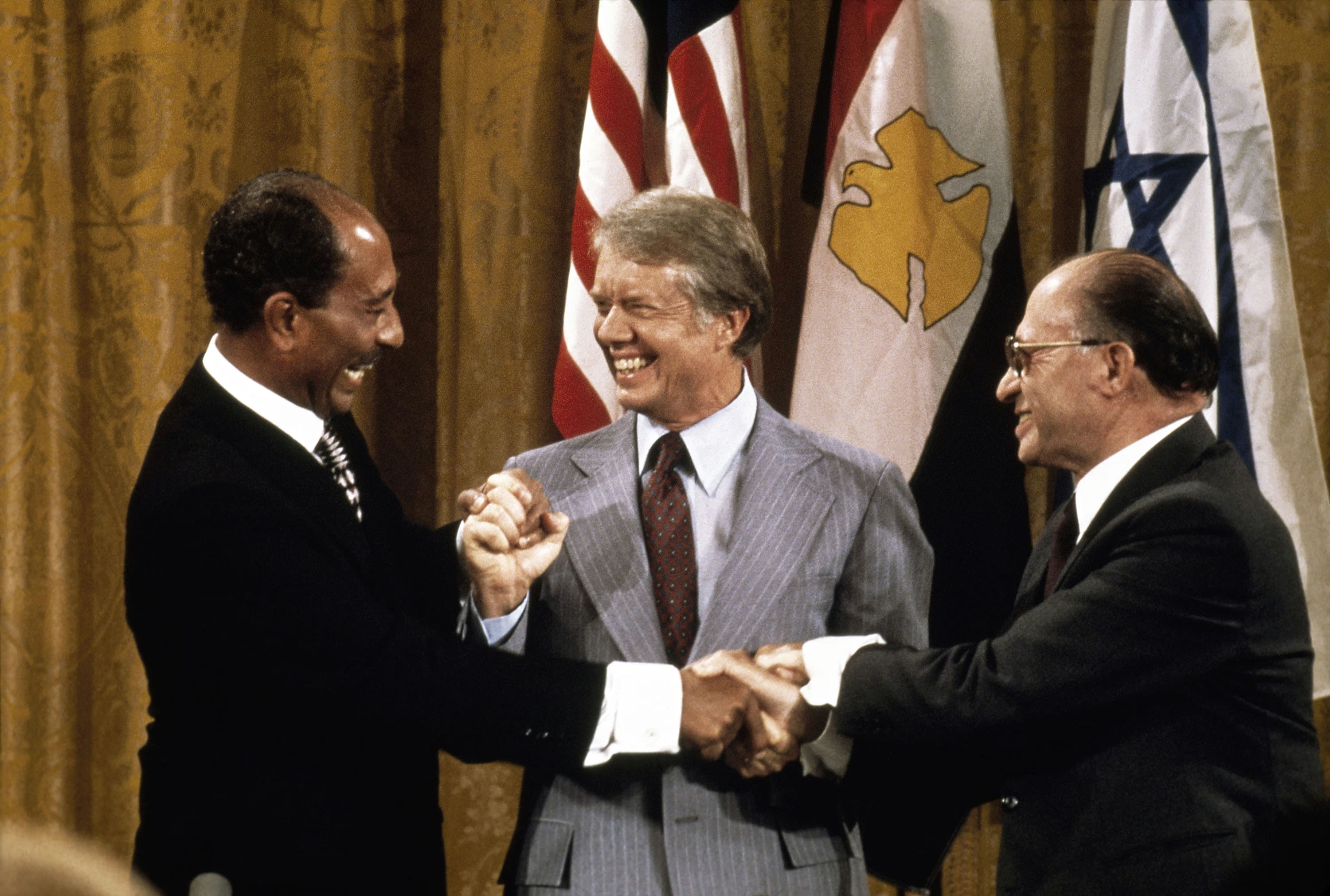
Egyptian President Anwar Sadat, President Jimmy Carter, and Israeli Prime Minister Menachem Begin celebrate the Camp David Accords in the East Room of the White House, 1978.
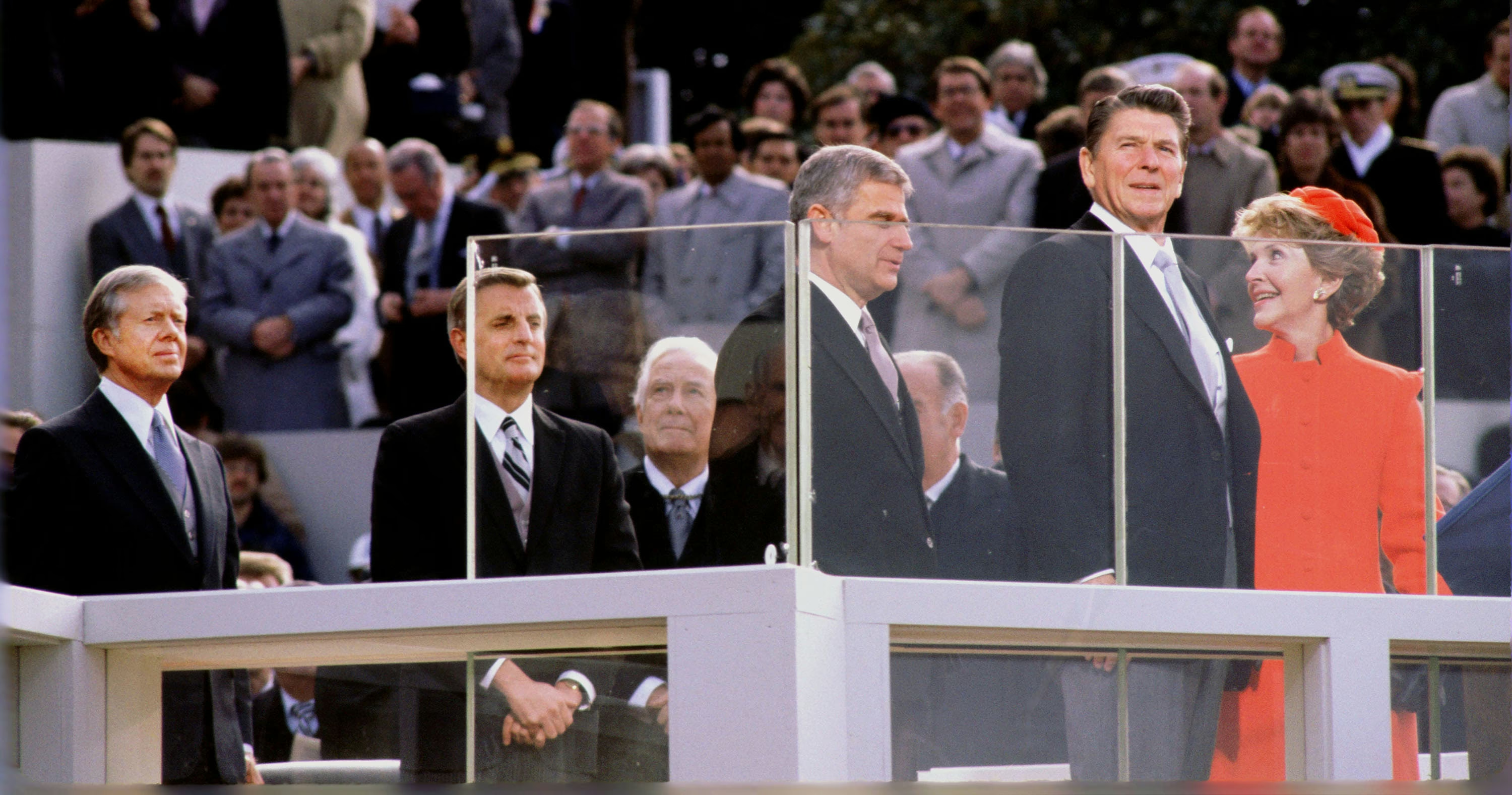
Inauguration of President Reagan. January 20, 1981. President Ronald Reagan and First Lady Nancy Reagan acknowledge the inaugural crowd. Behind them are (left to right) former President Jimmy Carter, former Vice President Walter Mondale, Chief Justice of the Supreme Court Warren Burger, and Senator Mark Hatfield, who was chairman of the Joint Congressional Committee on Inaugural Ceremonies. This was the first presidential inauguration on the West Front of the U.S. Capitol, where every outdoor inauguration since has been held.
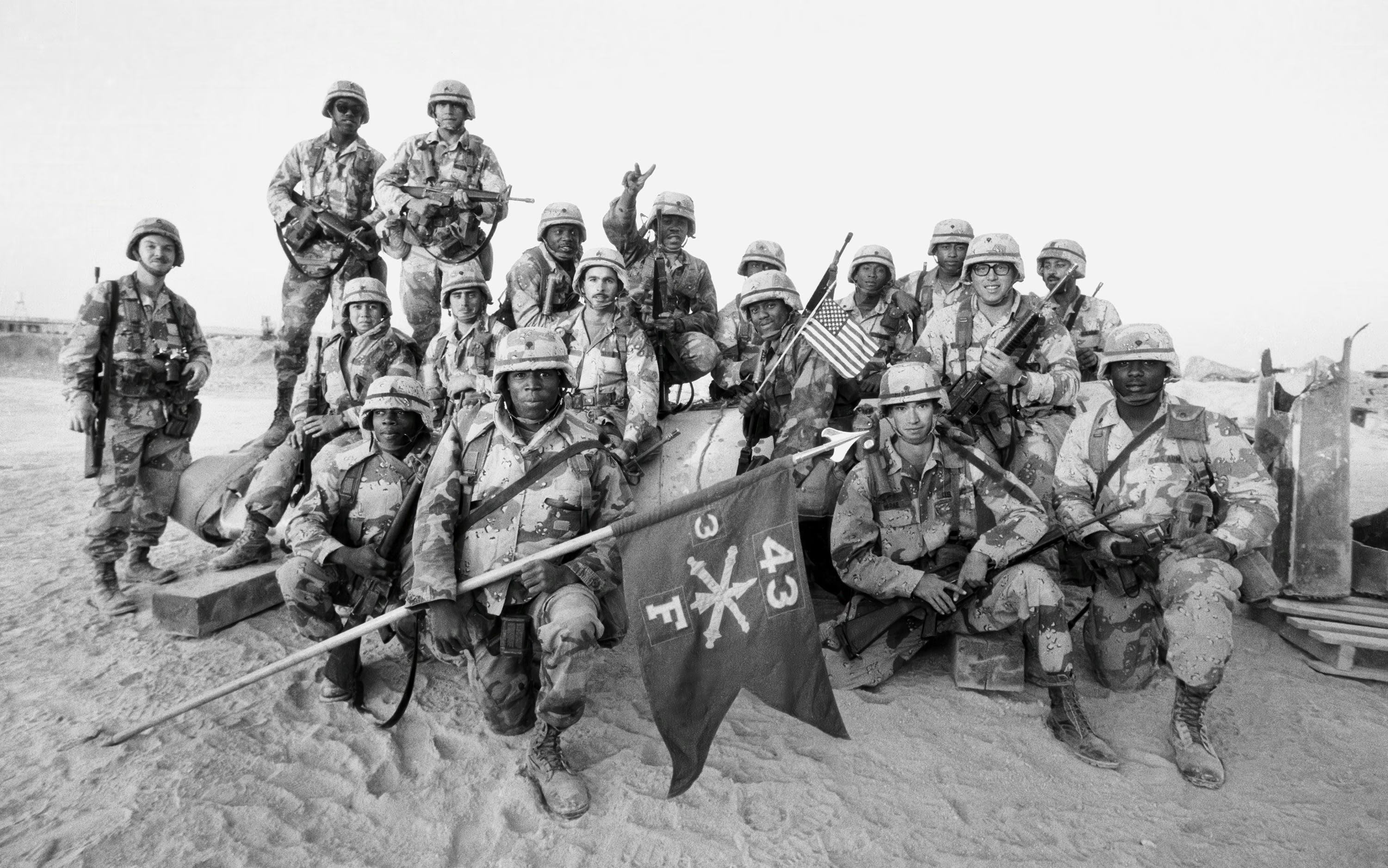
U.S. soldiers pose with an Iraqi Scud missile that they shot down outside Riyadh. Scudbusters were American Patriot missiles deployed from Saudi Arabia to counter the incoming rockets. The modifications made by the Iraqis to the Soviet-made Scud missiles gave them a longer range but also had the unintended consequence of making them less accurate and unstable—and much harder to shoot down.
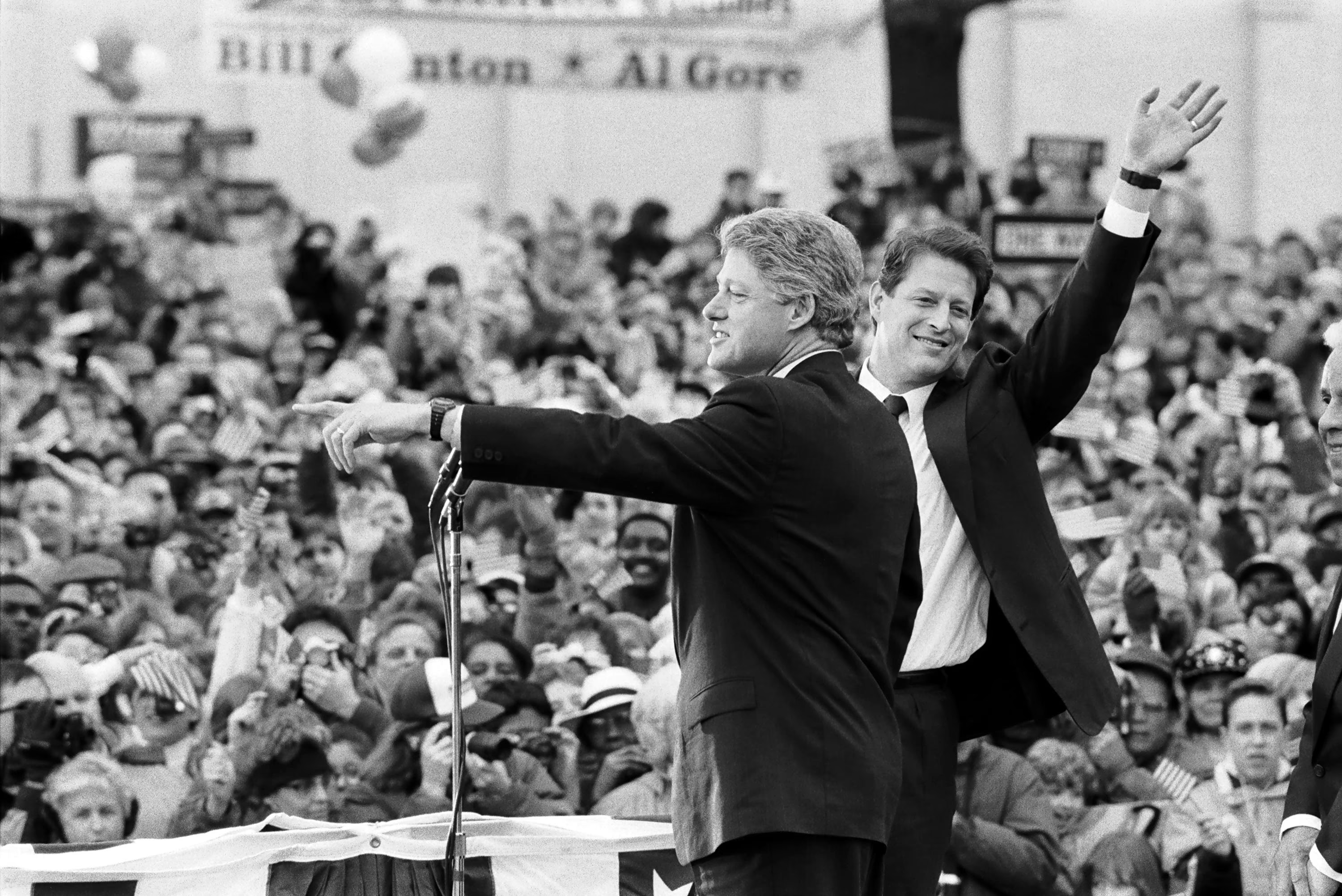
Clinton-Gore Inauguration Week. January 1993. President-elect Bill Clinton and Vice President-elect Al Gore stop in Virginia on their way to Washington, D.C., for their inauguration. I didn’t cover the Clinton-Gore campaign in 1992, but this exuberant moment had the feel of a campaign appearance. Clinton is one of the most engaging politicians I have ever met. His genuine curiosity about the people he’s talking with is one of his great strengths, and I saw very few people who weren’t wowed or wooed when they met him.
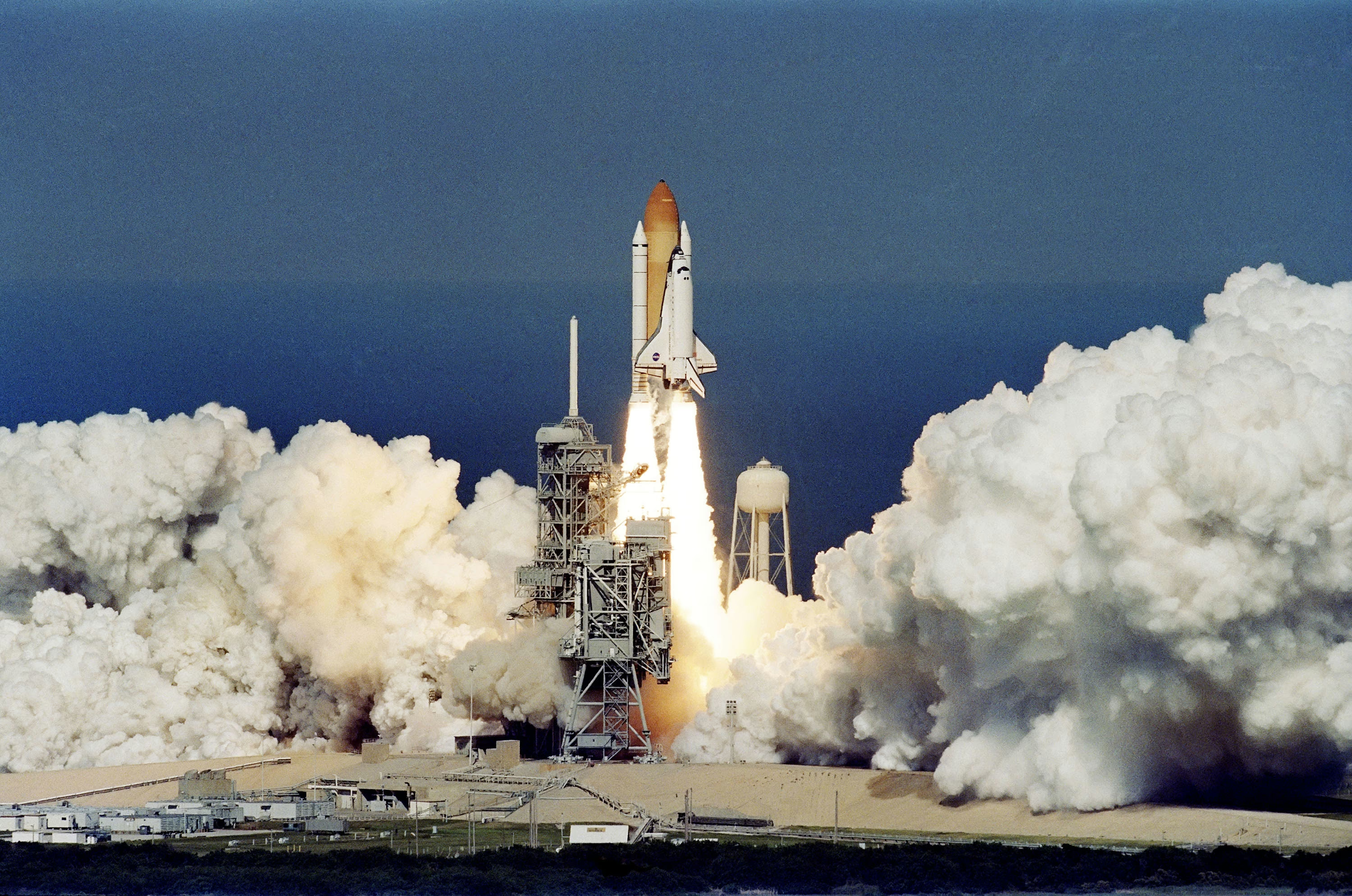
Senator Glenn Returns to Space. Kennedy Space Center, 1998. On October 29, at Kennedy Space Center, the launch of the space shuttle Discovery returns Senator John Glenn to space. As a Mercury astronaut in 1962, Glenn had been the first American to orbit the Earth. At age 77, he became the oldest person to travel into space at that time.
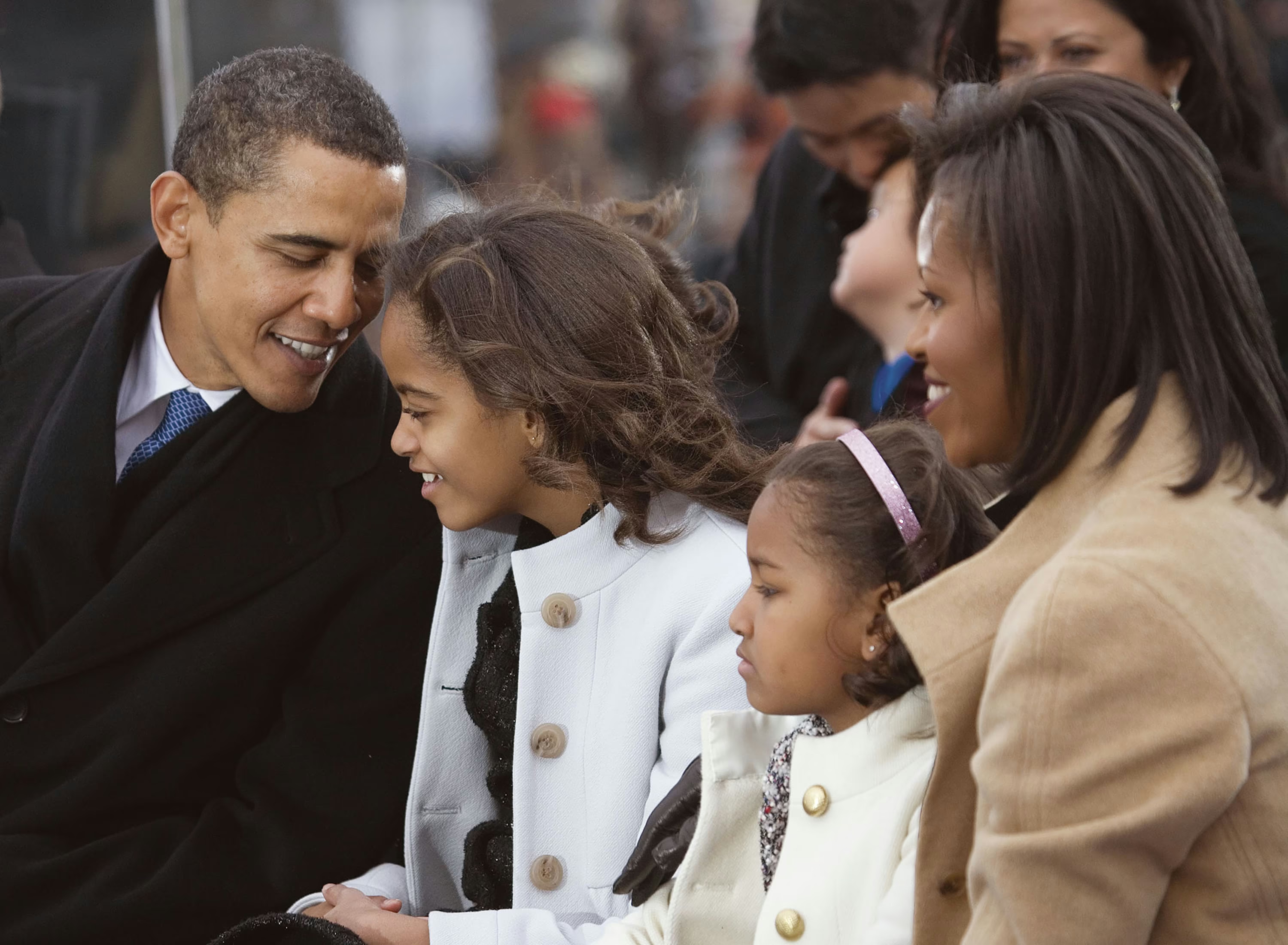
President Obama Preinaugural Concert. January 18, 2009. President-elect Barack Obama and Michelle Obama watch the concert with their two daughters Malia, 11, and Sasha, 8.
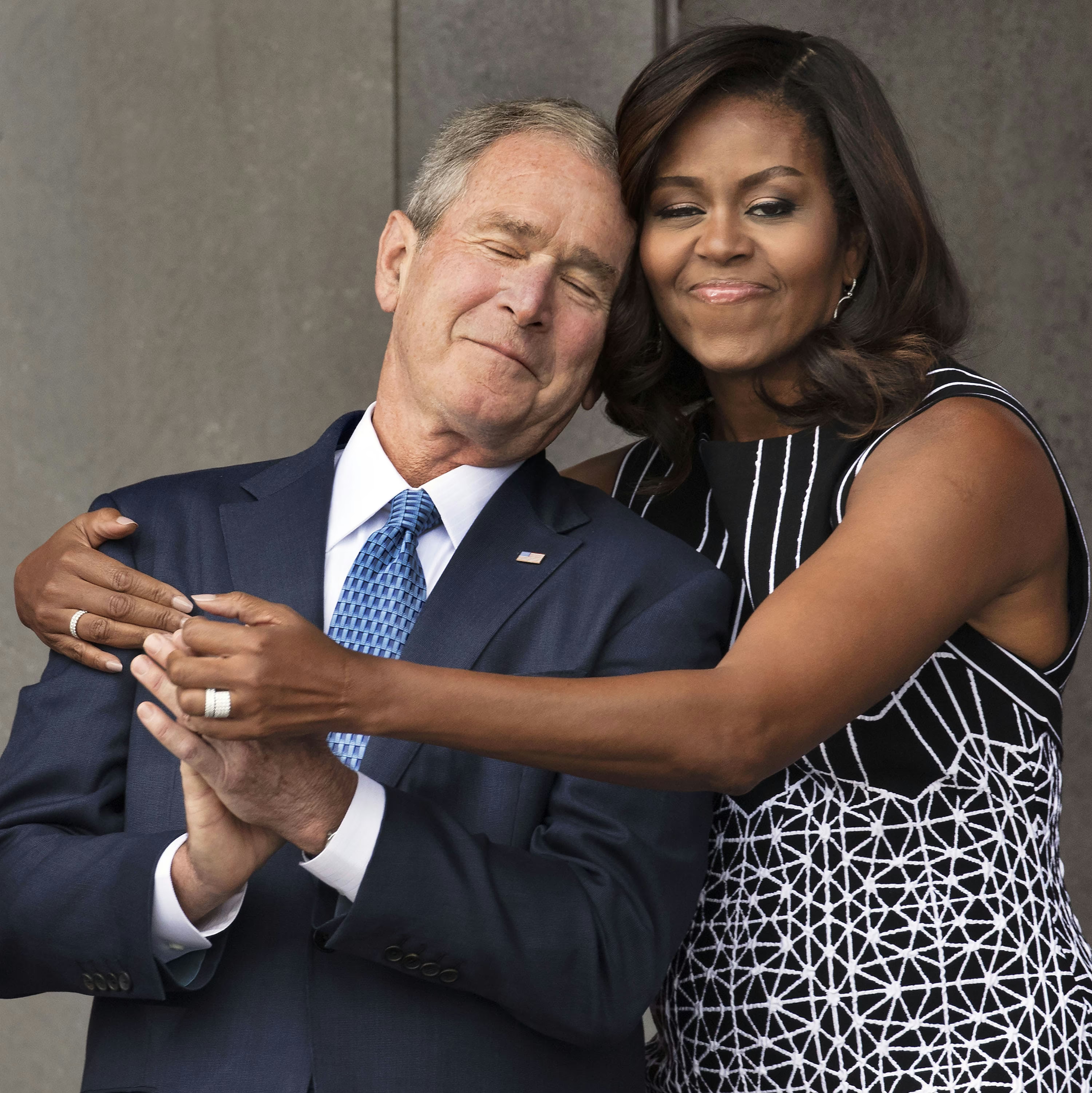
National Museum of African American History and Culture, Washington, D.C., 2016. First Lady Michelle Obama hugs former President George W. Bush at the opening of the NMAAHC. On December 16, 2003, Bush signed the legislation that created the museum dedicated to Black history and culture. It would be the 19th museum in the Smithsonian. He also pushed for it to be on the National Mall.
The post What I Saw Every Step of the Way appeared first on The Atlantic.