content=”https://www.washingtonpost.com/wp-apps/imrs.php?src=https%3A%2F%2Fcloudfront-us-east-1.images.arcpublishing.com%2Fwapo%2FZFJ4IWLME6XQAELNKF2PGKGPAE.jpg&w=1200″
As climate-friendly, energy-efficient appliances such as heat pumps, EV chargers and induction stoves become more popular in U.S. homes, many homeowners have replaced their electrical panels — the box of circuits where the electrical wire from the street comes into the home — with a larger one to handle the increased electric load.
New research shows that almost all of those upgrades might be unnecessary. Existing panels, it seems, could usually handle the increased demand.
If you are thinking of upgrading your panel, ask these questions first:
How much energy am I currently using?
Homeowners are often using far less power than they think they are. See whether your utility will give you the data on your home’s usage, or look for a local company that can help you estimate your “energy load profile.”
Is it worth choosing a power-efficient appliance?
Some newer versions of some appliances, including EV chargers and induction ranges, are built with technology meant to keep power demand low, especially when there are other demands on the panel at the same time. These versions can be more expensive. But if they save you thousands of dollars by avoiding a panel upgrade, they might be worth it. They would be kinder to the overall power grid, too.
Can I find a qualified electrician?
Practically speaking, you can only skip the panel upgrade if you can find an electrician who says it’s safe to add devices to your existing panel. Consult qualified professionals.
Read more here about how outdated assumptions and many states’ years-old electrical codes are leading people to spend thousands on unnecessary upgrades.
A new study has found that two oceanic atolls in the Marshall Islands are some of the most intact ecosystems left in the world — teeming with life and a range of species at a time when climate change, overfishing and pollution threaten many other natural areas around the globe.
According to the study, published Wednesday in the journal Frontiers, the coral atolls of Bikar and Bokak in the northeast of the Marshall Islands have some of the most rich and dense ecological communities on the planet, with 15 seabird colonies, 266 groups of reef fish, 15 groups of open-water predators, and more.
“This is at the very top of the most intact ecosystems I’ve seen,” said Alan Friedlander, a researcher at the Hawaii Institute of Marine Biology at the University of Hawaii and one of the authors of the study.
The researchers surveyed seabirds, sea turtles, reefs and deepwater communities of fish — at times finding themselves surrounded by hundreds of sharks or dozens of blocky, half-meter-long parrotfish.
The atolls are now a protected area, ensuring that they will be preserved. “It’s a natural baseline,” Friedlander said. “These are windows to the past — what reefs everywhere used to look like.”
Good morning. It’s Wednesday, Nov. 11, and Veterans Day. The Post spent time with some vets with PTSD that resisted treatment, so they tried ayahuasca instead.
Yesterday, House Republicans blocked the impeachment effort against Defense Secretary Pete Hegseth. That story leads today’s edition of The 7 briefing. The 211-204 vote was a show of Republican unity after last week’s midterm losses and has eased pressure on Hegseth, at least temporarily.
Today, Trump will travel to Arlington National Cemetery to mark Veterans Day. He is likely to pass by the site where he hopes to build his arch, but opposition to the project is growing. This morning, The Post published an account of the fight to build or block the arch.
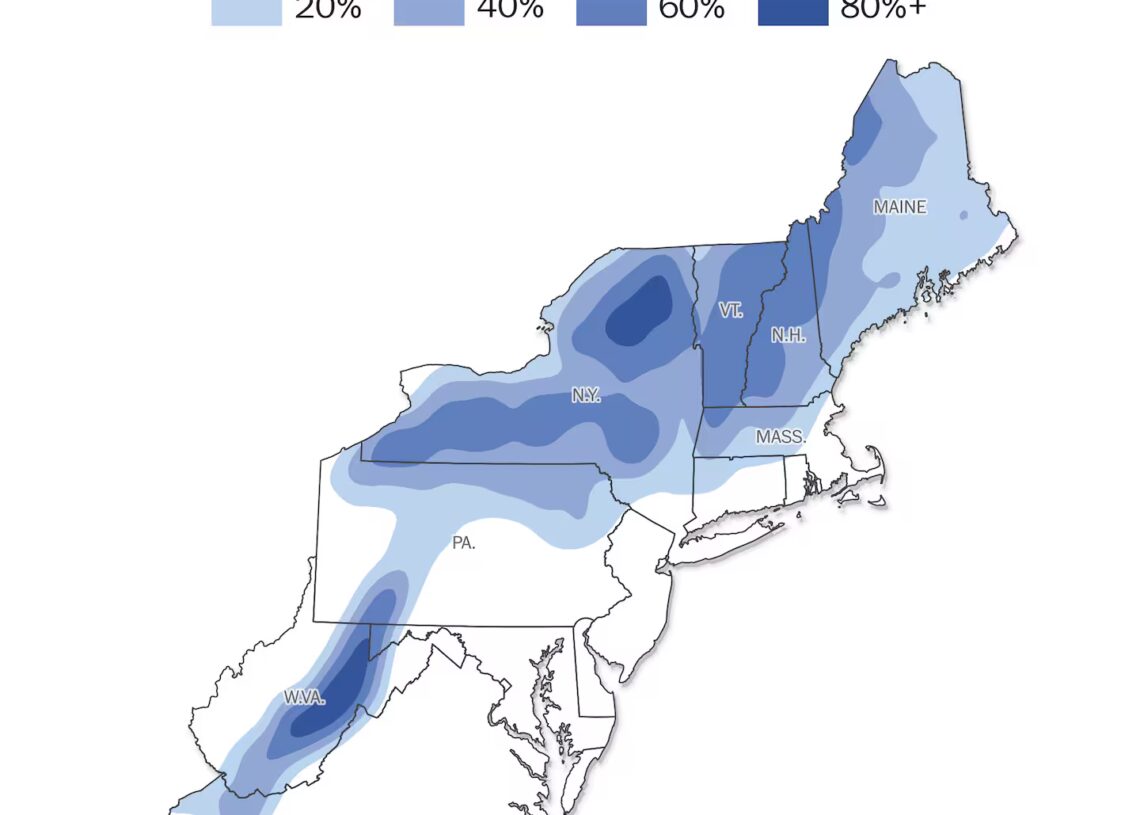
Elsewhere in the briefing, we cover Secretary of State Marco Rubio’s trips to watch Florida football games. We reveal which areas could be in for heavy snow this winter. And finally, could putting an air purifier in your bedroom benefit your health? A new study suggests so.
Read today’s edition of The 7 briefing here.
Sen. John Cornyn (R-Texas) is approaching the final days of his more than two decades in the Senate. But he’s still got some juice in him.
“I’m looking for a job, if you have any ideas,” Cornyn said Tuesday when asked by TMZ about his next steps. “People who retire die.”
Cornyn met with his successor, Democratic Sen.-elect James Talarico, this week to help with transitioning his office. Talarico will be sworn in in January. Cornyn, 74, said Talarico expressed interest in continuing with the Republican’s case work staff. Several Democrats who won in Texas’s historic blue wave have retained or added Republican staffers to ensure continuity in a state where they have not governed in more than 30 years.
Cornyn said he would cheer for Talarico’s success, as long as his priorities are in line with Texans’ interests. Still, Cornyn remained confident he could have kept the Senate seat red had he been on the ballot. Cornyn lost in a bitter primary runoff to Texas Attorney General Ken Paxton, who lost to Talarico by 12 percentage points.
Nvidia has retained former federal prosecutor Joon H. Kim to lead its investigation into its CEO Jensen Huang’s affair with an alleged Chinese spy.
Kim is a partner with the elite firm Wachtell, Lipton, Rosen & Katz, which previously investigated claims that the Los Angeles Clippers circumvented salary rules for star basketball player Kawhi Leonard. Kim served in various roles in the Southern District of New York — the prestigious jurisdiction with remit over financial institutions and major white-collar crime — from 2000 to 2006 and again from 2013 to 2018.
Kim’s retainer was first reported by the New York Times.
Huang’s Sunday admission that he had been unfaithful to his wife has roiled Washington and Wall Street as Nvidia, which develops the prized chips that power artificial intelligence, faces questions about whether the actions of its top executive threatened national security.
Kim has worked a number of high-profile cases. In 2021, while he was in private practice, he was one of the independent investigators who probed allegations of sexual harassment by former New York governor Andrew M. Cuomo. While an assistant U.S. attorney, he was involved in organized crime cases, including the murder conviction of American mobster Peter Gotti.
Leaders in Cranbury Township, New Jersey, defended their decision to keep the loss of $26 million from the public until after the election, saying on Monday that law enforcement had instructed officials not to disclose the theft as they investigated.
At a contentious meeting of the Cranbury Township Committee, Mayor Lisa Knierim said waiting until last week to announce the September theft helped law enforcement agencies track and recover some of the stolen funds.
The money, raised from the issuance of a public bond, was intended to buy property for affordable housing but was inadvertently sent to a fraudulent account during a “sophisticated financial theft operation,” the township stated.
Law enforcement officials have so far identified and frozen about $17.5 million of the stolen money.
“We kept things quiet for a reason,” Police Chief Giuseppe N. DeChiara said. “If we tipped our hand too early, they could have liquidated everything.”
Several community members and New Jersey Republican leaders have questioned why the committee waited until Friday to disclose the theft. They accused Knierim, a Democrat, of withholding the information until after last Tuesday’s election, when a Democrat defeated a Republican for a seat on the township committee.
But DeChiara said he and his state and federal law enforcement partners decided when the information should be released to the public.
“They did everything I asked them to do,” DeChiara said.
The investigation is ongoing.
International health experts began meeting Tuesday to determine whether the United States will lose its status as a country that eliminated the continuous spread of measles, a landmark public health achievement attained more than a quarter century ago.
A committee of the Pan American Health Organization, part of the World Health Organization, is meeting behind closed doors through Friday to determine whether there is evidence that the U.S. has had uninterrupted transmission of measles for more than 12 months. If so, the country would lose its measles-elimination status, attained in 2000.
The committee is expected to announce its conclusions next Tuesday.
This year, the U.S. has tallied more measles cases than in any year since 1991. The Centers for Disease Control and Prevention has recorded 5,182 cases so far in 2026, compared with 2,289 during all of 2025. States and counties have reported at least nine people with measles have died.
The global review follows a resurgence that began with a major outbreak in West Texas in January 2025 and was followed by sustained outbreaks in Utah, Arizona and other states.
The U.S. is presenting its data Tuesday, said Noel Brewer, who chairs the U.S. committee that reviews the annual measles reports of the CDC to verify whether the U.S. maintains or loses its status. Brewer said he could not share the report’s contents or conclusions. But publicly available data shows two separate chains of transmission that have extended beyond 12 months, he said.
The commission is reviewing all countries in the Americas. The U.S. and Mexico are receiving particular scrutiny because their outbreaks have lasted long enough to raise questions about continuous transmission.
The post 3 questions to ask before shelling out to upgrade your home’s electrical panel appeared first on Washington Post.