In 2024, Latino voters helped return President Donald Trump to the White House. Commentators saw the beginnings of a durable Republican coalition. Two years later, those voters have delivered a very different message: Ya basta! Enough!
After Trump’s gains among Latino men and in places such as South Texas, Henry Olsen envisioned the possibility of “a new, realigned Republican majority.” By the following May, Republican pollster Patrick Ruffini was more categorical: “Absent a big change in how these voters perceive the Democratic Party, they aren’t going back.”
Oh, they went back.
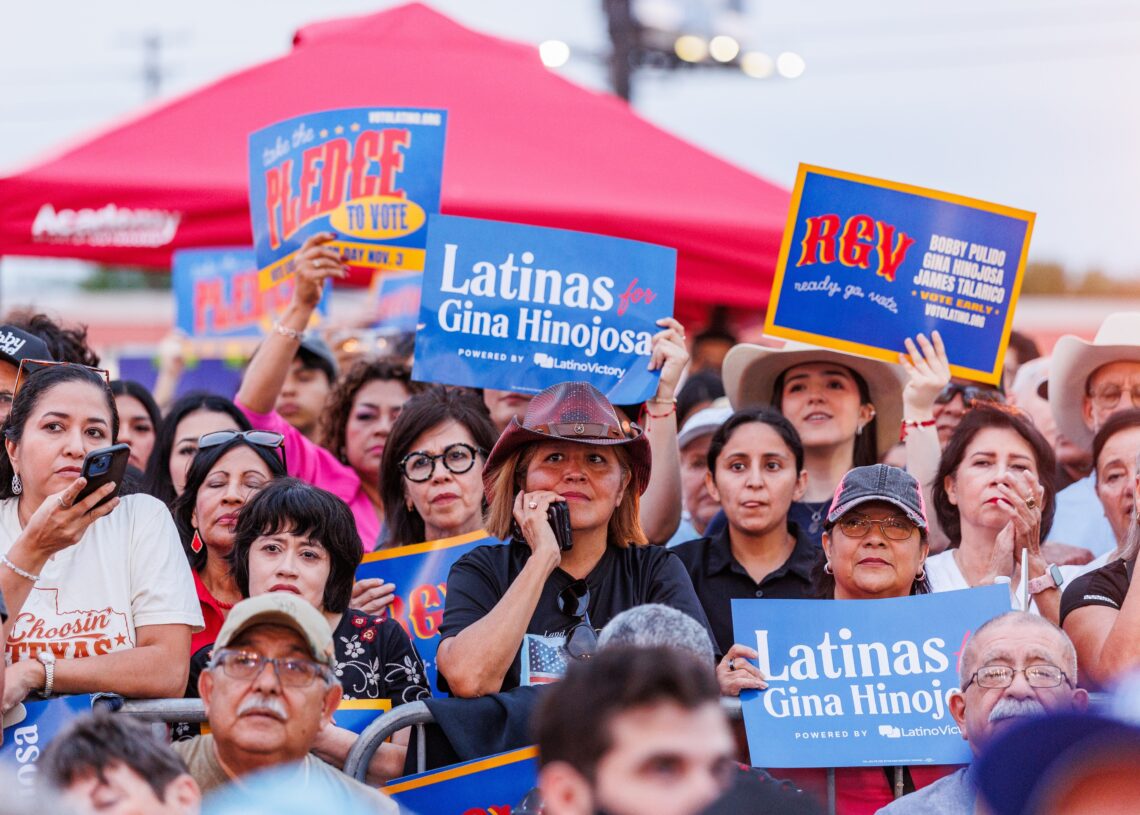
On Tuesday, Latino voters across the country delivered a sharp rebuke to the president and his party. NBC News’s exit poll found that they favored Democratic House candidates by 62 percent to 35 percent. A separate voter survey published by the New York Times showed Latinos backing Democrats by 69 percent to 30 percent, a 28-percentage-point shift in the partisan margin toward Democrats compared with the 2024 presidential election. It was the largest Democratic shift among the racial and ethnic groups shown in that survey.
In pivotal Texas, the reversal was just as striking: Latino voters supported James Talarico’s Senate bid at levels comparable to those Beto O’Rourke garnered in his closely fought 2018 Senate race, as pollster Maria Di Franco noted on election night. “It was a generational reckoning,” strategist Mike Madrid told me.
Trump has only himself to blame. He had an opportunity to turn an electoral breakthrough into a lasting foothold among Hispanic voters, who legitimately were unhappy with Democrats. All that required was delivering on his economic promises and understanding that support for border security was not a license for indiscriminate cruelty. Instead, he delivered economic disappointment, another foreign war and an immigration crackdown that spread fear throughout the communities whose votes he hoped to keep.
The warning signs were unmistakable before the election. In an September survey by Equis, a polling firm that specializes in studying the Latino electorate, 52 percent of Latino registered voters named the economy or cost of living as the country’s most important issue. Seventy-three percent disapproved of Trump’s handling of the economy; 76 percent disapproved of his handling of the cost of living.
The first findings from a voter survey released by UnidosUS and the Latino Community Foundation, two advocacy organizations, and BSP Research, a polling firm, reinforced that picture. Among the survey’s 3,050 Latino respondents, the cost of living and inflation remained the leading concerns they wanted the president and Congress to address. Groceries topped their household-expense worries, followed by housing and gasoline. These were not abstract anxieties about the direction of the economy. They were the costs of getting through the week.
In South Texas, economic insecurity was fed by Trump’s cruel immigration enforcement agenda. Contractors faced expensive financing, higher fuel costs and a workforce too frightened to show up at construction sites. Benny Melendez, a McAllen contractor who voted for Trump in 2024, told the Atlantic that houses he once completed in four months now take eight to 12 because he cannot find enough workers. At least 15 men he had worked with have been deported.
The damage extends beyond construction. Steve Torres, another Trump voter, told the magazine that electricity bills for his short-term rental properties exceeded $4,000 a month. He closed two restaurants the previous year after struggling with rising costs.
The war with Iran compounded that sense of betrayal, linking the cost of living to another broken promise: no new wars. In an October analysis, researchers Carlos Odio and Rachel Stein of Equis reported that Trump’s handling of Iran had a net negative approval rating of 46 points among Hispanic voters in a late-September survey.
And immigration enforcement brought the sense of betrayal closer to home.
Supporting a secure border is not the same as endorsing a campaign that makes people afraid to work or tears apart families. According to Equis, 66 percent of Trump’s 2024 Latino supporters expected him to focus enforcement narrowly on new arrivals and violent criminals. What many witnessed instead was a crackdown reaching long-term residents, families and children.
The UnidosUS survey’s preliminary findings made the distinction explicit: An overwhelming majority of Latino voters across party lines supported an immigration system that combined effective border security, an earned path to citizenship for long-term residents, and targeted, accountable enforcement. Wanting order at the border did not mean giving the government a blank check in their communities.
“Hispanic voters voted as if their lives depended on it, because they do,” Democratic strategist Simon Rosenberg told me. “There can be no doubt that Trump’s terror regime against Hispanics played a huge role in the surge of their vote across the country.”
The more granular analyses will come later. A Cuban American in Florida does not bring the same priorities and indignations to the polls as a Tejano in the Rio Grande Valley or a Mexican American in California’s Central Valley. Voters who changed parties should not be confused with those who returned after sitting out an election. Nor does a Democratic rebound mean that a substantial Latino Republican electorate has disappeared.
But it seems to me that what connects these voters is a thirst for democratic accountability. Faced with incompetence and cruelty, Latino voters acted — not as a demographic bloc waiting to be claimed by either party, but as citizens demanding an answer. Their votes were more than a rejection of a president. They were an assertion of belonging: This is our country, too.
The post The GOP thought Latinos wouldn’t leave. They did. appeared first on Washington Post.