Iran is reviewing a set of proposals presented by mediators that could shape the future of its nuclear program, according to five officials briefed on the negotiations, representing a potential breakthrough in stalled diplomatic efforts to end its war with the United States.
Iran’s willingness to re-engage in nuclear talks, after weeks of refusing to budge, suggests recent mediation efforts led by Qatar to prevent a return to full-blown war have had some success, the officials said. They described the terms being reviewed as “concrete proposals,” without elaborating.
The Iranian foreign ministry did not immediately respond to a request for comment. The five officials, including an American and two Iranians, spoke on the condition of anonymity to discuss sensitive details of the talks.
Qatar has spearheaded a diplomatic blitz with Iran in the past week, the officials added, participating in two rounds of talks in Tehran and hosting a third in Doha. Two of them said that the Qataris have also held recent talks with Iranian officials in Armenia.
Vice President JD Vance has emerged as a key proponent of the Qatari-led efforts to avert a military escalation, according to three of the officials. He has also appeared to try and distance himself from President Trump by blaming the war for the Republicans’ heavy losses in the midterm elections this week.
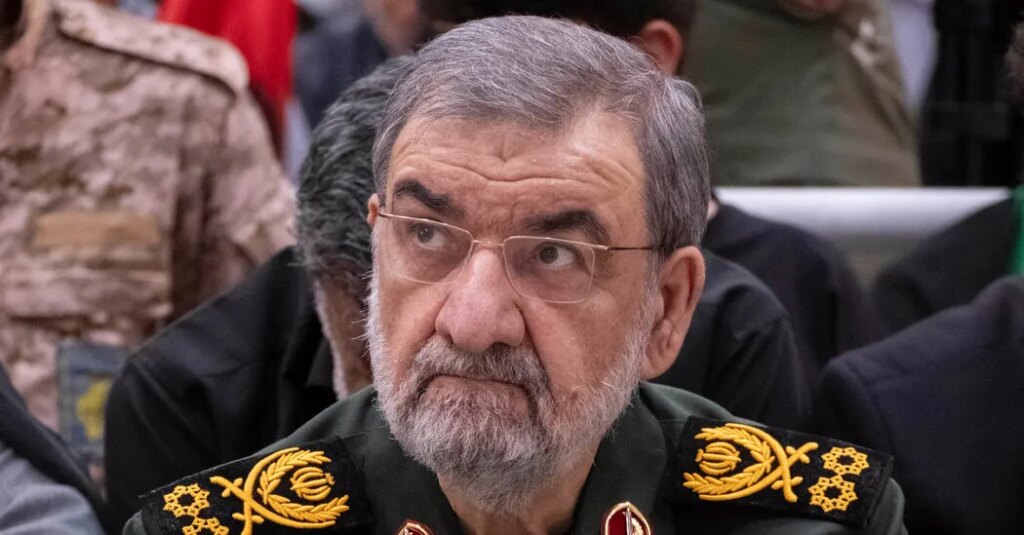
Last month, Mr. Vance sent a letter to Mr. Rezaei proposing to hold direct peace talks that would also cover Iran’s nuclear program. Mr. Rezaei said the letter had shown that the United States had changed its tone toward Iran, which he described as a sign of the “Iranian nation’s strength and victory.”
Before the United States and Israel attacked Iran in late February, Mr. Vance was the figure in Mr. Trump’s inner circle who was most opposed to a full-scale war. At the time, he warned Mr. Trump that a conflict could cause regional chaos and untold numbers of casualties.
On Monday, Mr. Vance said progress had been made with the Iranians, but he noted that Mr. Trump had both “kinetic” and “non-kinetic” options. “The president and I both feel pretty good about the prospects for potentially coming to a negotiated settlement,” he said.
The flurry of diplomacy comes as Mr. Trump and Israel have been weighing a large-scale attack against Iran. The American and Israeli militaries have drawn up a list of targets to strike, including energy infrastructure and other sites vital to the Iranian economy.
Iran’s nuclear program, which Mr. Trump says is an effort to develop a bomb while the regime insists it is for peaceful purposes, has bedeviled efforts to find a long-term solution to end the war.
In June, the United States and Iran agreed to a cease-fire. The deal was intended to pave the way for talks about the nuclear issue, and lead to the reopening of the Strait of Hormuz, a vital waterway for oil and gas shipments that Iran effectively closed early in the war. But the agreement collapsed, sparking months of intermittent clashes before the conflict settled into a tense stalemate.
Both Iran and the United States have used increasingly bellicose rhetoric in recent weeks, propelling Qatari mediators to try and broker a last-ditch deal between the two countries.
Mohsen Rezaei, the head of Iran’s Supreme National Security Council, suggested in a televised address on Saturday that Iran would not hold nuclear talks until the United States accepted the country’s demands. Those include releasing frozen Iranian assets, and lifting sanctions on the country’s oil and the U.S. naval blockade on Iran’s ports.
Privately, however, Mr. Rezaei has shown more openness to discussing the nuclear issue, according to the two Iranian officials and the American official. He has been negotiating with the Qataris alongside senior Iranian officials, including Abbas Araghchi, the foreign minister, and Mohammad Bagher Ghalibaf, the speaker of Iran’s Parliament.
The future of Iran’s stockpile of highly enriched uranium has been one of the key sticking points in the talks. Mr. Trump has said Iran must give up the stockpile, which he has referred to as “nuclear dust.”
Iranian officials have been adamant that they will not ship the uranium outside the country. In previous rounds of talks, Iran has discussed diluting the stockpile on its own soil under the supervision of international inspectors.
The International Atomic Energy Agency, the U.N. nuclear watchdog, estimated in a report published this year that, as of June 2025, Iran had about 440 kilograms, or roughly 970 pounds, of highly enriched uranium. Experts say that it could be used to develop a small number of nuclear bombs.
As of Thursday morning, Iran and the United States were reviewing the latest suggestions from mediators to bridge any remaining gaps, two of the officials said.
Mr. Trump has vacillated between making bellicose threats to return to all-out war and saying he wants to give diplomacy a chance. On Wednesday, he said Mr. Vance’s assertion that the war with Iran was to blame for the midterm defeat was “largely true,” but he also defended his decision to attack the country.
Oil prices fell sharply after the midterm results, as some observers thought it could encourage Mr. Trump to end the war.
Iranian leaders have warned that its forces would expand their range of targets if the country is attacked again. Senior Iranian officials and clerics are also debating whether Iran should withdraw from the Nuclear Nonproliferation Treaty, which prohibits the development of a nuclear weapon.
Gulf Arab officials have expressed growing concerns that a renewed U.S.-Israeli attack on Iran could lead to devastating retaliatory strikes on their own countries, further straining their already bruised economies.
“From the perspective of the U.A.E., and I would also say Gulf countries, we don’t really want to see another round of confrontation in the region,” said Anwar Gargash, a diplomatic adviser to the president of the United Arab Emirates, at the Manama Dialogue security conference in Bahrain over the weekend. “We want to see a diplomatic and political resolution of this protracted crisis.”
Sanam Mahoozi contributed reporting to this article.
The post Iran is Reviewing ‘Concrete Proposals’ on Nuclear Program, Officials Say appeared first on New York Times.