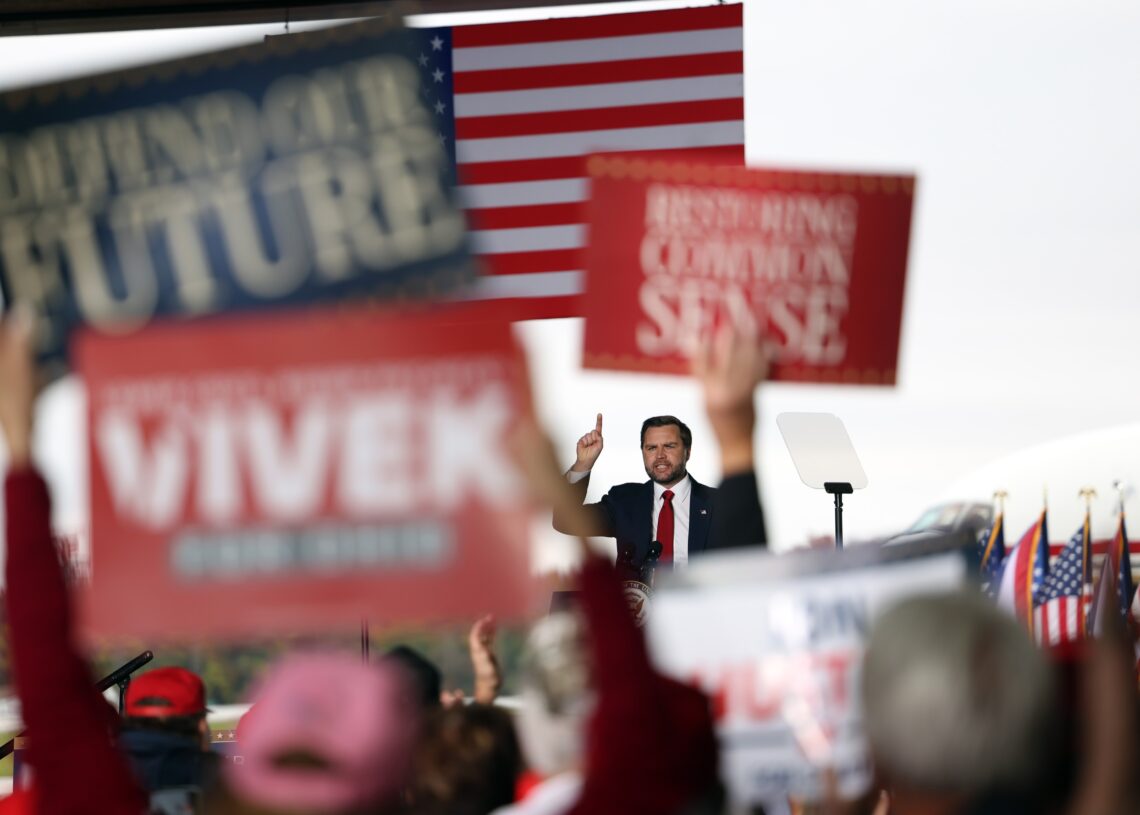
Vice President JD Vance posted 617 words on X on Wednesday explaining the Republican midterms wipeout. “The reason we lost is the war” in Iran, he wrote, then called for the GOP to change “our relationship to Israel.” One word that did not appear in Vance’s postmortem: tariffs.
President Donald Trump won in 2024 partly because voters who were angry about inflation trusted him to make life more affordable. Two years later, the economy was again the dominant issue for voters, but this time, it was an enormous liability for his party.
More than half of voters named the economy and jobs among the three most important issues facing the country, according to a survey of more than 90,000 midterm voters by the research firm NORC in partnership with The Post and other sponsors. Those voters favored Democrats by 15 points. Two years ago, voters who identified the economy and jobs as a top issue favored Trump by more than 20 points.
The reversal was most dramatic among Americans feeling the pain. Voters who said their families are falling behind financially favored Democrats by 31 points. In 2024, such voters backed Trump by 30 points.
The Iran war certainly contributed to Republicans’ defeat. The conflict has driven up energy prices, and more than one-third of voters in the Post-sponsored NORC survey listed the war as one of the country’s three biggest issues. More than 6 in 10 of them voted Democratic.
But the economy ranked as a substantially larger worry. According to a separate Fox News Voter Poll, which had a sample of about 80,000 people, 66 percent of midterm voters said Trump’s tariffs have hurt the national economy and 64 percent said tariffs have hurt the economy in their area. Eighty-nine percent said the cost of living was a crucial or major factor in their congressional vote, and 63 percent blamed unusually high prices more on Trump’s policies than on factors outside his control.
Republican candidates saw the danger coming. Five battleground Senate nominees avoided mentioning tariffs at the party’s September convention in Dallas. So did Vance. Trump, on the other hand, boasted that tariffs were “making us much richer than we ever thought.”
As Election Day approached, the administration’s own actions suggested otherwise. Trump suspended tariffs on certain ground beef imports to lower grocery prices. After Sen. Susan Collins (R-Maine) appealed to administration officials, the White House exempted nine categories of Canadian products important to agriculture in her state. Collins lost anyway.
As red states in the Midwest such as Kansas and Iowa turned into competitive battlegrounds, farmers received some protection from protectionism. Tariffs raised equipment costs while trade wars reduced foreign markets for American crops. Instead of removing those costly distortions, the administration compensated farmers. A promised $8 billion bailout shortly before the election brought projected direct federal payments to farmers this fiscal year to about $55 billion.
Vance’s second prescription for Republicans, after “end the war,” is to “focus on cost of living.” He should follow that thought to its logical conclusion. For a generation, Republicans argued that prosperity comes from competition, open markets and letting American consumers decide what to buy and American businesses decide where to source their supplies. The party lost its way, and the past two years tested Trump’s proposition that Washington can make Americans richer by taxing imports, restricting choices and picking winners.
Voters have now rendered their judgment on that failed experiment. Trump doesn’t need to wait until 2028 to respond. If he wants to lower the cost of living, he has one tax he can cut immediately: his tariffs.
The post JD Vance claims to know why Republicans lost. He left one thing out. appeared first on Washington Post.