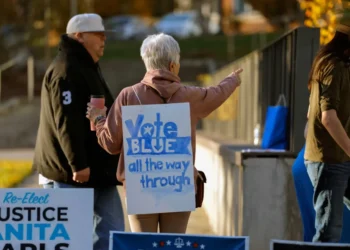
It’s Election Day, an exercise in democracy that seemingly never fails to leave Americans hanging on every last ballot to be counted.
Gather your patience, and some caffeine, as experts say it may take several days, if not longer, for complete results to emerge, introducing an element of uncertainty to races that could decide control the Senate, House and governorships.
The waiting game is expected to raise a recurring question in U.S. elections: Why are some states much slower to report results than others?
“Slow is in the eye of the beholder,” said David Scott, vice president of elections for The Associated Press. (Many news media outlets, including The New York Times, rely on the news organization’s race calls.)
What usually causes counting delays?
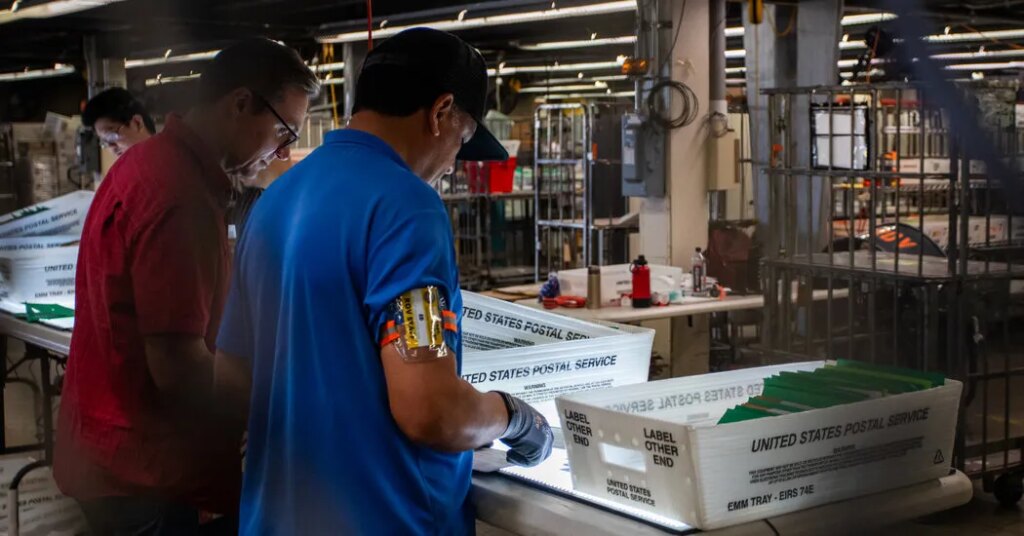
Voting by mail, which gained in popularity during the coronavirus pandemic, has become increasingly common in several states, particularly in the West. But, experts said, that convenience does not always lend itself to the speed of processing and counting ballots.
Six states, including Wisconsin and Pennsylvania, do not allow election officials to begin processing those ballots until Election Day, according to the National Conference of State Legislatures.
Machines that can open envelopes can help speed the process, but many places have not upgraded their technology, often because of the expense, said Tammy Patrick, chief programs officer at the National Association of Election Officials.
As a result, election workers, one Republican and one Democrat, must open the envelopes by hand.
“There’s a saying that we often use in elections,” Ms. Patrick said. “We want our elections to be cheap, fast and accurate, but we only get to pick two things.”
While many states require absentee ballots to be returned by Election Day, some allow for them to be received up to 10 or 15 days later, as long as they are postmarked by Election Day.
Who’s in for a long night?
California, the nation’s most populous state, is an obvious contender because of its emphasis on voting by mail, experts said.
During the presidential election in 2024, when nearly 81 percent of residents cast ballots by mail, about 60 percent of the state’s vote was counted by election night, according to The Associated Press.
“It’s part of what they have chosen to value, which is maximum participation,” Mr. Scott said.
It’s not just states that have developed a reputation of lumbering through an election. So have some cities critical to Democrats, two of which could tip races for the control of the Senate.
In Texas, Harris County — its seat is Houston, and it is the most populous in the state — is often a straggler in reporting its election results. That’s something that those who track results said to keep in mind in the Senate race between James Talarico, the Democratic nominee, and Ken Paxton, the Republican nominee and the state attorney general, whom polls have shown to be in a tight contest.
In Michigan, Wayne County, which includes Detroit, has experienced similar counting delays in past elections that experts said could significantly loom over the Senate race between Mike Rogers, a Republican former representative, and Dr. Abdul El-Sayed, the Democratic nominee.
Ms. Patrick, of the National Association of Election Officials, said many people lose sight of the fact that not a single state in the nation reports official results on election night.
“The real tension here is when the races are close and whether or not the media are comfortable projecting to winners,” she said.
What about ranked-choice voting?
Two states with pivotal Senate races, Maine and Alaska, use ranked-choice voting, in which voters select a set number of candidates in order of preference.
If no candidate captures 50 percent of the vote in the first round of counting, additional rounds follow, which experts said could result in delays of several days in those states.
Like other New England states, Maine has a highly decentralized election system in which votes are reported at the municipal level, which analysts said could create delays.
And Alaska, because of its large size and more extensive grace period for returning absentee ballots, could also take longer to settle.
Counting of absentee ballots begins on election night at five regional elections offices in Alaska, which does not require voters to have a reason for choosing to vote by mail. The state accepts absentee ballots that are postmarked by Election Day until 10 days after an election if mailed from within the United States and up to 15 days after if mailed from overseas.
Who’s in for an early night?
Election experts pointed to Florida as one of the fastest states to report election results.
It does not allow same-day voter registration and requires absentee ballots to be received by 7 p.m. local time on Election Day.
The emphasis on speed and tightening of voting rules came after Florida was widely criticized during the 2000 election, when the outcome of the presidential race hinged on ballot problems and a protracted recount in the state.
“States make choices,” Mr. Scott said.
The post Why Some States Take Longer to Count and Report Election Results appeared first on New York Times.