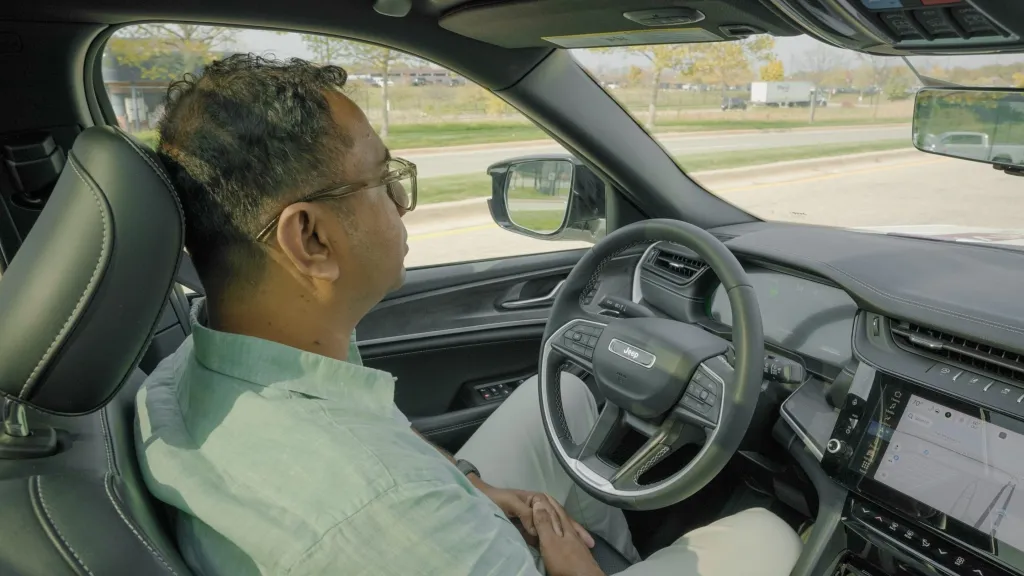
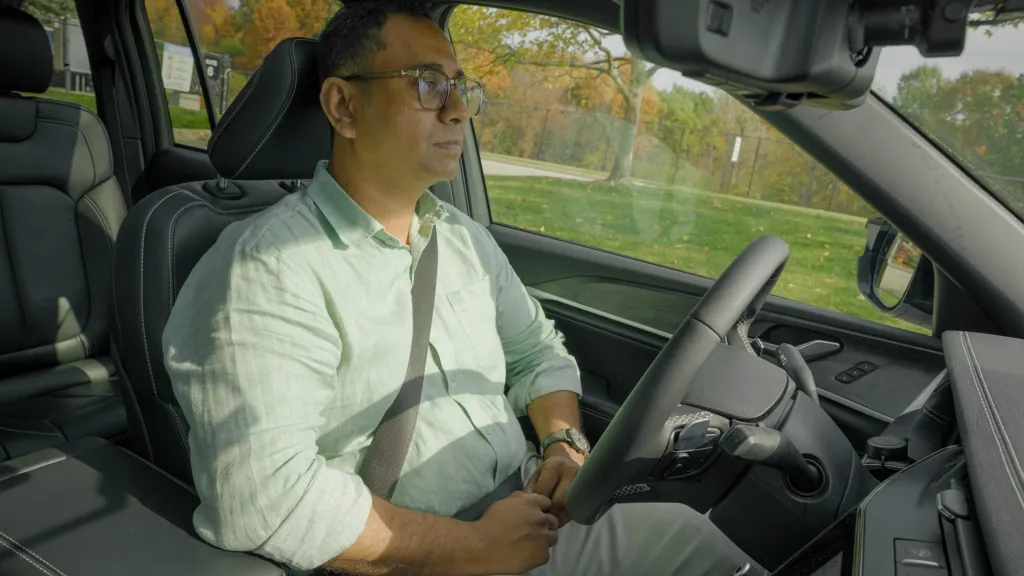
The Grand Cherokee is lined with wood paneling, its windshield is cracked, and chunks are cut out of its side-view mirrors like pierced ears. That’s where the cameras go, a grinning Joydip Saha tells me from behind the wheel. The manager of Stellantis’ hands-free driving project lovingly taps what he calls “the most broken-up car,” jerry-rigged with a yellow box sitting on the dashboard that lets a human grab control. It’s an industry-standard “kill switch” used in many prototype vehicles. In technical terms, the safety driver can hit the kill switch to disconnect power to the advanced driver assist system module, stopping the ADAS system from controlling the vehicle. Then, the driver has full control over the vehicle.
Another piece of equipment connected to the kill switch — the STLA AutoDrive L2++ system embedded in the vehicle — beeps when it needs him to take control, a bit like a dog wearing a smart collar.
And it’s confused. We are in the bowels of the Chrysler Technology Center in suburban Auburn Hills, Mich., navigating through the rabbit warren of a parking structure on the campus built by Lee Iacocca, the former Fortune posterboy who broke ground on the 500-acre site in 1986 and dedicated it in 1991, at a cost the company puts at about $1 billion. With the headquarters tower added in 1996, it spans 5.4 million square feet, the second-largest building in the U.S. by floor space, behind only the Pentagon.
Stellantis still runs its North American engineering out of Iacocca’s building, and the people who work there still say “all under one roof.” Inside, it’s a pure shot of early ‘90s design. Skinny escalators climb skyward around an octagonal skylight, like a Clinton-era MC Escher drawing.
The diamond-shaped parking garage attached to it is unique and confounding. Saha’s development mule heads toward the wrong exit and Saha has to put his hands on the wheel Even he finds the garage complicated. Auburn Hills’ suburban roads are much better for a test drive and I watch Saha’s mule smoothly navigate an intersection where two Michiganders decide to both make illegal multi-lane changes within seconds of each other.
Saha, the global engineering manager who serves as the owner of Stellantis’ L2+/Hands Free highway assist system, has been at this longer than most. He worked on the Chrysler Pacifica that Stellantis supplied for Waymo’s first robotaxi in Arizona, then managed a group that integrated Level 4 autonomy with partners including Aurora and Lyft. He still test-drives every new software build himself, as often as twice a week, because he considers any problem a customer faces problems to be his responsibility. He said his team built the Cherokee’s hands-free system in six weeks with the help of AI tools, when a similar project used to take a year or even 18 months.
He has a rule for AI, though: “I will not let people use AI to architect stuff because they will forget how to debug stuff,” he said. In a safety-critical business, he adds, engineers have to be able to answer every question.
Across two days of interviews at the technology center, engineers told Fortune that AI has turned yearlong projects into weeks and overnight simulations into minutes. Stellantis wants that speed to cut development time on its new computing and cockpit software, STLA Brain and STLA SmartCockpit, from four years to 24 months, starting with two models in 2027. But nearly everyone who described a speed-up also described checking the machine’s work. Stellantis also has problems bigger than time savings. The company has 14 brands, a European business that is losing money, and a second-quarter adjusted operating margin of 1.8%, while CEO Antonio Filosa has set a margin target of 7% for 2030.
Wall Street isn’t waiting. Stellantis is the member of Detroit’s Big Three most exposed to Europe, which accounted for about 38% of its 2025 revenue. (GM sold its European brands, Opel and Vauxhall, in 2017 to PSA, one of the companies that later merged to form Stellantis.) Europe also leans much harder toward electric vehicles than truck-happy America: : battery-electric cars made up 17.4% of new EU registrations last year, according to ACEA, compared with 7.8% of U.S. sales, according to Cox Automotive.
Stellantis had also bet heavily on EVs in North America, and it took the biggest hit in Detroit after the $7,500 federal EV tax credit ended on Sept. 30, 2025. In February, Stellantis wrote down roughly €22.2 billion (about $26.5 billion), more than Ford’s $19.5 billion charge in December or the $7.6 billion GM took across two charges. Stellantis shares fell 25% that day, and the reverberations are still being felt, with the stock down nearly 60% year-to-date.
Mel Roberts, the director of North American infotainment, who plans the features inside Stellantis vehicles five to eight years out, said AI was not her biggest surprise of the last several years. “What I couldn’t anticipate is just the complete collapse of the electrification ambitions and how that really did affect all of our future plans,” she said. “It trickled into everything.”
Detroit’s European giant
Stellantis is the only one of Detroit’s Big Three to be legally headquartered abroad, in the Netherlands. It’s the result of a pandemic-era merger in 2021 between Fiat Chrysler and the PSA Group that brought iconic European brands such as Peugeot and Citroën together with Fiat, Jeep and Ram. That gives it a distinctly international air, as Fortune met executives born in France, Mexico and Bangladesh within minutes of each other, along with a Michigander back from a few years stationed in Paris.
The mergers also left behind a machine built by committee. Ben Zawodni, manager of software engineering, is working to fold the hundreds of electronic control units, each a small computer with its own job, into a central “brain” called, naturally, STLA Brain. Over the decades, he says, the car’s architecture had evolved over time to really mirror the supply chain. “We were bolting on features.”
Amanda French, who leads the company’s platform teams, is tackling the same problem one layer down. Stellantis historically built separate platforms, each to a fixed size. Its new platform, STLA One, is built to stretch from small B-segment cars to midsize D-segment vehicles. The company says it is designed to grow into a mega platform supporting 30+ models and targeting more than 2 million units by 2035. Asked whether building it felt like playing with Legos, French responded, “Yeah, with a lot more people and emotions involved.”
‘Not there yet‘
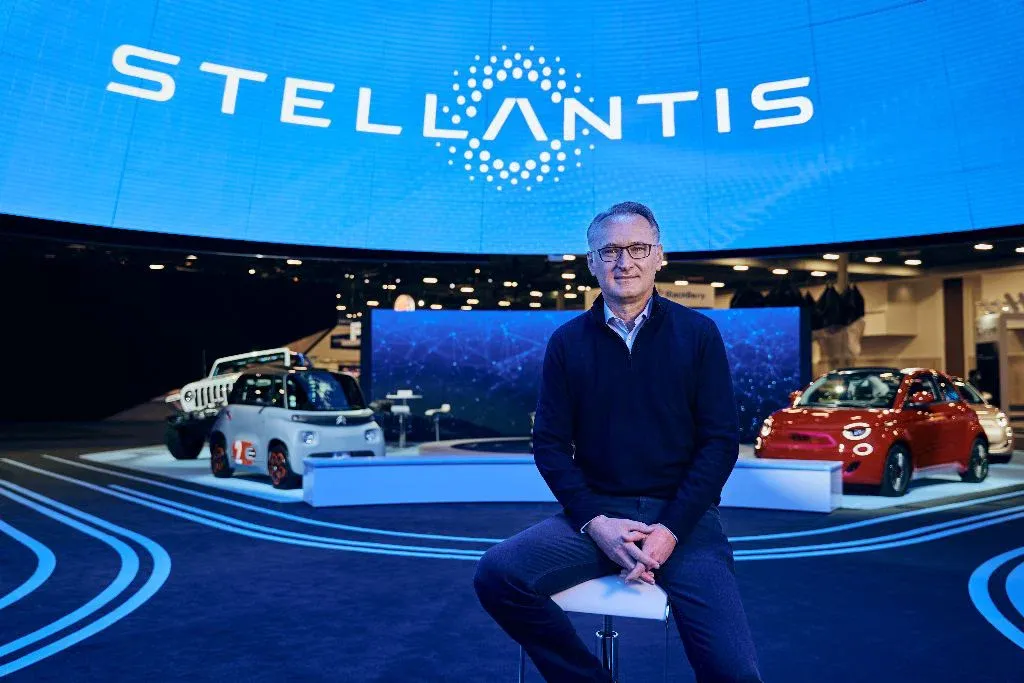
Upstairs at the technical center, Chief Engineering & Technical Officer Ned Curic is a grumpy but talkative and warm presence. He came to Stellantis by way of Amazon, with previous stints at Microsoft and Toyota. Calling himself “quite intense,” he explained that Stellantis is not where it needs to be. Some teams show “phenomenal successes,” he said. In building that culture, he said, “as a whole organization, we are not there.”
Curic sounds exasperated with an industry that has piled on complexity. Cars now come with “five screens, like digital noise, like 350 features,” he said, and automakers have historically tended to “checklist the heck out of the features” without measuring how people actually use them. He said he learned from Toyota that “the highest quality part that you have in a car is the part that you don’t have in a car.” In Stellantis’ research on drivers, for instance, he said most people preferred a mechanical stick to a button on a screen.
At Amazon, Curic received Jeff Bezos’ notorious emails forwarding on customer complaints. The body of each email was a single question mark. “I never found it stressful,” Curic said. “Never.” One executive would handle the problem, he explained, and the others would each write a couple of paragraphs to help.
From Amazon and Toyota, Curic also brought small teams from the “two-pizza rule” and single owners for each system, so engineers who once sat in separate groups can’t blame each other when something breaks. “If you see something that’s wrong, you just pick it up,” he said. “I own it.”
The hardest idea he’s selling is that “the best thing that you can do for your career is to make yourself redundant.” He has done it himself several times by getting a team in good shape, leaving, and starting something new. For that to work, Curic said, the company has to make sure there is always a new opportunity for those people, and that leaders need maturity and confidence. Asked whether Detroit’s long run of hard times makes people defensive about change, he replied that while there is always a bit of a fear, change is a lot more accepted, ”and actually sought after.”
The man telling engineers to make themselves redundant is also hiring them. At the Paris auto show in October, Curic told Bloomberg that Stellantis would add “multiple hundreds” of engineers in Europe and the U.S. this year.
The starting gun
The pressure lands on engineers like Zawodni and French. Both of them are tackling Stellantis’ tricky margins issue by simplifying the wiring for each vehicle to bring the manufacturing into alignment, cutting costs and boosting Stellantis’ profits back to where they need to be. “The AIs aren’t going to tell us what the new platforms are,” Zawodni said.
Zawodni said he started working on consolidating the cars’ central computing during COVID, when engineers went fully remote and Stellantis set up labs in India, Poland and North America that could be logged into from anywhere. A proof of concept for a global observability platform, which monitors software deep inside the car’s computers, took a week. Before agentic coding tools, he remembered something like that would take six months. And defects that took two to three weeks to fix shrank to two to three days. “We knew that we had to really reimagine all of our time,” Zawodni said. Did that scare him? “How exciting, right?”
French, a cheerful engineer from southern Indiana, lit up when the conversation turned to AI, though hers was a more measured take than Zawodni’s. She said human judgment “cannot be replaced,” but AI helps her pull together requirements and bills of materials stored in regional systems that were never built to talk to each other, because Stellantis is “made up from a number of different companies.” She compared AI to an interactive form of Cliffs Notes she wished for in school.
Zawodni said his team was not all as excited about the AI breakthroughs as he was. “I think there was a starting gun, and that starting gun went off,” he said. “Some people heard it, and some people didn’t.” Of his own engineers, he calls it a mixed bag. “Engineers are really afraid of losing their core skills,” he said. They want to know why a semicolon in a coding language does what it does. He called that “a valid curiosity,” but argued that it doesn’t get Stellantis to its goals. He wants them to become architects, and eventually chief architects.
The tools haven’t lightened Zawodni’s own load. “Agentic tools, they’ve made our work so much easier,” he said. “So why am I working so much harder?” He estimates he works at least twice as hard as before. “I feel a tremendous sense of urgency.” He said, “I really hope that we can transition responsibly … especially our people.”
Choosing battles
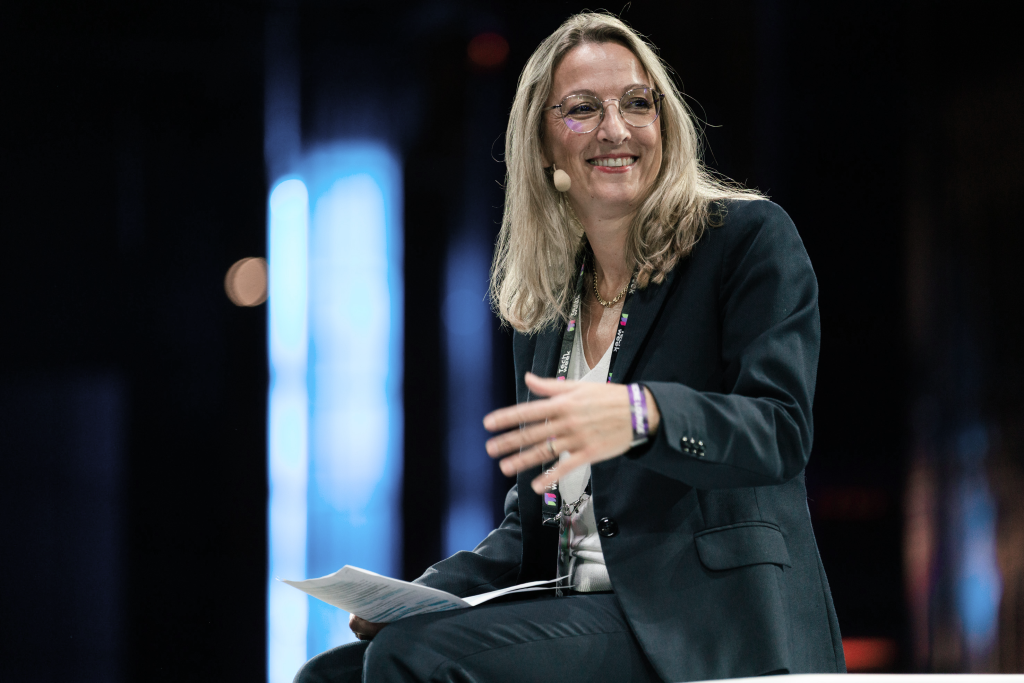
Anne Laliron, a French engineer who runs Stellantis’ roughly 400-person tech research group, gave up her office after COVID so her team can always find her, and she lights up talking about their energy. Her job is deciding which big bets to make. Stellantis can’t afford to do everything, so it designs battery cells in-house and partners with startups for the rest. “If you want to embrace everything,” she said, “you are at risk of spreading your effort.”
For Stellantis, partnering is a way to punch above its weight. The company brings in Wayve, a British startup, for the perception software in its hands-free driving, works with the French startup Tiamat on sodium-ion batteries, with Zeta Energy on lithium-sulfur batteries, and owns a stake in the Chinese EV maker Leapmotor, selling its cars outside of China through the joint venture Leapmotor International. Laliron said the habit runs deep at Stellantis and is less common at other automakers. Curic wants a culture where “it doesn’t have to be invented here,” and he said the learning with Leapmotor runs both ways: “We learned a lot… we also taught them a lot.” Stellantis runs batteries the same way, Laliron said: design in-house, partner with startups, and leave mass production to its gigafactory partners.
Their biggest bet sits on a stage nearby: a battery-electric Dodge Charger prototype carrying a solid-state battery from Factorial, a Massachusetts startup Stellantis has worked with since 2021. The two companies run it as one team, and Factorial co-founder Siyu Huang says the startup has done it with $250 million in capital, a fraction of what some competitors have spent. The car worked the first time they turned the key. But Huang puts the technology three to five years from automotive production, and Laliron cuts about 10% of her group’s projects every year when they don’t pan out. “It’s always painful,” she said.
Still one car a day
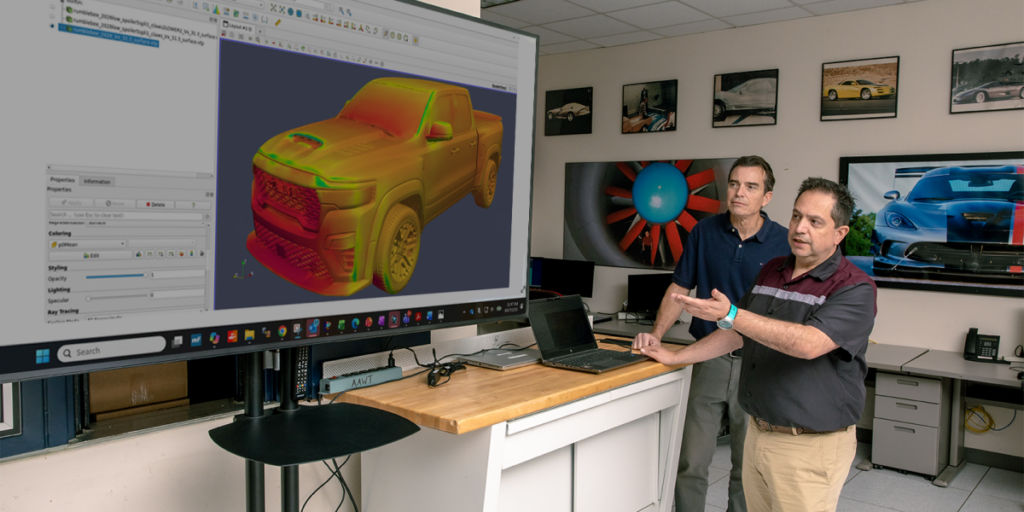
Elsewhere, the speed-ups are real, but still small next to Stellantis’ problems. Arturo Guzman was among the first to bring AI into the company’s aerodynamics work, about five years ago, after a startup struggled to explain it to him in a side conversation at a conference.
Now he explains it to vice presidents, and he starts by taking the mystery out. “There’s no miracles. There’s no magic,” he said. “For us being engineers, all this is a Python code.” Run through his team’s model, a design change to a Ram pickup’s front splitter returns a drag estimate in about three minutes. The full simulation used to take 14 to 24 hours. He tells his directors it’s like an intern. His younger engineers get a different metaphor: R2-D2 from Star Wars. “You just give it a task and come back and see what it did.”
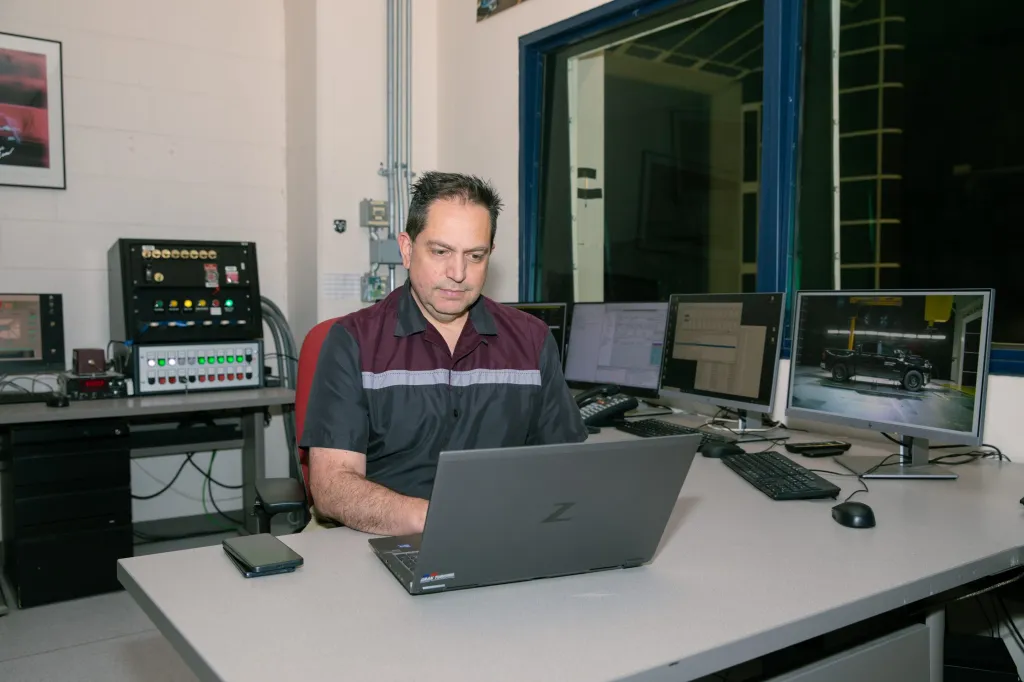
Guzman said the time his team saves goes to “other stuff.” His team now generates new guidelines, takes requests from across the company, and mines its simulation data for patents. “Now I tell them, just send me the data,” he said.
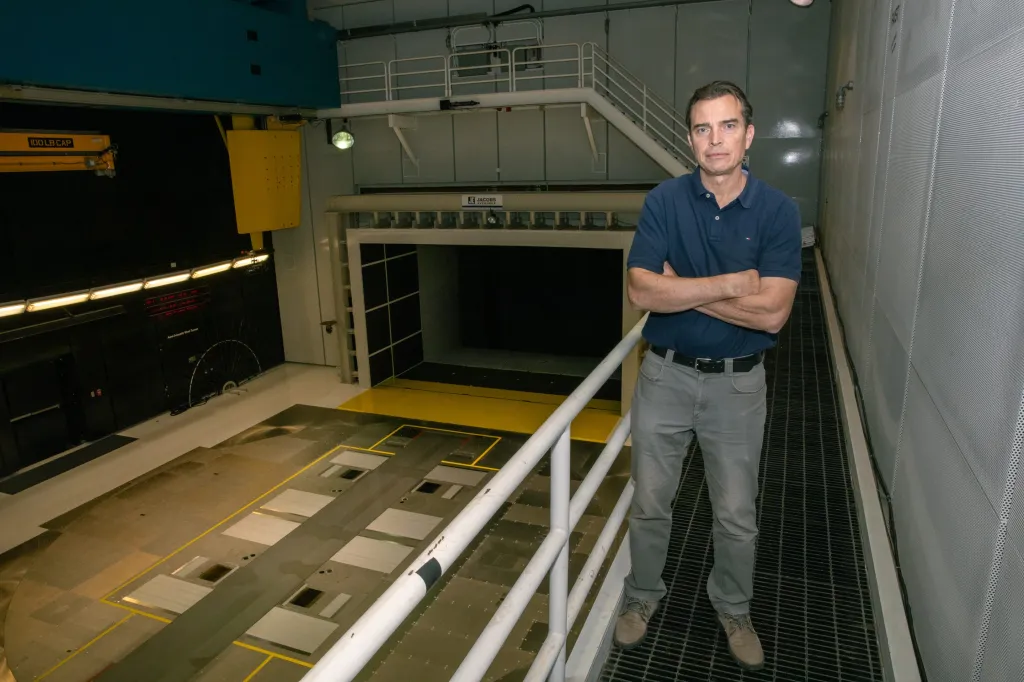
Through the doors to the wind tunnel, the giant equipment runs at pretty much the same pace it always has. It still tests “typically, one car a day,” said Steve Kubiak, a deadpan Michigander who started at Chrysler in 1992 and has supervised the tunnel for about 10 years. Asked whether the process has changed over time, he said, “No, it’s always been the same.” The analysis is speeding up even if the testing isn’t. A colleague, Todd Lounsberry, gives AI the data from the last 20 runs of a test and asks what it sees. Asked how someone becomes the manager of a wind tunnel, Kubiak responded, “First you get a wind tunnel.”
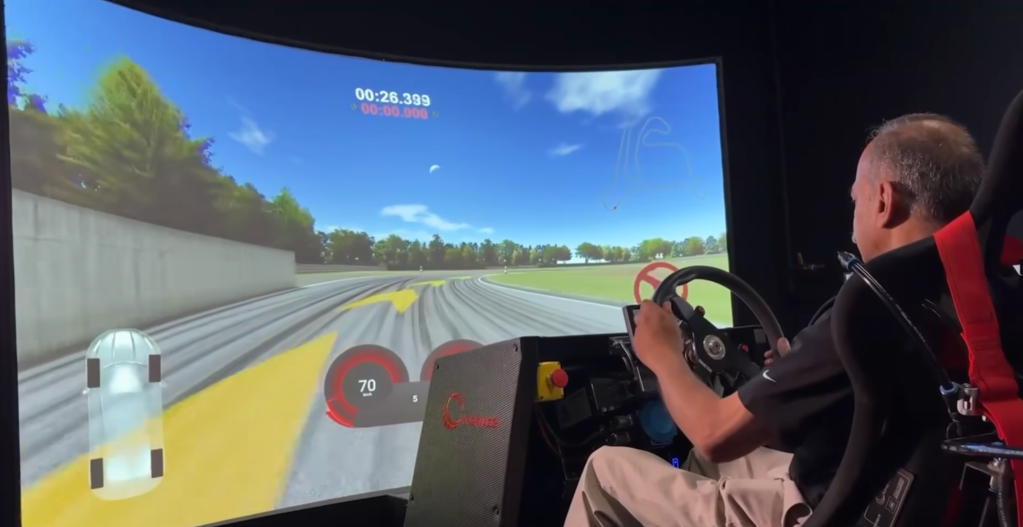
Other engineers are keeping AI on a short leash. Mohammed Malik, who runs Stellantis’ driving simulators from the Automotive Research & Development Centre in Windsor, Ontario, said his group is “keeping it in the box,” but even so, technology has transformed his work. Malik at work is like a life-size, immersive game of Mario Kart, the classic racing game where Nintendo characters pick their car and track then try to dodge obstacles to the finish line.
His job has been transformed by his simulator more than by AI. Engineers used to tune a vehicle on a computer, build a prototype and only then find out how it felt. Now a driver can feel the computer model before anything is built, and Malik can swap springs on the fly. He can test 10 tires in an hour, something no prototype can do. His team has scanned about 20 roads, from racetracks to local streets, in 10-centimeter squares, and it trades models with colleagues in Brazil and Italy instead of shipping cars across oceans.
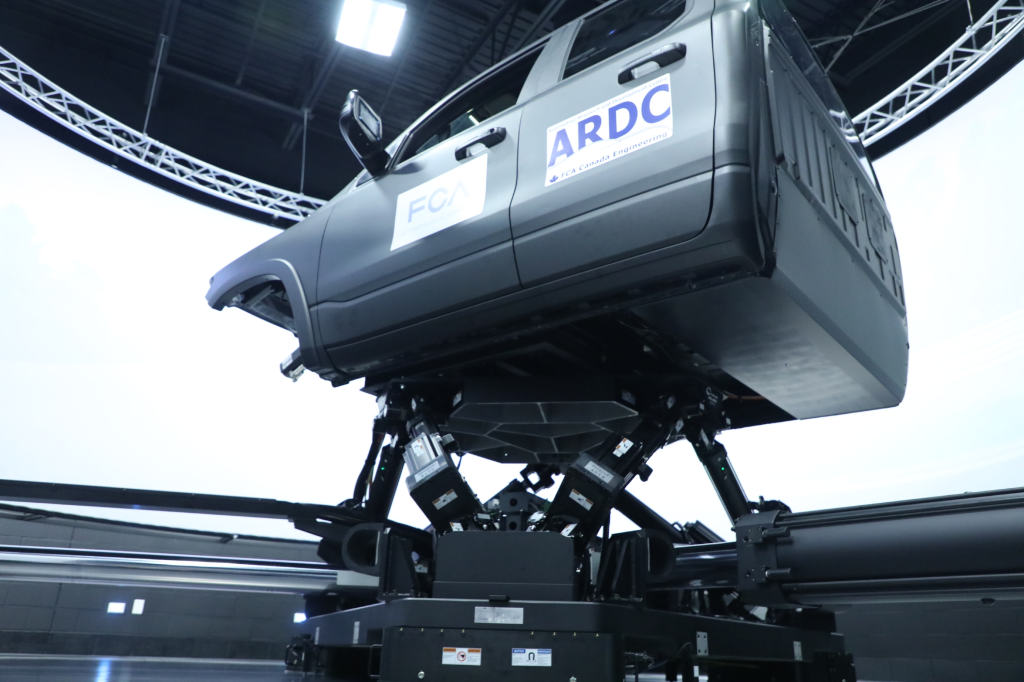
Malik plays me a video of a full-size Stellantis body that lacks any wheels — instead it’s suspended on what appear to be mechanical spider-legs, bobbing up and down, back and forth in front of a giant TV screen with a track. Asked whether he ever played Mario Kart, he said he has a track of his own, built by a student. “You can drive the Rainbow Road if you want,” he beams from behind his bushy mustache.
Malik plays me a video of a full-size Stellantis body that lacks any wheels — instead it’s suspended on what appear to be mechanical spider-legs, bobbing up and down, back and forth in front of a giant TV screen with a track. Asked whether he ever played Mario Kart, he said he has a track of his own, built by a student. “You can drive the Rainbow Road if you want,” he beams from behind his bushy mustache.
Malik plays me a video of a full-size Stellantis body that lacks any wheels — instead it’s suspended on what appear to be mechanical spider-legs, bobbing up and down, back and forth in front of a giant TV screen with a track. Asked whether he ever played Mario Kart, he said he has a track of his own, built by a student. “You can drive the Rainbow Road if you want,” he beams from behind his bushy mustache.
AI’s role is narrower. A simulator run produces thousands of channels of data, and when a car hits a bump and “swirls a little bit,” Malik asks AI which channel to look at. His ambition is much bigger: feed an agent every test driver’s scorecards from every region, ask it “what does it take to make a Jeep,” and let it drive the simulator itself until the answer feels right. For now, he said, the company is moving at a very slow pace and wants some form of control. “Some of the stuff we want to do, we can do today,” he said. “And some of the stuff we want to do, we cannot.”
The bigger surprise has been people’s willingness, or lack thereof, to adapt. Veteran test drivers who spent 10 or 20 years in physical prototypes were slow to move to the simulator. Young engineers with racing setups in their basements took to it right away. Laliron has seen the same thing. Experienced engineers carry old failures with them, she said, and sometimes “their brain is closing doors.”
Some people have made peace with work that is better but not faster. Roberts said her AI research tool returns 10 to 15 sources, and she has to check every one. “I don’t think it saves time,” she said, though it makes her work more “robust.”
One more cycle
Alison Rahm, the chief vehicle engineer for midsize and large SUVs, has seen this before. She is moving back to Michigan after two years running Stellantis’ European car lineup from Paris, and she remembers a staff meeting in 1997, when her boss told the room they were getting something new called email. “All of us were in a total panic,” she said. They went back to their desks and tried it anyway.
AI now runs checks that people used to do by hand, Rahm said, like going down a list of about 1,000 engineering design practices. That frees engineers to ask whether the rules themselves are right. But she isn’t ready to stop double-checking. For years after virtual crash testing arrived, she notes, engineers still crashed real cars into the walls to convince themselves the situations were right.
Asked how long it will take to trust AI the same way, Rahm paused. “I think we need another life cycle to prove to ourselves that our assumptions were right.” While cautioning that different products have different life cycles, she deliberated. “I would say four years.” That would land in 2030, the year Filosa has promised a 7% margin.
Saha drives us back into Iacocca’s garage, and puts his hands back on the wheel of the Cherokee as the diamond-shaped parking structure looms. The robot needs a guiding hand coming home.
Saha takes a long view on when the AI game will shake out. As we roll into a smooth parking job, he turns to me and says he’s a Game of Thrones fan (his favorite character is Robb Stark). While he works in logic, he explains, he likes fantasy because he finds he needs “to be a little bit philosophical” with the other side of his brain. “Creativity is very important.”
Saha takes a long view on when the AI game will shake out. As we roll into a smooth parking job, he turns to me and says he’s a Game of Thrones fan (his favorite character is Robb Stark). While he works in logic, he explains, he likes fantasy because he finds he needs “to be a little bit philosophical” with the other side of his brain. “Creativity is very important.”
Humans have adapted and thrived to date by figuring out creative solutions, he said. “We were never the strongest animal in the world,” he said, riffing a bit in the style of Game of Thrones writer George R.R. Martin. He suggests that several hundred years of industrialization led people sometimes to get used to process-oriented thinking. “My understanding is we’re going to leave behind the process-oriented world because AI is going to help us. And my personal belief is that’s actually good.”
“There will be some loss,” Saha said, as there is with any technological shift. But he pointed out that humans have adapted to the natural world through creativity over and over again. “People are going to figure out how to tame AI, too.”
The post ‘The best thing that you can do for your career is to make yourself redundant’: Inside Stellantis’ AI push after the ‘starting gun went off’ appeared first on Fortune.