Toughness is a cardinal virtue in the MAGA movement, where it signals an in-your-face masculinity and a readiness to use force — and even cruelty — to conquer perceived enemies.
At times, this quality has become intertwined with Christianity, as when Defense Secretary Pete Hegseth in March recited a prayer at the Pentagon for God to “break the teeth of the ungodly.”
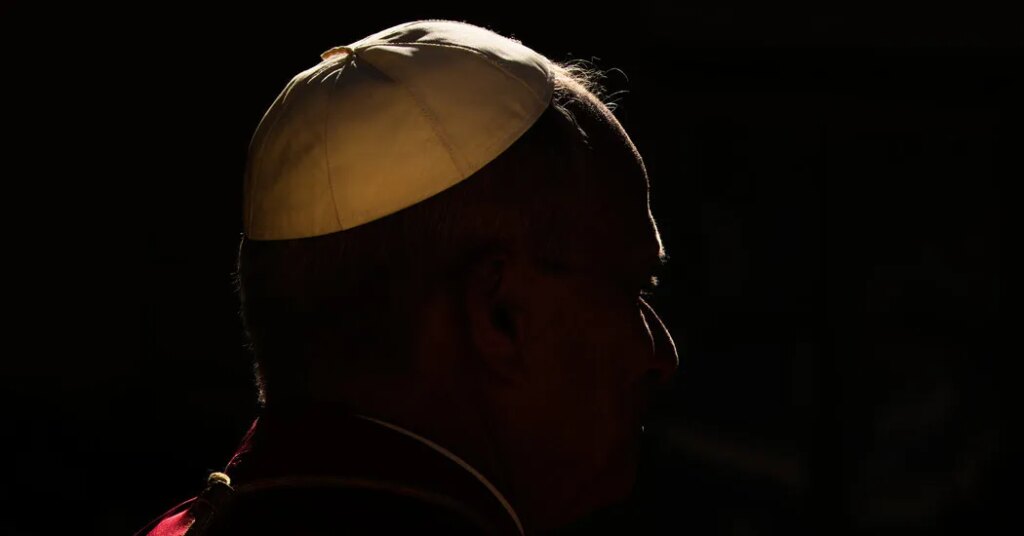
Pope Leo XIV, who has clashed with the Trump administration over the war in Iran and immigration policy, hardly fits this mold of “high T” Christianity. He’s calm and reserved, and often seeks compromise over conflict. But it would be a mistake to misjudge Leo as soft. He’s actually the tough guy here.
During his decades as a missionary and leader of the Augustinian order, the pope displayed a very different kind of toughness, repeatedly serving in perilous places and often putting himself in danger to pursue his ministry.
That same kind of grit has been on display recently in Rome, where Leo underwent surgery on Oct. 13 to remove a cancerous growth in his lung, took a call with President Vladimir Putin of Russia from his recovery room and was out of the hospital in less than a week.
Leo is determined to embark on a grueling trip to Argentina, Peru and Uruguay on Friday that will involve more than a dozen flights covering 19,000 miles — despite still recovering from the surgery that removed a lower lobe of a lung. The Vatican last week confirmed the trip would go forward as planned.
This is the missionary mind-set, one that requires sacrificing your ego — and sometimes your health and well-being — for the good of the mission. “The great missionaries bear witnesses to quiet, unobtrusive approaches, whose method is the sharing of life, selfless service, the renunciation of any calculated strategy, dialogue and respect,” Leo preached in St. Peter’s Basilica in April. “The cross is part of the mission.”
Leo is not the first pontiff to travel to dangerous places or display determination in facing their own frailties. In many ways, demonstrating courage, resolve and, yes, faith is part of the papacy’s job description.
In the Vatican announcement confirming the South America trip, the pope said he’s “looking forward to returning to the continent where I’ve experienced so many moments of my life.”
Not all of those moments were happy; a few were harrowing.
In 1984, the future pope was a young Augustinian named Robert Prevost studying for a doctorate in canon law in Rome. A car accident in Peru killed two priests who were helping to set up a new diocese in the remote northern town of Chulucanas. Father Prevost’s Augustinian superiors asked him to step in and move more than 6,500 miles away. “It is not without a certain amount of fear that I have accepted this new assignment,” Father Prevost told fellow friars. Nonetheless, he went.
Soon after arriving, Father Prevost contracted typhoid fever. But he stayed on for his one-year term, completing his assignment.
A violent Maoist group known as Sendero Luminoso, the Shining Path, was terrorizing the country at the time. Senderistas left the dead bodies of suspected traitors in the streets and sent bomb-laden burros into crowded areas. Nevertheless, Father Prevost returned to Peru less than two years later, writing his fellow Augustinians in 1987 that he felt a strong urge to live “in the midst of the immense mass of alienated people, participating in their lives, their anguish, their despair and their hopes.”
During his time back in Peru, Senderistas began to target foreign Catholic clergymen as “agents of imperialism disguised as priests.” Father Prevost was offered a bodyguard through the archdiocese, but he refused. As the violence escalated, Father Prevost stayed. His credibility as a Christian depended on his willingness to remain, whatever the dangers. He remained until 1999, when the worst of the terrorist violence was over.
In reporting on Leo’s life before the papacy for our book, we heard numerous stories like this.
When he ran the global Order of St. Augustine as prior general he traveled to over 40 countries. Some of those trips involved risks that many people would not take.
In September 2001, hundreds of Muslims and Christians died in a week of sectarian fighting in the streets of Jos, Nigeria. Even many Nigerians avoided the area. But the Augustinians had just inaugurated Nigeria as their order’s first African province, which was headquartered in Jos. Father Prevost was determined to be there for the opening ceremony in November.
When he arrived, armed soldiers guarded the Augustinians’ compound. “It was dangerous,” said the Rev. John Abubakar, a Augustinian from Nigeria who was there. “And the fact that he had that courage was inspiring. We were like, ‘Who is this American?’”
Pope Leo doesn’t brag about his exploits. In fact, he rarely talks about them at all. But beneath his Midwestern reserve is a certain kind of fortitude, a quiet courage, a grace under pressure. He has a serenity about him, even during really difficult moments, the Rev. Robert Hagan, an Augustinian who knows Leo well, told us: He’s “not a nervous dude.”
As pope, he seems a bit more careful about his personal safety (the Swiss Guard helps). But he remains as determined as ever. In a hot-mic moment at the Apostolic Palace last year, Queen Rania of Jordan turned to Pope Leo and asked with concern, “Your Holiness, do you think it is safe to go to Lebanon?”
“Well, we’re going,” he replied with a tight smile. The trip, which included a stop in Turkey, went off safely, despite war in the region.
Leo has shown the same resolve during his bout with lung cancer. He announced the diagnosis himself from the Apostolic Palace, revealing a transparency — and vulnerability — rarely, if ever, seen from modern popes.
On the second day after his operation, his surgeon found him arranging chairs in the hospital’s chapel. “Holy Father, we can do that,” his surgeon told him.
“It doesn’t matter,” Leo replied. “I can do it, so I will.”
Daniel Burke is senior editor for religion and spirituality and Scott Detrow is a host of “All Things Considered” at NPR. They are the authors of “American Pope,” a biography of Pope Leo XIV.
The Times is committed to publishing a diversity of letters to the editor. We’d like to hear what you think about this or any of our articles. Here are some tips. And here’s our email: [email protected].
Follow the New York Times Opinion section on Facebook, Instagram, TikTok, Bluesky, WhatsApp and Threads.
The post President Trump Called the Pope Weak. Who’s the Real Tough Guy? appeared first on New York Times.