Demand for protein has skyrocketed in recent years as American eating habits have changed.
The Make American Healthy Again movement and new dietary guidelines emphasize protein. Tens of millions of Americans on GLP-1 medications are adding more protein to their diet to retain muscle as they lose weight. Companies have added protein to everything from cereals to Kraft Mac & Cheese.
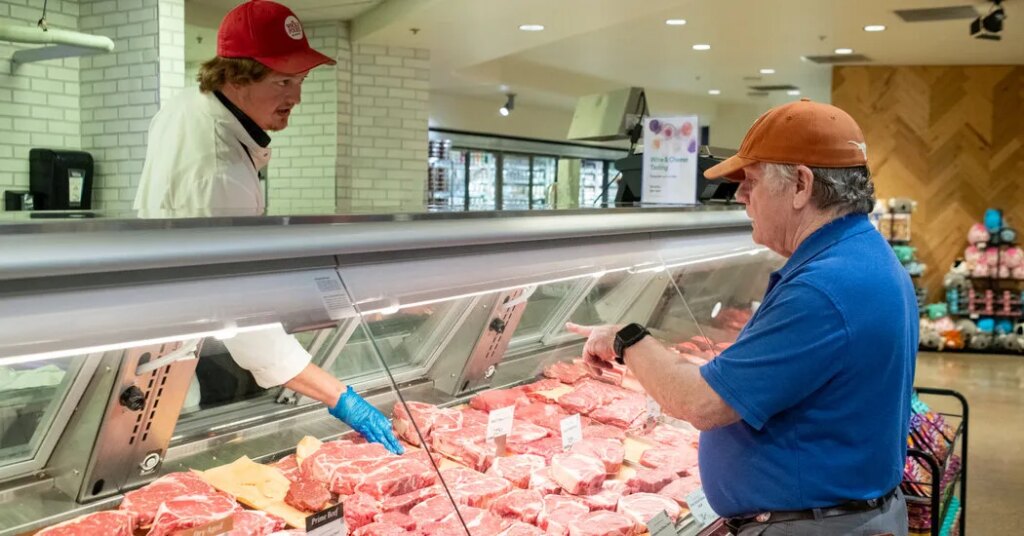
Increasingly, Americans want their protein through high-quality beef. With the country’s cattle supply at its lowest level in decades, that demand has pushed steak prices to nearly $13 per pound and ground beef to nearly $7 per pound. Steak prices are up 3.5 percent in the last year, and 16.6 percent in the last two.
The well-off among American consumers “have never been more able and willing to pay for great beef, and it has the market outcome of raising the price,” said Glynn Tonsor, a livestock economist at Kansas State University. The average American is projected to eat 59 pounds of beef this year, up from a low of 54 pounds in 2014.
Still, the rising cost of beef — and groceries overall — has been a common talking point on the campaign trail this fall. With the exception of chicken, consumption of other forms of protein hasn’t kept up with beef.
Here’s a look at other sources of protein that Americans are eating.
Chicken
Chicken is the cheapest and most consumed animal protein. Whole chickens cost just $2 per pound, while boneless chicken breasts are double that. It is favored by those with health concerns about red meat, even though more recent studies suggest that some of those concerns are overblown.
In the early 1990s, Americans ate about as much chicken as they did beef, about 65 pounds a year of each. Since then, chicken consumption has soared in the United States, with people expected to consume on average about 108 pounds this year. Almost all of that is from broiler chickens, birds developed to yield a lot of meat.
Americans eat a little less than an egg a day — the average American will eat around 270 this year — a number that has barely budged in years. Eggs, another source of protein, cost about $2.25 a dozen, down from $6.25 in May 2025. That increase was mostly attributed to avian influenza.
Since chickens can lay eggs as soon as 16 weeks after birth, and broiler chickens can reach slaughter weight at seven weeks — compared with nearly two years for cattle — any swings in supply or demand can be addressed quickly.
Only another large outbreak of avian influenza would markedly decrease the chicken and egg supply and send prices up.
Pork
While consumers may be looking to eat more protein, they aren’t getting it from pork.
Pork chops cost around a third of what steaks do, but that hasn’t been enough to get more Americans to try them out.
Pork consumption has essentially remained flat, around 50 pounds annually per person, for 40 years, according to the Agriculture Department data. The cost of pork has remained about the same over the past five years, ranging between $3.50 and $3.75 per pound. Wholesale pork prices are falling, and pork production is down slightly.
Pork sales also suffer more than other meats from high gas prices. According to the Agriculture Department, bacon consumption is a “complement to restaurant meals and road trips,” both of which slow when gas prices rise.
Fish
American consumption of seafood, per capita, nearly doubled since the 1960s to almost 20 pounds in 2023, according to the latest Agriculture Department data.
That growth was almost entirely from fresh and frozen fish and shellfish, as opposed to canned seafood. Consumption of canned fish has remained steady, but its share of fish consumption has declined as fresh and frozen categories have grown.
Almost 60 percent of the fresh and frozen seafood consumed is what the Agriculture Department labels finfish, while shellfish makes up the rest. While eating tinned fish has become trendy (sardinemaxxing, anyone?), the average American still eats just one-third of a pound of cured fish each year.
Seafood prices are extremely vulnerable to tariffs and trade disruptions, as 80 percent of the seafood Americans eat is imported. Seafood prices have risen 6.9 percent over the last year.
Turkey
Many Americans will roast a turkey for Thanksgiving, and it may be one of the few times during the year they eat a whole turkey.
The National Turkey Federation estimates that 45 million turkeys are sold for Thanksgiving. Sizable amounts are sold for Christmas and Easter as well, but Americans consume most of their turkey in other forms: sliced deli meat, turkey bacon, turkey burgers and so on.
The average American ate 13.2 pounds of turkey in all its forms last year, according to the Agriculture Department, the smallest amount since 1986. Part of the reason may be that wholesale prices are up. The average per-pound cost for frozen, whole turkeys rose 29 percent from last year, according to the Agriculture Department. The retail cost of what the Bureau of Labor Statistics calls “other uncooked poultry including turkey” is up 9 percent.
Soy and other plant-based proteins
The United States grows almost a third of the world’s soybeans. But Americans hardly eat any of them, at least not directly.
Around 40 percent of those soybeans are exported, mostly to China, while the rest are sent to crush plants, where they are separated into soybean meal and soybean oil. The meal is mostly used in animal feed, while the oil is used to cook and ends up in all sorts of food products.
Americans consume a lot of soybean oil — at least 25 pounds per year, whether in fried food, mayonnaise or salad dressings. But they eat less than two pounds of soy annually, mostly in soy milk, tofu and edamame.
Despite the rise of companies like Beyond Meat and Impossible Foods and innovation in fake meat proteins, most Americans just don’t eat much of them. And now those companies are struggling. Beyond Meat’s market capitalization is about $125 million, compared with more than $13 billion when it went public seven years ago. The company reported revenue of $68.8 million in the quarter that ended June 27, down 8.2 percent from a year earlier. Sales volume was down 9.5 percent, the company said.
The post Pick Another Protein? Americans Still Want Beef, Despite the Price. appeared first on New York Times.