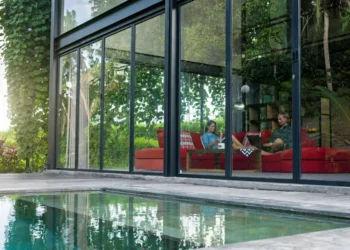
One thousand feet above city traffic, from her new 74th-floor apartment, Anastasia Zeeman has the kind of enchanting views that only floor-to-ceiling glass can offer. She looks out on a skyline and horizon where storms and sunsets play out like big-screen movies.
But Malaysia’s tropical sun sometimes delivers what Ms. Zeeman calls a “wall of heat” radiating from her windows.
More than any other form of architecture, glass skyscrapers testify to the human desire for sweeping views and a sense of rising above the fray. In some of the world’s fastest developing places — Dubai, Mumbai, Jakarta, Kuala Lumpur — they have become city-defining showpieces, signaling sophistication and rising financial clout.
And yet glass tends to be ill-suited for keeping out the heat, and its overuse often makes buildings more energy intensive to cool. That’s fueling a debate about whether these symbols of modernity make sense in a world growing hotter because of climate change.
Some argue that the ambition and innovation that spawned the high-rise era can help modern skyscrapers fend off rising temperatures while maintaining the million-dollar views. Others say the all-glass aesthetic is at odds with the environmental goal of reducing greenhouse-gas emissions. They say it is time to rethink city skylines.
When he was New York City mayor in 2019, Bill de Blasio briefly floated the idea of banning the “glass and steel” structures altogether. Philip Oldfield, an Australian architecture scholar who wrote a book on sustainable high rises, calls the glass towers “environmentally criminal.” Ken Shuttleworth, a prominent British architect who three decades ago helped design London’s Gherkin building, now says he’d do it differently, without quite as much glass all the way around.
“You really just need to have smaller windows,” said Mr. Shuttleworth. He said his approach to skyscraper design has changed as he’s come to realize that “we are burning a hole in the planet.”
Despite that criticism, the glass skyscraper’s appeal endures.
The form, which originated in American cities like Chicago and New York, has now spread across China, the Middle East and Southeast Asia. Over the past decade, the world has constructed 25 times the number of buildings 200 meters (roughly 655 feet) or taller that it did in the 1980s, according to the Council on Tall Buildings and Urban Habitat. Some 91 percent of the world’s skyscrapers of that height have been built since the turn of the 21st century.
The “vast majority” have facades largely of glass, said Antony Wood, who was the president of that council until last year.
Proponents of glass-dominant design say this building spree can still be responsible if strategic choices are made.
Because the sun doesn’t hit a building equally from all directions, buildings can boost their energy efficiency simply with the right orientation. Architects can also add features like fins or undulations so less sunlight directly hits the glass. Stringing greenery on glass facades is also a trend.
Glass can also be treated with gossamer-thin metallic coatings that reflect away radiation. Most buildings use several layers of glass to impede the heat. One high-end option involves sandwiching automated blinds between them.
“It’s not as simple as people think it is,” said Gordon Gill, an architect at Adrian Smith + Gordon Gill. He has helped design numerous skyscrapers, including a 1,000-meter tower in Saudi Arabia that will be the world’s tallest once completed. “I’m not a big fan of, ‘Aha, we found the answer: We’re just going to use less glass.’ I don’t believe in panaceas. Your entire process is about balance.”
Most studies conclude that cutting down on glazing, as glass is sometimes called, does help reduce energy for cooling. A 2019 analysis of 1,000 American office buildings found that structures with larger window ratios had higher air-conditioning loads — though window size didn’t predict a building’s overall energy use. A research paper from Saudi Arabia concluded that glazing “should be minimized in hot regions,” with windows ideally amounting to 20 to 30 percent of the facade.
But skyscrapers, of course, are so much more than objects meant to maximize efficiency. Big windows let in natural light, which limits the need for artificial lighting.
They also help units sell.
Ms. Zeeman, for example, had looked at seven or eight properties before walking into Oxley Towers, one of which is Kuala Lumpur’s sixth-tallest building. She’d moved from the Dutch countryside with her husband, who’d gotten an engineering job in the city. They saw the panorama and paid over their budget.
“To wake up with this view, it’s a completely different mood,” she said. “It inspires me to do more.”
‘Beautiful to the eye’
Glass has helped give Malaysia the very thing its prime minister said he wanted three decades ago: buildings that evoke development and are “beautiful to the eye.”
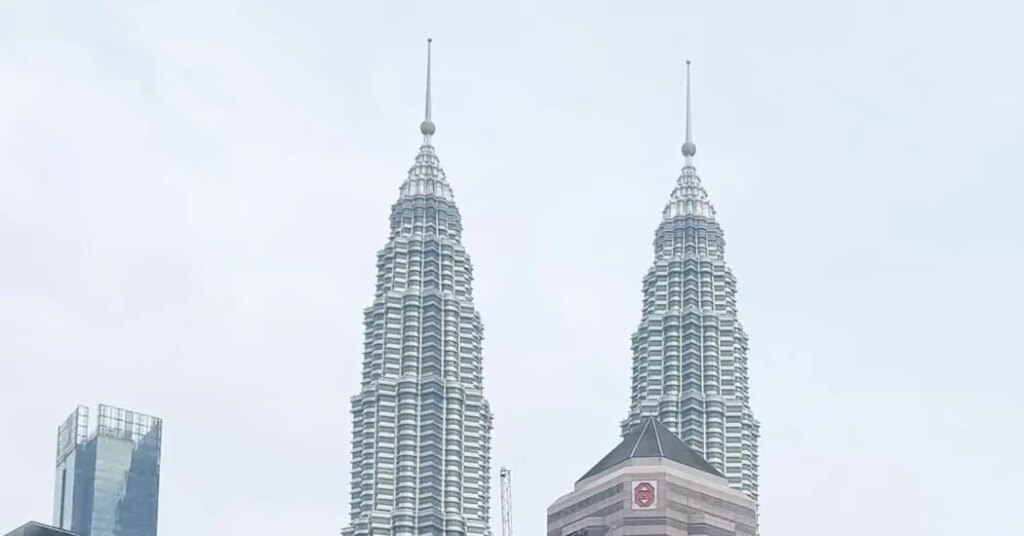
The country started in 1996 by completing the twin Petronas Towers, the tallest buildings in the world at the time. Then it kept going, constructing hundreds more skyscrapers — including two taller than Petronas. Malaysia, with just 35 million people, now has more buildings 200 meters or higher than any country but China, the United States and the United Arab Emirates.
Some of them, particularly ones with top-end technology, have good energy efficiency numbers, said Sarly Adre Sarkum, an architect and the chief executive of Malaysia’s Green Building Index. But Mr. Sarkum said the overall quality of the towers is “still not so good.” He said that in Malaysia’s climate, extensive glass facades carry “significant energy consequences.”
Roughly 60 percent of the building energy use in Malaysia stems from air-conditioning, Mr. Sarkum said. “When buyers purchase these, they think they get great views,” Mr. Sarkum said. “But you need to keep the curtains closed.”
The Oxley Towers, where Ms. Zeeman lives, represents one of the city’s heaviest uses of glass. Even the bathrooms next to the gym have floor-to-ceiling windows.
The Oxley was designed by a firm founded by David Mizan Hashim, a self-described “idealist” who obtained his master’s degree from Harvard in 1986 and launched his company, Veritas, soon after. Veritas says it accepts only projects that aim for green certifications.
But Dr. Hashim acknowledged that his idealism doesn’t always play out, given the trade-offs over aesthetics and performance. “This is the struggle of my life,” he said.
For one thing, developers of residential high rises don’t wind up paying the energy bills. “So there is less of an incentive for them to go all-out,” Dr. Hashim said.
The Singapore-based company that developed Oxley said in a sustainability report that it works “continuously” to improve the efficiency of its properties, and uses energy-efficient air-conditioning systems and motion-sensor lighting where possible. It says Oxley Towers have “high-quality glazing” that “reduces the need for extensive air-conditioning.”
Even so, Dr. Hashim said, the building is “not as cutting-edge as it could be.” That’s because the development company wanted a relatively unadorned look, which removed the possibility of adding shading features. “That was an aesthetic choice,” Dr. Hashim said.
The development company, Oxley Holdings Limited, did not respond to a request for comment.
The towers will likely obtain a silver rating from Malaysia’s rating index, the third-highest level, he said, though Dr. Hashim had hoped it could be gold. Ultimately, he said, “it is a building that is being sold.”
The power of air-conditioning
The glass skyscraper became viable only with the advent of air-conditioning.
Before then, high rises were built primarily out of heavy masonry, with windows as little cutouts. That aesthetic now looks old-fashioned. But in a 2023 study comparing the energy efficiency of nine New York City high rises, the oldest skyscraper — the Chrysler Building, constructed in 1929 — was by far the best performer.
Even in Malaysia, the first modestly tall buildings looked as if they were in an almost defensive stance against the sun.
The 18-story parliament building of the 1960s, Malaysia’s tallest at the time, came wrapped in a honeycomb-like lattice. The Dayabumi Complex, built in the 1980s, had its windows shrouded behind an ornate white veil inspired by Islamic motifs.
Stellios Plainiotis, the chief executive of a facade consulting company in Kuala Lumpur, said Malaysia was “effectively experimenting with what a skyscraper for the tropics should look like.” Some of those ideas now feel “remarkably current,” he said.
Critics of the all-glass approach say air-conditioning excused architects to ignore other design lessons about contending with heat. Those include techniques honed over centuries in warm environments, such as the white, sun-reflective facades of Greece or the open, traditional homes of Southeast Asia.
“Our ancestors, they didn’t go to school. And yet they could build buildings that respond to the climate,” said Abdul Razak Bin Sapian, a professor of architecture at the International Islamic University Malaysia.
One such example can be seen from the upper floors of the Oxley: a neighborhood, just a half-mile away, that looks from above like a toy village. Surrounded by high rises, it is an island of one- and two-story homes, preserved almost by accident because of colonial-era laws that created an enclave for ethnic Malay ownership.
That has left the neighborhood, Kampung Baru, as an architectural time capsule. People hang out in open-air restaurants under ceiling fans, and many homes have large overhangs that ward off the sun. Small windows are covered by horizontal louvers.
One of the oldest homes in the neighborhood belongs to Jamiyah Kesot, 71. Constructed of dark timber with a high-pitched roof, it relies on the cooling features from a different time. It is built on stilts, allowing airflow from below. Ms. Kesot’s monthly energy bill is around $15. She uses two floor fans and no air-conditioning.
“I don’t need it,” said Ms. Kesot, a grandmother of seven who worked on a Texas Instruments assembly line for 37 years before retiring in 2011.
Most days last summer, the outdoor temperature rose into the 90s. And Ms. Kesot’s home, at least to an unacclimated visitor, still felt punishingly humid. But one afternoon a thunderstorm rolled in. Wind rippled through the louvers, flapping the curtains, and the home filled with fresh air.
From her living room, as the thunder crackled, Ms. Kesot had no panoramic view of the soaring buildings all around her or the dramatic skies about Kuala Lumpur. For that, she’d have to go outside.
The post Shiny Glass Skyscrapers Are a Hot Thing. Literally. appeared first on New York Times.