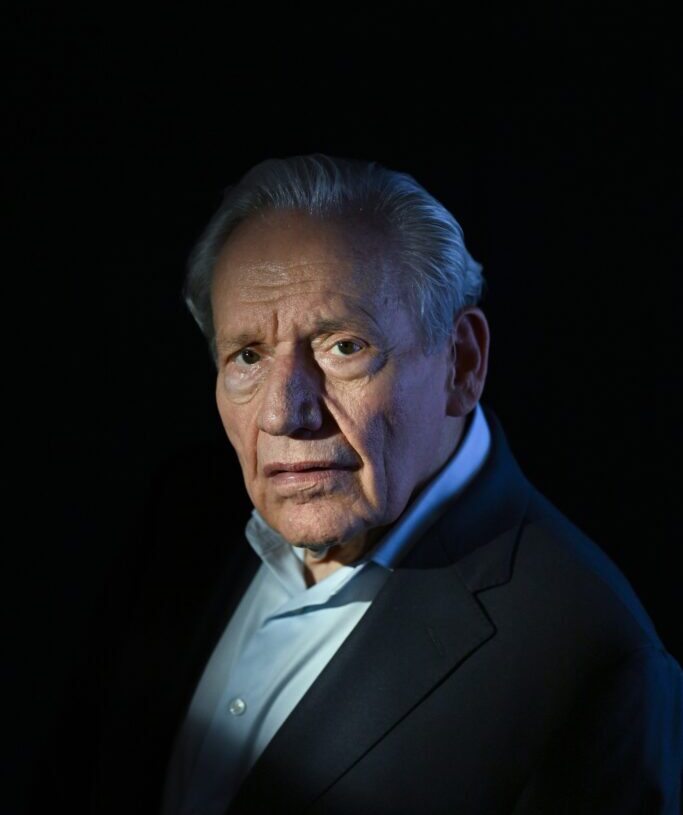
For 55 years, Bob Woodward has unearthed some of Washington’s deepest secrets. Now the legendary reporter is exposing a trove of his own.
During his long career as a Washington Post journalist and blockbuster author, Woodward zealously protected many confidential sources who helped him uncover the Watergate scandal and penetrate the enigmatic sides of every president since Richard M. Nixon. For three decades, Woodward famously safeguarded the identity of Deep Throat, the most guessed-about anonymous source ever, until former deputy FBI director Mark Felt outed himself at his family’s urging in a 2005 Vanity Fair article.
Today, with many of Woodward’s other key sources deceased, the 83-year-old writer has decided to pull back the curtain and reveal who helped him score many of his monumental scoops. In doing so, he draws on a vast hoard of notes, memos, transcripts and other documents that he collected over the years.
Woodward’s new book unravels the lingering mystery of how he managed to slip into then-CIA Director William J. Casey’s room at Georgetown Hospital in 1987 and extract a bedside confession from the mortally ill spymaster that he knew about the diversion of profits from arms sales behind the Iran-contra scandal.
Some CIA leaders and Casey’s widow accused Woodward of making up the encounter for his 1987 book, “Veil,” an account of the CIA’s secret wars during the Reagan administration. They said it was unfathomable that he could gain unauthorized access to the well-guarded Casey, much less get him to talk after seizures and brain surgery had rendered him largely mute.
In “Secrets,” Woodward explains that he had methodically cultivated members of Casey’s security detail as sources for years. The tactic paid off. Instead of kicking Woodward out when he showed up at the hospital uninvited, one of the guards greeted him warmly — “Hi, Bob” — and the protective unit let him speak with Casey.
When Nixon cried
For the first time, Woodward also divulges how he learned about an intensely private White House meeting between Nixon and Secretary of State Henry Kissinger during the final throes of Watergate in 1974, when Nixon broke down sobbing and persuaded the crusty Kissinger to kneel and join him in prayer. The next day, the disgraced president announced in a televised address that he would resign.
Without specifying their sources, Woodward and his reporting partner at The Post, Carl Bernstein, narrated the intimate episode in their 1976 book, “The Final Days,” replete with extensive dialogue between Nixon and Kissinger. As with the Casey hospital story, critics questioned whether it really happened or how Woodward and Bernstein could have told it as if they were in the room.
In his memoir, Woodward reveals that the main sources for what he calls “the infamous prayer scene” were two of Kissinger’s deputies: Air Force Maj. Gen. Brent Scowcroft and Lawrence Eagleburger, a top State Department official. Though neither man witnessed the scene, they told Woodward that Kissinger described it to them immediately afterward.
Moreover, when a drunk Nixon phoned Kissinger later that night and pleaded with him not to tell anyone that he had cried, both deputies were silently listening in on the call — and then blabbed about it to Woodward, according to the manuscript. Eagleburger and Scowcroft died in 2011 and 2020, respectively.
(Kissinger, who died in 2023, was another source for the prayer scene. Woodward reports that Kissinger discussed it with him one year later during a party at — of all places — the Watergate complex.)
In his book, Woodward calls Scowcroft, who also served as national security adviser to Presidents Gerald Ford and George H.W. Bush, “a secret source for 35 years” and one of his most valued. “Scowcroft had precisely the kind of mind I appreciated and frankly, I loved,” Woodward writes. “I could see he relished telling the true inside story from the shadows rather than on the front page.”
Besides unmasking sources, Woodward devotes one chapter in “Secrets” to his disappointment in another close contact: Jeff Bezos, the billionaire owner of The Post and founder of Amazon.
Woodward writes that he met Bezos in 1997 “when Amazon was just a small online bookstore that he was operating out of his garage” and a few warehouses in Seattle. Impressed and “intrigued” by the e-commerce entrepreneur, Woodward fostered a relationship.
When Bezos bought the money-losing Post in 2013, Woodward recalls that he felt “relief.”
“I believed at the time that Bezos would provide the finances for The Post to continue to operate courageously,” Woodward writes. “Jeff delivered on his word, initially.”
Woodward praises Bezos for not flinching during the first Trump administration when the White House “went after Amazon, tooth and nail” because of The Post’s hard-hitting coverage. He also recalls that in 2018 when his first book about Trump — “Fear” — was coming out, he gave Bezos a heads-up and warned him that it would be highly critical of the president.
“Jeff said, ‘Don’t worry, I have your back, Bob. I’ll always have your back.’ And he did at first. Not just mine, but the paper’s.”
According to Woodward, things changed in the fall of 2024, when Bezos ordered The Post’s editorial board to kill a draft endorsement of Democratic presidential nominee Kamala Harris shortly before Election Day.
“It was the timing that looked especially bad, like Bezos and the newspaper were capitulating to Trump,” he writes. “But part of me believed he would quickly realize the mistake. … I gave him the benefit of the doubt.”
Woodward writes that he grew more dismayed after Bezos made several other decisions: to prominently appear at Trump’s inauguration; to revamp The Post’s opinion pages so they would promote personal liberties and free markets, without publishing dissenting viewpoints; to cut the newsroom’s budget and lay off about 30 percent of its staff; and to remain silent in response to Trump’s attacks on the press.
“As I saw it, Bezos was now directly compromising public trust in The Washington Post’s aggressive and independent journalism — a reputation and legacy reporters and editors had tirelessly forged with readers over a half century,” Woodward writes, adding, “There are things in life and even in business that are so much more important than financial gain.”
A Bezos representative declined to comment. In a statement, Post CEO and Publisher Jeff D’Onofrio defended Bezos.
“To be clear, Jeff remains unwavering in defense of our work, our independence and the safety of our journalists. He hasn’t and doesn’t meddle in our reporting (and knows no worthy editor would accept it if he did),” D’Onofrio said.
He added: “Like other media companies at other moments, Jeff has pushed The Post to end years of losses and seek growth — but he’s explicit that the goal is to sustain the significant journalism that is our reason for being, and our newsroom is delivering.”
‘You must look everywhere’
In the memoir — his 24th book — Woodward tells how he became an inveterate “snoop” growing up in Wheaton, Illinois, where he learned through painful experience that other people’s secrets had the power to affect him deeply.
His parents tried to hide their marital troubles — and his mother’s mental health struggles — even after 11-year-old Bob caught his mother passionately kissing his father’s best friend in the dining room. His father only admitted they were getting a divorce after Bob confronted him with an incriminating letter he had discovered in his father’s sock drawer that referred to the end of the marriage.
“You have to snoop, I concluded then at age 11,” he writes. “You’ve got to look in the drawers. You must look everywhere things could be hidden because they are being hidden.”
As a teenager, Woodward worked as a night janitor at his father’s law practice, a job he loved because it gave him the freedom to snoop through confidential legal files stored in the attic. The files contained what Woodward describes as “the real stories, the hard ugly controversies in people’s lives” — details about police arrests, broken marriages and, in one case, a cover-up involving “a prominent school administrator” who got one of Woodward’s schoolmates pregnant.
Woodward attended Yale University on a Naval ROTC scholarship. After graduation, he served five years in the Navy. Once he completed his military service, he turned down an admission offer from Harvard Law School and instead decided to try to become a newspaper reporter — even though he had no experience or training.
He flunked a two-week tryout at The Post — “a spectacular crash,” as he puts it — but got an entry-level job at a Maryland weekly where he learned the basics of newsgathering and writing. After a year, he pestered The Post to give him another chance and it did, assigning him to the night-cops beat. He was the lowest-paid reporter on the staff.
Nine months later, five men were arrested for burglarizing Democratic headquarters at the Watergate. Woodward, still a raw rookie, covered their initial court appearance and had the good sense to sit in the front row — which enabled him to hear one of the accused burglars whisper to the judge that he had worked for the CIA.
That revelation prompted a whirlwind of Post coverage that would culminate in Nixon’s resignation two years later and make Woodward and Bernstein the most famous reporting duo in America.
While the backstory of how they covered the Watergate scandal is well known, Woodward reveals fresh details about how he developed two of Nixon’s now-deceased defense lawyers — Fred Buzhardt and Leonard Garment — as secret sources. In numerous interviews, both attorneys separately admitted to Woodward that their client was an incorrigible liar whom they personally disliked.
As Nixon’s defense counsel, Buzhardt listened to hundreds of hours of conversations that the president had secretly taped in the White House but resisted turning over to prosecutors until he was finally ordered to do so by the Supreme Court. In public, Buzhardt vigorously defended Nixon and was seen as “the operational man in charge of the Watergate cover-up,” according to Woodward. In private, however, his assessment of Nixon was caustic.
“He flat out lies,” Buzhardt told Woodward during one of 17 interviews that took place in 1974 and 1975. “He still to this day thinks that he was not involved in the cover-up.”
During the height of Watergate, Garment regularly met Woodward for interviews at a Chinese restaurant in downtown Washington and once brought along a briefcase filled with what the lawyer called “the really incriminating tapes.” In the memoir Woodward doesn’t say whether he was able to listen to them, but he writes that Garment called the recordings “infantile” and “sick.” Through them, he added, Nixon was “letting America into the toilet of his mind.”
State secrets
Woodward is known for interviewing presidents and other high-ranking public figures, but he developed confidential sources at all levels of government.
In “Secrets,” he writes that Stanley Sporkin, the CIA general counsel and former chief enforcement officer at the Securities and Exchange Commission, was “an important secret source of mine for many years.” Sam Dash, chief counsel for the Senate Watergate Committee, was another. Both are now deceased.
Others who couldn’t stop talking to Woodward over the years included Sen. Lindsey Graham (R-South Carolina). Woodward discloses that he interviewed Graham “at least 74 times” before the lawmaker died in July. According to the memoir, Graham was also instrumental in persuading Trump to talk to Woodward for his top-selling 2020 book, “Rage,” about Trump’s first term as president.
Some of Woodward’s best-placed informants, however, were largely unknown to the public. In addition to members of Casey’s security detail, Woodward forged a bond with Peter Afanasenko, the State Department’s senior Russian interpreter for over 40 years.
During the waning days of the Cold War, Afanasenko kept Woodward apprised of Soviet leader Mikhail Gorbachev’s personality shifts and body language during high-stakes private meetings with senior U.S. officials — priceless intelligence for a journalist. As “one of the few language experts anywhere who mastered both simultaneous and consecutive translation,” Afanasenko functioned, in effect, as a human tape recorder, according to Woodward.
“He was an extraordinarily secret source for me with unique and authoritative insight, taking me into the room where business was conducted,” Woodward writes. “It was highly unusual for a translator to talk to a reporter. But I agreed not to identify him in any way during his life.” Afanasenko died in 2023.
Throughout his career, Woodward has been a master at persuading people to share classified information that is newsworthy — even though by doing so, his sources were potentially breaking the law.
Woodward writes that he was careful never to publish anything that might put U.S. personnel at risk — and that he and The Post sometimes voluntarily withheld details that could damage national security. But he takes the unusual step in his memoir of outing sources who leaked him state secrets.
One such leaker was C. Boyden Gray, who served as White House counsel to George H.W. Bush during Bush’s presidency and vice presidency. Woodward describes Gray, who died in 2023, as “one of my lifelong secret sources.” He also lived just a block and a half away from Woodward in Georgetown, which made passing sensitive documents much easier.
One Friday in February 1987, as the Iran-contra scandal was unfolding, Gray walked over to Woodward’s house bearing a gift: a three-page memo labeled “top secret” regarding an Israeli official involved in the sale of U.S. arms to Iran. According to Woodward, the document contradicted the Reagan administration’s public assertions about the scope of its contacts with Iran, and even he wondered at first why Gray had given it to him. He said Gray later explained that “he knew the memo would get out” eventually and “he wanted to get ahead of it.”
When it came to leaking information about national security matters, however, few of Woodward’s sources could top Richard Darman, a senior presidential adviser and Cabinet official during the Reagan and George H.W. Bush administrations.
Over decades, Woodward held at least 58 meetings, interviews or phone conversations with Darman and found him to be “a gold mine” of information.
“Darman was willing, even anxious at times, to talk about the most sensitive intelligence matters, including NSA intercepts and CIA operations,” according to Woodward. “He was always careful not to talk about matters that would harm national security, I believed, but he would go right up to the edge. A reporter’s dream source.” Darman died in 2008.
Penetrating the court
In the memoir, Woodward clears up another decades-long mystery: Which Supreme Court justices talked to him for the 1979 bestseller “The Brethren”? The exposé of the inner workings of the nation’s highest court under Chief Justice Warren Burger electrified Washington.
When the book was published, Woodward and his co-author, Scott Armstrong, disclosed that they had interviewed five of the nine justices on the court, as well as 170 former law clerks, but on the condition that they not be named. Given the court’s reputation for maintaining a Sphinxlike silence, “The Brethren” ignited a guessing game in Washington and in legal circles around the country, as well as criticism over the book’s heavy reliance on anonymous sources.
“Our use of unnamed sources was a huge point of controversy for the book, but in my 55 years of reporting experience, people rarely shared secrets on the record, particularly at the time something is going on,” Woodward writes in his memoir.
Nearly a half-century later, Woodward finally names the five justices who granted interviews: Potter Stewart, Lewis Powell, Byron White, Harry Blackmun and William Rehnquist (all are now deceased). Woodward’s memoir explains how he and Armstrong painstakingly cultivated the justices and their former clerks as sources. The authors kept long memos about the interviews, which Woodward draws on to quote the justices at length in his new book.
Woodward also tells the story of how got his hands on an internal Supreme Court document that was a cornerstone of “The Brethren”: a confidential 75-page case history chronicling the justices’ tense deliberations in U.S. v. Nixon. In an 8-0 decision, the court ruled in the 1974 landmark case that Nixon had to turn over his secret tape recordings in response to a federal subpoena and that, most importantly, the president is not above the law.
In “Secrets,” Woodward writes that he learned about the existence of the case history from Steven P. Goldberg, a former Supreme Court law clerk who died in 2010. But Goldberg was adamant: He couldn’t possibly give Woodward a copy.
Woodward wheedled and coaxed and pleaded. Despite Goldberg’s repeated protestations, Woodward talked the clerk into letting him pay a visit to his home late that night.
Goldberg still refused to cough up the document, however, so Woodward suggested a compromise: How about you read it aloud while I take notes?
“My plan was to wear him out until I either had enough of it down or he eventually gave it to me,” Woodward recalls.
With a sigh, Goldberg started reading from a comfortable living room chair. Woodward smiled and took notes — but he did so very, very slowly and kept asking Goldberg to pause.
After a while, Goldberg fell deeply asleep. Woodward contemplated grabbing the case history from his lap and bolting out the front door, but “that seemed a little too far, even for me,” he recalls.
Instead, he walked over to Goldberg, gave him a slight nudge and informed him that he would take the document and bring it back first thing in the morning.
Goldberg stirred with a look of “absolute exhaustion” on his face, according to the memoir. But the former clerk mumbled okay — and that was good enough for Woodward.
“Not wanting to disturb him more, I gently took it. I did not want to run out the door but I moved swiftly,” he writes. “If I was on a security camera, I wanted to be behaving properly, with whatever might be left of my dignity.”
Woodward scampered home to read the whole thing. The case history proved invaluable, a “raw and unforgiving” and “Holy Grail” account of the court’s inner workings.
Before returning it to Goldberg the next day, he stopped at The Post’s newsroom to make a photocopy.
The post Bob Woodward spills his ‘Secrets’ appeared first on Washington Post.