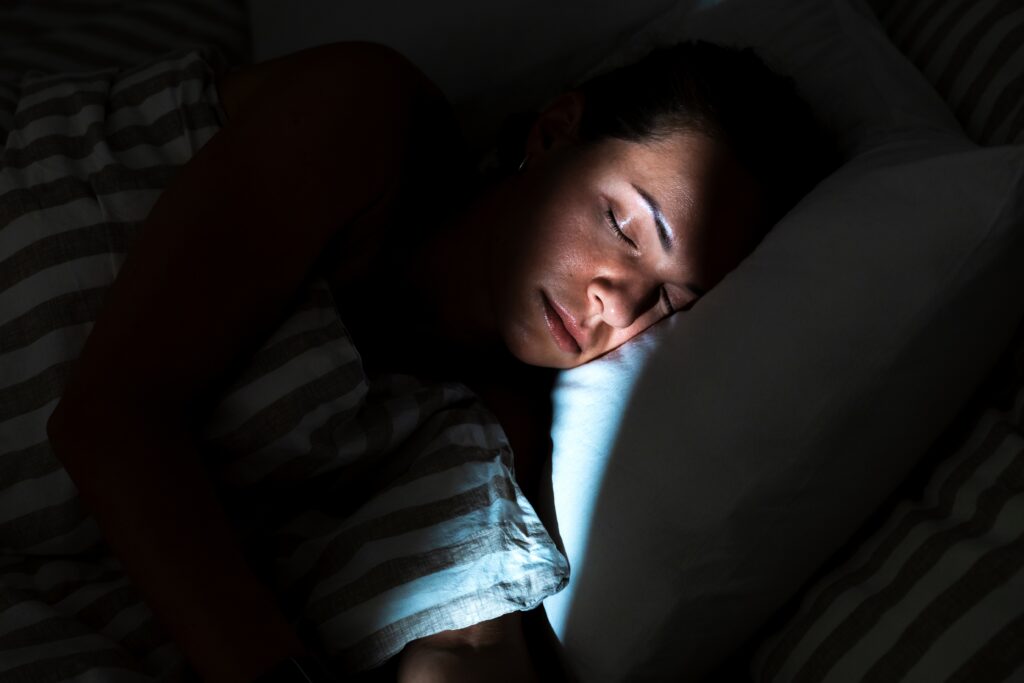
Lawmakers are again pushing to make daylight saving time (DST) permanent — but for now, it still ends on the first Sunday in November. That means, at 2 a.m. on Nov. 1, most Americans (except people in Hawaii and most of Arizona) will set their clocks one hour earlier and “fall back” to standard time.
Even if you’ve been making this change your whole life, it can still throw off your body clock. “Twice per year, when daylight savings springs forward or falls back, our sleep cycles are altered,” Emerson Wickwire, a section head of sleep medicine at the University of Maryland Medical Center and a professor and researcher at the University of Maryland School of Medicine, said.
The good news is that most people don’t need to do much to prepare for the upcoming shift. But if you’re especially sensitive to changes in your sleep schedule, you may benefit from making some adjustments in the few days ahead.
Do you need to prep your body for the fall time change?
Of the two clock changes, the fall shift tends to be less disruptive, said Taruj Ali, a board-certified sleep medicine doctor and medical director of sleep medicine at Mary Washington Healthcare. Turning the clocks back theoretically gives you an extra hour of sleep before your usual wake-up time.
One study found that adults in the United Kingdom slept about 30 to 40 minutes longer on the day of the fall change compared to the Sunday before and the Sunday after. The spring change, by contrast, shortens our sleep window by an hour and has been linked to more adverse health and safety outcomes, including heart attack, stroke, emergency room visits and traffic accidents.
“When our clocks fall back, our bodies are being asked to sleep an hour more,” Wickwire said. “Although that’s somewhat of a transition, generally speaking, that’s not such a difficult ask.”
That said, the switch can still cause minor issues, like waking up earlier than you intended, daytime fatigue or feeling tired earlier in the evening, so a little preparation may be helpful — particularly for people whose sleep is easily disrupted, habitual early risers, shift workers and young children.
That’s because your body’s internal clock doesn’t instantly adjust when the clocks change, Ali explained. Little kids and anyone who naturally gets up very early, for example, may continue waking up at the same biological time even after the clock has been turned back — so their usual 5 a.m. wake-up becomes 4 a.m.
The adjustment can be especially tricky for shift workers. “People working night shift or swing shift are already working against their biological clocks,” Ali said. “If we add a time change of an hour on top of that, it further disrupts their circadian rhythm. This change can affect their alertness at work.”
How to prep for ‘falling back’
If you think you could use some help adjusting, a few simple steps may ease the transition.
Start by gradually shifting your sleep schedule. Ali recommends delaying your bedtime by 15 to 20 minutes each night for three to four days leading up to the switch. Going to sleep and waking up a little later can help align your body’s rhythm with the new clock time, he said.
For example, if you usually sleep from 11 p.m. to 7 a.m., you might shift your bedtime and wake-up time by roughly 15 minutes a day, starting Wednesday or Thursday: 11:15 p.m. to 7:15 a.m. the first night, then 11:30 p.m. to 7:30 a.m. the next, and so on. You don’t need to shift a full hour by Sunday morning; even a partial adjustment can make the transition less abrupt, Ali said.
Waking up later might not be possible given your schedule. In that case, try to make sure you’re going into the change as well-rested as possible. “Get enough sleep — more than you might think you need — in the days leading up,” Wickwire said. “That’ll soften the blow of any sleep loss.”
Of course, getting enough sleep can be easier said than done. To help, try to avoid screens and stimulating content in the hour before bed and, once you’ve adjusted, keep your bedtime and wake-up time consistent — the same 30- to 60-minute window each day. These habits are worth keeping year-round, too.
After the change, try to spend 15-20 minutes outside shortly after waking up. “Morning light is the most important factor when it comes to regulation of our biological clock and our circadian rhythm,” Ali said. If that’s not doable, light through a bright window or a light box is the next best thing. If you find yourself waking up earlier than intended, Ali said to wait until your desired wake-up time to get morning light.
Could this be our last clock change?
The Sunshine Protection Act of 2025 the House passed in July isn’t the only proposal to end our twice-yearly clock changes. But lawmakers disagree on which time to keep. The Sunshine for Our Kids Act of 2026 would instead make standard time permanent, with exceptions for states that choose DST. It was also introduced in July, but has not advanced in the House, and similar efforts to end the clock changes have repeatedly stalled in Congress.
Sleep and medical experts have weighed in, too. “The American Academy of Sleep Medicine and other leading organizations advocate for permanent standard time as a better alternative than permanent daylight saving time,” Wickwire said.
Scientists say that standard time is more in tune with the body’s internal clock, which is largely regulated by the sun. Year-round DST would mean darker mornings and more evening light, which can shift your circadian rhythm later — making it harder to fall asleep and wake up in time for school or work.
For now, a little preparation may help you ease into the change — and make the most of that extra hour.
The post The clocks change soon. Here’s how to prep your body. appeared first on Washington Post.