The Trump administration wants to accelerate the use of artificial intelligence for scientific discovery. But can its plan succeed without prioritizing universities?
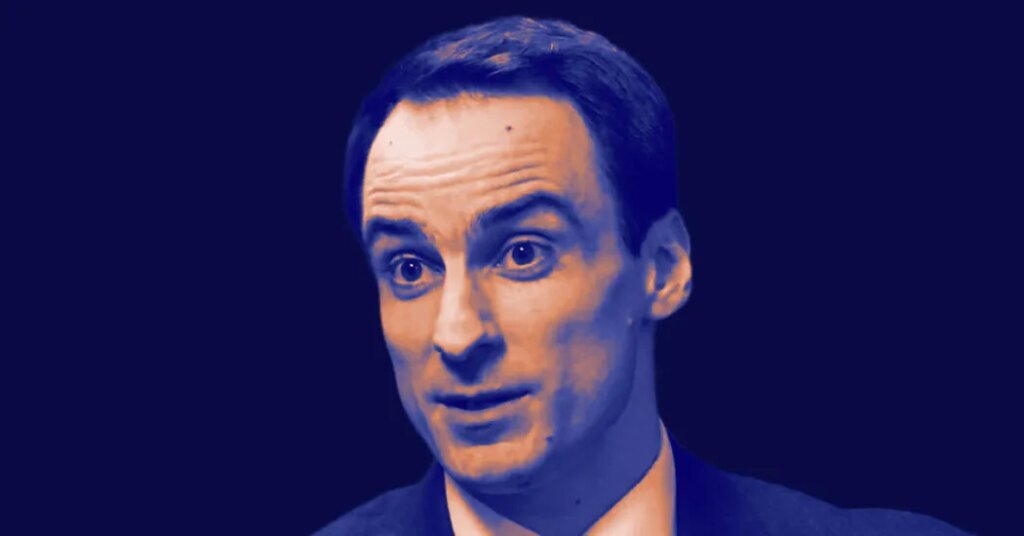
Guest host Tyler Cowen speaks with Michael Kratsios, President Trump’s top science and technology adviser, about the White House’s new blueprint for American innovation and what it means for the next generation of scientists.
Below is an edited transcript of an episode of “Interesting Times.” We recommend listening to it in its original form for the full effect. You can do so using the player above or on the NYTimes app, Apple, Spotify, Amazon Music, YouTube, iHeartRadio or wherever you get your podcasts.
Tyler Cowen: Michael Kratsios, welcome to “Interesting Times.”
Michael Kratsios: I’m excited to be here. Thanks for having me.
Cowen: Now, the United States has depended upon its universities for scientific research since at least World War II.
In this model, the federal government, universities, industry — they all play complementary roles. The government funds basic research, universities do that research while educating future scientists, and industry then takes those discoveries and turns them into something practical.
Now, you think that model is broken and you want to change it. Why?
Kratsios: Well, I think that’s a great summary of the linear model of innovation that Vannevar Bush proposed at the end of World War II. Vannevar Bush was a science adviser to Franklin Delano Roosevelt, and F.D.R. tasked him to look at the science and innovation ecosystem in the U.S. and come up with some proposals.
Ultimately, he released “Science: The Endless Frontier,” which was his report to the president — it was delivered, actually, to Harry S. Truman. And in that report, he talked about what you discussed there: that it’s important for us to have places where basic research can be done. That the discoveries from those places ultimately could be commercialized.
And that led to this great flourishing of scientific and technological innovation in the U.S. during the latter half of the last century. And I think what was very interesting about that moment in time was that, really, the majority of research was being funded by the federal government, and universities became the home for that.
But I think the reality is that the way — and the places where — basic research broadly is done has fundamentally changed over time. And more important, I think the amount of R&D that is being done by the private sector alone is dramatically more than it’s ever been.
So I think that’s just one of many, many examples of how the ecosystem that launched this endeavor in the 1950s has dramatically changed, and we have to meet that moment, and that is why we wrote the report “Science: A New Golden Age.”
Cowen: What’s the scientific evidence that science, right now, has been broken?
Kratsios: I think there’s a number of ways to look at it. I think one is thinking about how expensive it is to create a new drug.
Another example: There’s been some studies that have looked at the impact of science and how impactful new scientific discoveries are, and many argue that that’s actually declining. The ecosystem has shifted toward rewarding older, legacy, non-innovative ideas.
So the number of National Institutes of Health grants, for example, that are given to people over the age of 65, are more than the ones under 35. We’re rewarding people that have already pursued their career for a very long time and may not necessarily have new ideas.
So those are examples of the types of things that we try to tackle in our report.
Cowen: But say we’re getting immunology treatments for cancer — mRNA vaccines, A.I. — those seem like pretty impressive achievements. And they came under the old regime. But you think we can do better yet?
Kratsios: We can definitely do better, and I think that’s the whole point of this. This isn’t an indictment, necessarily, of current pieces of the ecosystem, but I think we have to think very carefully about how this new ecosystem exists, where the private sector’s doing a lot more, the government is still doing a tremendous amount, philanthropy — which you’re very familiar with — is doing more than it’s ever done in this space, plus academia.
All of these pieces of the puzzle can work together in a way that we could never imagine before. And for us, we want to reinvigorate that enterprise. We want to find ways where we can build partnerships between and among all these pieces to drive better discovery. And overlaying all of it, and something that is more important than anything, is the fact that superintelligence is here.
And I truly and fundamentally believe that superintelligence will be the biggest unlock for scientific discovery in the history of our country, and we have to make sure that all pieces of the ecosystem are leveraging S.I. to drive discovery.
Cowen: So what are the funding priorities under your plan?
Kratsios: So I think for us, the funding priorities first and foremost are S.I. for science, and this was launched by executive order ——
Cowen: And S.I. being superintelligence.
Kratsios: Correct. Superintelligence.
Cowen: What we used to call artificial intelligence.
Kratsios: Yes. So ——
Cowen: [Chuckles] And I still do.
Kratsios: S.I. for science is going to be the biggest unlock for scientific discovery in the history of the world. It’s going to impact everything from material science to chemistry to math.
In our plan, I think the belly button of it all is something called the Genesis Mission, the idea that we should build a scientific instrument in the federal government to be able to leverage S.I. for scientific discovery, and that’s what we’re building in our national labs.
And we’ve opened it up, and now have access to it, from all of our agencies across the government. So if you’re doing very important health care work or biomedical work that requires superintelligence, you can access this instrument at the D.O.E., and the same goes for lots of other agencies. The core thing we want to do is provide S.I. as an enabling tool for whatever scientific discovery you want to make.
Cowen: But as I understand the proposals, there’s actually less money for biomedical research, right? There’s more sent to other places and less in that particular topic of research.
Kratsios: So Congress has appropriated, through a continuing resolution, the same amount of money to the N.I.H. that they were before.
Cowen: But Congress — but what the president wants, and you’re representing the executive branch here — the president seems to want less money in a whole number of areas.
Kratsios: Well, if you want to play the numbers game, the president in the fiscal year 2027 budget proposed the largest R&D budget in the history of the country. So I think that’s one way to look at it. Our commitment to spending on R&D has never been greater, and no president in history has ever committed more.
I think the other thing that I’m very proud of is that this president has essentially funded the largest class of Graduate Research Fellowship Programs in history — the premier fellowship that the N.S.F. gives to the brightest American students that are going to be pursuing graduate degrees.
So we have funded the largest number in the history of the United States. And I think the other thing we talked about ——
Cowen: But N.S.F. funding itself is still going down under the president’s plan, right?
Kratsios: So right now Congress has appropriated the same amount, and we’re spending that money. And I think back to your point, and I get your point ——
Cowen: Sure. I mean, I get that Congress is restoring funding. But in terms of the president’s plan ——
Kratsios: Yeah, I think what you’re getting at is something that I deeply believe we need to think a lot more carefully about.
I think this fixation on the top-line dollar spent is very misguided and is not the way that any analytical scientist would pursue a budget process.
And it’s something that I very much struggle with when I deal with the community that tries to purportedly support science here in Washington. The most important thing that we should be doing is trying to find ways to make the greatest scientific discoveries to support the American people. And I think spending more money on the wrong things is far worse than spending less money on the right things.
And this goes back to: Are we making the best use of those dollars? And I think that’s what we get back to with all of the proposals that are in the “Golden Age” report: How can we actually spend those dollars in a way that can support Americans, and make these discoveries more real for everyday Americans?
Cowen: And for you, what makes an investment high R.O.I.? Or high return on that investment?
Kratsios: This is a really important point to make. I think, one, we need to do the very important meta science work to actually be able to answer those questions.
But I think it goes back, actually, to something that Vannevar Bush said early in his report. At the very beginning of his report, in the executive summary, he talks about why he’s writing this. And it is for, essentially, American prosperity, American health and national security.
And I think sometimes that’s lost, because the shorthand for the Vannevar Bush take on the science world is that we should just fund basic discovery — “blue sky” research — and let a thousand flowers bloom and great things will happen.
But the reality is the core metric that he had was: Is the research ultimately resulting in a better life for Americans and a healthier life for Americans and protecting our national security? And I would argue, I agree with that view.
Cowen: Now, you have a background in an investment company working with Peter Thiel, and also in the A.I. company Scale AI.
How does that background — which is different from traditional science — how does that shape the plan you came up with, which is outlined in this report, “Science: A New Golden Age”?
Kratsios: When I first started in the first Trump administration, I was the chief technology officer of the United States, and my role during that time was very much focused on technology policy.
And I came into government very interested in trying to find ways to improve the regulatory environment in the United States so emerging technologies could succeed. Things like: How do you get autonomous vehicles on the road? How do you get drones flying for package delivery? How do you get A.I.-powered medical diagnostics more quickly through the F.D.A. pipeline?
And what I quickly realized was that the United States government has a very powerful role to play in agenda setting for the direction of American science. For many years, I think the government has stepped away from that role and has taken the position that we should not be risk-takers. We shouldn’t have an opinion.
And the more you analyze that from any type of mind-set of an investor or a businessperson, that makes absolutely no sense.
There were no metrics whatsoever on whether or not the programs that we were investing in were good for the country or not good for the country, or whether the types of grants we’re doing are valuable or not. Should we be changing the parameters of the grants? None of that was being done.
And I think one of the most obvious recommendations that we put out in the report was around the creation of meta science units. So this is the science of science, if you will. There’s groups of people that can analyze how we’re actually funding and conducting science across all of our agencies and come up with answers like: This is working, this is not working.
And there’s tons of proposals in “A New Golden Age.” Some of them may work, some of them may not, but someone has to do the analysis. And the fact that the government wasn’t even doing that, I think, was particularly shocking to me, and I think most taxpayers would be horrified with this state.
Cowen: And in this plan, what’s the role of universities? So they’re already facing budgetary pressures due to what will be declining enrollments, and then it seems the number of dollars going to universities will decline.
So I teach at a university. It’s highly bureaucratic. It’s often frustrating to me, but I do have a sense of how the system works.
We’ve relied on growing enrollments, and especially at the graduate level — with immigration policy now tougher — funding is down from a number of sources, including the government.
My fear is that, really, a lot of top-tier research universities are having to abandon their graduate programs. We see evidence of this. And when graduate programs go away, scientific research tends to diminish. Faculty spend more time teaching undergraduates, they don’t have research and teaching assistants in the same way. They’re not teaching graduate classes and learning the same amount.
How are they to continue to play their core role in basic research?
Kratsios: Yeah, I think that it’s a very fascinating time for universities. If you look back and think about 10, 20, 30 years ago — if you were a scientist who wanted to really work on cutting-edge research, you would be going to a university. Now, you’re going to be going to Anthropic or OpenAI, or you’re going to be going to Commonwealth Fusion Systems to work on fusion. So the ecosystem has changed.
So right now, American Ph.D. programs are geared toward this, at a minimum, five-year Ph.D. But they’re also tailored to try to optimize the curriculums in order to train students to be academics, and the numbers don’t play out. About 60 percent of people who get Ph.D.s do not end up becoming academics.
So we asked ourselves: In that environment, shouldn’t we be trying to do a better job of training these young technologists and scientists to go out and actually be prepared for what they’re ultimately going to do in industry?
So we launched a four-year Ph.D. program in partnership with universities and with industry, so that during the last year of your Ph.D. program — at year four — you’re at an industry lab. You do work in industry, and your dissertation is written on the work that you do at that company.
Again, back reorienting toward the American scientist every day. They don’t want to wait until they’re in their late 20s to make the next great breakthrough to support Americans. They want to do it quickly.
So we will be able to graduate great scientists before the age of 25, to go out into the field. And for each of those students, the university is critical. They are the ones who will do the training.
Cowen: But resources going into universities — they are declining. Aren’t universities critical as a holding tank?
So if we take neural nets — a key idea behind current A.I. — there’s some progress on neural nets in the 1950s, and then the idea is not very popular, it’s somewhat dormant. And it’s not until the 1980s that neural nets blossom again and people start thinking: Well, maybe this can work. There’s Marvin Minsky at M.I.T.
And that holding tank function — it is, in a way, super inefficient because there’s 30 years with it on the surface — not that much happening. But the larger the holding tank or bullpen, the more oomph you get with the ideas, because then you draw upon them when they really matter. And under the plan, isn’t that function of the university significantly diminished?
There’s a bunch of good new things you’re doing. But just in net, there’ll be fewer people working in universities and fewer able to step forward when we need them, no?
Kratsios: I don’t think so. I think universities have a bright future ahead of them if they embrace the fact that they’re part of a new, reshaped science ecosystem.
Take, for example, something that we’ve talked about a little previously, which was the rise of superintelligence for discovery. If you’re an academic and you want to do research in material science, in chemistry, in math, in physics, you need to have access to compute in order to do your research. That is where the next great discoveries are going to be happening.
I called, personally, the chancellors and presidents of all these universities in the Southeast United States and got them to commit to build, essentially, a compute consortia in the Southeast, where they’ll be able to share compute resources among universities in 10 states so that their researchers — their people at their university — have access to this compute.
And I think that’s the future, where we have to think about partnerships. Where universities can partner with the other pieces of the ecosystem, to have the resources. So all the great minds that you’re talking about have the tools they need to keep doing their great work.
Cowen: Doing that is fine. But if we think in terms of net effects — which is what is going to matter — it seems to me the net effect is: Right now, a lot of scientists feel demoralized.
And part of that you can blame on them — I would accept that. But nonetheless, they think more often of not going into science at all, or moving to Europe or Canada.
And even if that’s them overreacting to some extent, that’s part of the equilibrium, right? And if the net effect of what we’re doing is to create this world where our own scientists are more demoralized — isn’t that, in net terms, a pretty big negative?
Kratsios: Well, luckily, we’re doing the exact opposite. We are trying to excite American scientists and gear the entire apparatus of the federal government to be pro-individual scientists.
One thing I’m most proud of, which we haven’t touched upon, is the pipeline of getting new scientists. One of the announcements I was most proud of was the relaunch of the Young Scholars Program at the N.S.F., which funded gifted and talented science and technology students in kindergarten through 12th grade and supported them.
This is an example of: We have to create excitement around scientific endeavor again, and that’s what we’re doing through our Artemis mission, to get men back on the moon. That’s what we’re doing through our new Young Scholars Program at the N.S.F. — to reinvigorate this excitement about science and discovery and ultimately, I think, be able to continue to feed great minds into these universities you’re talking about.
Cowen: The president recently gave the National Medal of Science to four individuals: Elon Musk, Jensen Huang, Lisa Su and Sergey Brin. All four are immigrants.
Now, if I were running science policy, the very first thing I would want to do is increase high-skilled immigration into the United States. But lately, it’s been falling because of deliberate policy. So isn’t it the case that the most important thing, we’re just getting it wrong?
Kratsios: I think there’s a lot to unpack there on the immigration side. And I think sometimes this gets caught up with a lot of other immigration issues.
Back to this idea of the young scholars I was talking about: I think we, as a country, have decided that we’re not going to prioritize building a pipeline of American STEM talent.
One stat that I started tracking in Trump 1, that I continue to do, is the percentage of U.S. citizens who graduate with computer science Ph.D.s. In the early 2000s, it was roughly a 70-30 split of U.S. citizens and permanent residents to foreign nationals, and now that has inverted.
I think anyone who looks at that number knows that can’t be good for the country — the fact that fewer Americans want to enter this field, which is on the cutting edge of the frontier for everything.
So we as a country need to first and foremost look in the mirror and ask ourselves: How can we prepare young Americans to go into these fields?
And the other piece, which I think came up on the same day we were giving these awards, was when the vice president gave a press conference with the fraud task force around some of these immigration policy abuses by certain companies and universities.
And one statistic that sticks out is — take the J-1 visa, which is used very often for postdocs in the United States. The fact is that in a lot of these universities, a foreign national postdoc on a J-1 gets paid less than an American doing the same postdoc.
So the question is: How do you incentivize Americans to go into these fields if they’re consistently undercut by this immigration layer of cheaper wages?
Cowen: Is it the case that we’re not going to do better at getting more American scientists into the pipeline if the attitude is one of less funding for universities and less funding for graduate students?
Kratsios: But we’re creating the incentives for young people to do exactly that. We’re giving them opportunities to go into the sciences in ways that they actually want to do.
Cowen: Now, in your vision of the public-private partnership, who ultimately has the final say over what gets funded? Is it politicians? Is it peer review? Is it companies?
I have the worry that if more is run through appointed officials — who in this case might be appointed by the executive branch — there’s a concentration of power.
And that might be fine under one particular administration, but if you imagine your views and there’s a future, say, A.O.C. or someone like Bernie Sanders as president, won’t you regret having given more authority over grants to the executive branch?
Kratsios: Well, I think the first thing we have to remember is the appropriation — where it all begins. The appropriation is done by politicians. They are the ones on the Hill who decide, through the appropriations language, what programs are funded: Are we funding fusion an extra $100 million, or $100 million less? Do we give the N.S.F. $100 million more, or $100 million less? So to begin where the branch, if you will, of the tree starts — it is a political decision made by elected officials in Congress.
Then there is a duty in the executive branch to execute the will of Congress and actually spend that money responsibly on behalf of the American people. And the idea that the duly elected president will not have his representatives be able to steward the taxpayer dollars is ludicrous to me.
Now, individual grant decisions — a meritorious decision of whether or not this quantum grant is more meritorious than that quantum grant is obviously not a decision for a political appointee.
But the process by which we decide whether or not the grant is meritorious is something that should most certainly be overseen by a political official.
And I think ensuring that we are good stewards of taxpayer dollars is a core fundamental responsibility of anyone in elected office.
Cowen: But Congress has been so passive as of late. The executive branch truly takes the lead in many matters, and peer review, it seems, will be relied on less frequently under the new proposed regime.
So the executive branch working through representatives would be more likely to move in and say: We don’t want to fund particular areas, right?
Kratsios: No, I think there’s a very important and critical role for peer review to play, and I think that’s how the vast majority of grants at the N.S.F. are given out, and a lot of other agencies, like the N.I.H., as well.
I think what we’d like to think about is — take, for example, an idea that we have in the book called a “golden ticket.” That still puts the hands of the decision in the peer review board. It just so happens that someone on the peer review has this golden ticket in their hand and can make a unilateral decision of whether or not they think that’s a meritorious grant.
So again, those decisions are not moved up to the political layer, ever. The ultimate decision on whether or not a particular grant has scientific merit is left with the peer review.
Cowen: Right now, the federal government owns equity stakes in about 30 companies. The libertarian in me worries that, over time, this will mean more and more influence over the scientific decisions of those companies. What can we do to pare back that worry of mine?
Kratsios: Yeah. This has been a big initiative by our commerce secretary, to essentially be able to give upside back to the American people for these very important investments that ——
Cowen: But we can do that through the corporate income tax. We don’t need equity ownership — that implies, over time, control.
Kratsios: Yeah. To us, I think we want to give, again, an opportunity for the American taxpayers to benefit from these commitments that we’re making to these later-stage technology companies.
And I think an example of that is around semiconductors, where we were appropriated money to help stand up and support our semiconductor industry. And the president and the secretary made the decision to make that investment in Intel, and there was a great deal to come back from it — upside to the American people — that in the prior administration there hadn’t been any upside. It was essentially just free money to a particular American company.
Cowen: If we spend more on A.I., A.I. research and A.I.-driven research, does that mean a greater concentration of both economic resources and also scientific influence?
So far, a lot of the rents from A.I. have gone to Nvidia. That’s a great, wonderful company, but it’s the most valuable company ever in the history of mankind, and we don’t need to make it more valuable.
There’s four or five top labs that have, by far, the best models. Again, I’m delighted by that. But they would seem to capture a lot of the value if more science were going into A.I.
So is it a wise idea to opt for more economic concentration?
Kratsios: To me, I ultimately believe that superintelligence is going to be the biggest democratizing force in science in the history of the world.
Right now, to do scientific discovery around the world, you’re very much bottlenecked by the physical resources you have at your disposal — what instruments are available to you, what types of resources you have at your particular university or research institution. And what superintelligence is going to do is fully democratize that.
Lila Sciences and Emerald Cloud Lab — which you’ve heard of, which are great companies — are building these cloud labs where, essentially, you’ll be able to send experiments to a cloud lab, where the experiments will then be conducted autonomously and the results will come back to you. So we’re at the first inning of probably one of the greatest flourishings of scientific discovery in history.
So to me, to your question — I ultimately believe that in these early innings, it feels like a lot of these gains are being concentrated in a few companies, but as you watch what’s happening with the open source ecosystem and everything else, I think over time this is going to become very democratizing.
Cowen: If we want to democratize everything in scientific research, should political appointees have the ability to block particular grants?
Kratsios: I think what we have said is that political appointees should have oversight over broad spending of the U.S. government. And I think that’s an important factor —
Cowen: So that’s a yes.
Kratsios: What we have argued for is that when you are running a meritorious review program for selecting grants, there most certainly should be political oversight on assessing whether or not they’re actually running a meritorious process to review grants. And if they’re not, it should be corrected. If they are, wonderful.
But again, individual politicians should not be deciding individual grant decisions, and I know at our office we’re not doing that.
Cowen: If we invest more in A.I., as we both know, public opinion in polling seems to be shifting strongly against A.I.
A.I. may end up being regulated — I would say too heavily, but not everyone agrees. And if we’re sending so many resources the way of A.I., and politically the sector is fragile, do you worry about that?
Again, keep in mind there’ll be a future administration, may well be Democratic, that will regulate A.I. more heavily than maybe the Trump administration would, and we’re putting so much of our scientific emphasis there.
Kratsios: So again, we’re in the early innings of the impact, and if you go back to thinking about, OK, well, what is sort of public sentiment around superintelligence, I think one of the areas where the American people are expecting more is in superintelligence for health care and for sciences.
So I think a lot is riding on the industry to actually use this technology to deliver the results the American people want.
Cowen: Talk me out of this worry: So we agree science is an ecosystem, and there’s always a temptation to want to fund the most dynamic, most productive parts of the ecosystem. And right now, that would probably be A.I.
But if you need the whole ecosystem to be working well, arguably you should be funding, at the margin, the less productive parts, which need the aid. That will sometimes be universities, but there’s plenty of other inefficient parts of our ecosystem.
So is this plan not putting more resources into the parts that are working well, but we get stuck with bottlenecks if the parts that are not working well end up with fewer resources?
Kratsios: Well, luckily, we’re not investing all of our money for the federal government into S.I. for science. It’s a portfolio approach. And obviously one ——
Cowen: But it’s a net shift toward artificial intelligence, right?
Kratsios: Well, I would argue — and I think this is a very important distinction — it’s not investing in superintelligence, it’s investing in superintelligence for science.
So the question is, I think a lot of people argue: Oh, why would the federal government want to invest more in superintelligence when billions, if not trillions, of dollars are being invested in the private sector into superintelligence? And I would agree with that statement. We shouldn’t be doing that.
The government isn’t funding how to create a next frontier model. That’s something that our great American companies are working on.
But applying those models to scientific discovery is still in its early stages. And as you know, if you think about the trend or the path by which we’ve gotten to this place with L.L.M.s — we started first with being able, essentially, to scrape the whole corpus of the internet, to use that to train a large language model.
The next chapter of that was around coding, where the model builders realized: Oh, we have really good coding data, and we can actually train these models to be good at coding. So then we had this rise of Anthropic and OpenAI Codex and all this stuff.
And I think, to me, the next chapter is around science, and the data that you need to train these large language models for science is still one that we’re working on a lot. And we were very proud to announce 190 federal data sets being made public in order to help train these science models.
But ultimately, you’re going to be applying this superintelligence to everything from material science to chemistry to math to physics, and we have to be in a position to actually leverage that.
Cowen: Do you want to be able to fund A.I. models to do “longevity science” — the notion that we all might live to 120 years old, possibly longer in some views? Is that a priority?
Kratsios: I wouldn’t consider that a top-tier national priority in the same category as getting man to the moon, or to fund broadly as S.I. for science. But that seems like something that would be interesting for folks at the N.I.H. to be looking at.
Cowen: I’d rather live to 120 than get a man to the moon, if it’s up to me.
Kratsios: You know, I couldn’t disagree with you. I think it’s great. And I think that goes back to what we’ve been arguing for a long time, about how we want to find cures for the biggest diseases out there that are troubling Americans.
And then we have this huge opportunity in front of us, and in a way and at a speed and at a pace that we’ve never experienced before. So I think that’s what I’m most excited about seeing the N.I.H. pursue.
Cowen: Now, you’re using the phrase “superintelligence.” I’m calling it by the older and more traditional term, “artificial intelligence.” What’s the difference there, and where does it come from? Why change the term?
Kratsios: Well, I think the president’s been very public about this. I mean, the word “artificial intelligence” is just not a very great word to use. “Artificial” means fake. I mean, we don’t like that. This is real. This has a real impact for the American people and can benefit our country.
The president had a conversation with a lot of the C.E.O.s that were at our lunch a few weeks ago, when we had our superintelligence summit. And I think there was general consensus around the room that “superintelligence” was the right term to use. And you’ve seen some executives come out and use that term publicly, going forward.
So I think it’s a great and important moment for the industry, where we move beyond the old and into this new age of superintelligence.
Cowen: But doesn’t that term scare people more if the intelligence is super and people feel maybe their own intelligence is not in every way super?
Kratsios: You know, I would actually take the opposite side of that. I think artificial intelligence is more scary and bad. No one wants something that’s sort of like fake or artificial. They want something real and powerful that can help change their lives for the better.
Cowen: President Trump has suggested — it might have even been at that same luncheon you just mentioned — that worries about what you’re calling “superintelligence,” they’re a kind of hoax. There’s not some sort of runaway A.I. that will take down the internet or undo our banking system — or in the words of some, even kill us all.
What’s your main safety concern with A.I. systems?
Kratsios: I think for us, what I’ve been advocating for since the first Trump administration — and something that we have continued to advocate for in the second — is before we start trying to create new rules and regulations around emerging technologies, we always have to look at what’s already on the books and evaluate whether or not the rules that we have are adequate to address the particular concerns that have come up with this new technology, where there are concerns about things like cyberrisk, for example. And we want to make sure that, if cyberincidents happen, we have the right tools in place to address those.
And what the president consistently talks about is that we have tools in the toolbox. We have the F.T.C., which can track some of these issues related to antitrust. We have lots of rules around criminal behavior that can be undertaken by a model. And when these things happen, we have the tools in our tool kit to address them.
Cowen: But recently — at least, it is believed — that one person acting alone hacked into the South Korean banking system and it was disruptive. I’m not sure of the capitalization of that person, but it seems unlikely that liability would be a sufficient penalty. If the person is overseas or possibly in a hostile nation, it’s very hard to even get at that person at all.
It seems that with cyberweapons now more powerful, that the older tools legally, in some way, have to be revised. That would be a basic lesson of law and economics: When the criminals have more power, somehow the penalties have to be increased or safety standards increased or something done.
So what is it we need to change to adjust to these new circumstances?
Kratsios: So a couple of things. We obviously can look at that, and as new information comes up, we should certainly make those updates. I think the other thing that we take a lot of care and pride in is we work very closely with these companies in order to run our own tests and help them improve their guardrails before their models are released.
And as you know, on June 2 of this year, an executive order was signed, which allowed for and called for a volunteer relationship between our frontier labs and the U.S. government, where we can analyze and test and see those models in advance of release and ultimately help them improve their models, so that when they come out, they are safe.
I think the other thing on cyber — which I think people don’t talk about enough — is they always fixate on a lot of the negative issues, which we honestly have to continue to track very closely. But there has never been a tool in history that is more powerful in securing our cyberposture than superintelligence.
So if you’re trying to create a cyberfortress for your company or for your government or for your endeavor, whatever it may be, S.I. provides this amazing, amazing tool to really harden your system. So it’s always going to be this offense-defense, playing off each other, and I think we shouldn’t forget how powerful this is to actually protect Americans.
Cowen: I work with education tech software all the time. It’s awful. I don’t feel it’s going to change anytime soon. I would be all for changing it immediately, but I can imagine a world where that could take 10 years or maybe more.
And then not just our universities, but local municipalities, many of our nonprofits — there’s so many bureaucratic, nonagentic parts of the U.S. economy. It just seems they’ll be wildly open to potential cyberhacks for not just a year, but really a pretty extended period of time.
So what do we need to do about that?
Kratsios: I think we should continue to be vigilant in trying to improve our software. And I honestly believe — I’m a little more optimistic — I do believe there’ll be this transition period where we really have to improve the cyberposture of a lot of our software.
But there’s great companies out there, and the pace and the velocity of innovation that’s happening in Silicon Valley to be able to actually make those transformations, I think, is going to surprise all of us.
We should continue, as a government, to think very carefully about how we can help protect a lot of our critical infrastructure around the U.S., and I think — as you’ve seen in some of the reporting around our S.I. task force — there’s going to be some effort relating to that, I presume, as we get launched. So that’s something that we do keep front and center.
Cowen: Should the federal government fund a lot more A.I. safety research? Which I would be for, to be clear.
Kratsios: To me, I think what’s really powerful is we have NIST, which is our National Institute of Standards and Technology agency, that does terrific work in the federal government.
What’s really valuable is research in measurement science. It’s something that I think — maybe rewind a second. I always believe that the government, first and foremost, should be trying to fund things where the private sector and others in the ecosystem are not incentivized to do. And you have to find those niche areas where you can step in and fund more. And the broad example is basic research. That’s why we support it so violently.
So I think, back to your question — supporting measurement science and broadly the understanding of how these models operate, how you can measure them, how you can evaluate them, how you can build guardrails, how you can align them — those are all very important research questions that I think the government can be very supportive in doing.
Cowen: What do you think of the idea of embedding observers into the major labs? These could be governmental observers or people from the other labs. Does that make sense to you?
Kratsios: To me, when the labs came out and said: Look, we really want our models to be safe. We have to do all these things to make them safe — my initial reaction was: Great. You’re a private company. You’re providing a product and a service to the American people. You need to provide something which you have trust in and which your customers will trust.
If you want to hire observers and put them in with badges, sure. If you want to hire 10 of them, if you want to hire 10,000 of them — whatever you want to do in order to ensure the safety of your product, you should go for it.
So I don’t want to stop them from doing that. They should certainly be open to doing that, and it’s encouraging to see that they’re taking a lot of the safety stuff seriously.
Cowen: But take the restaurants in Washington, D.C., which is where we’re taping this — it’s not unusual for a food inspector to come by and look at the place and look at the back room and see if there are rats. And you could say that’s an embedded observer. They’re not embedded for very long, but there’s a process, and it’s based on looking and sampling.
The A.I. companies shouldn’t be doing the same?
Kratsios: So we have a relationship with the frontier labs, and they share their models before they release it, and the government has access to those models for at least 30 days.
So there’s a great relationship there, where we see these models beforehand. We’re able to run our tests in various places across the government — interrogate them with the types of information data that only the government has, to provide new things. So I think we’re there, and I think it’s an important part of the ecosystem.
Cowen: But at some point, that process will have to be regularized, right? Somehow sanctioned by Congress, made more predictable, turned into some kind of body or agency. What will that look like?
It’s fairly informal now, right? Models are shown, people nod their heads — maybe there’s not a formal yes, but something is allowed to proceed. It can’t go that way for 20 years — maybe not even two years.
Kratsios: Well, I can’t predict for 20 years, but I can say the system right now — through the executive order the president signed in June — I think is working pretty well. I think we have a great relationship with the labs, where they’re very open to sharing their latest model and very open to feedback from those models. And I think it leads ultimately to better and safer models being released.
Cowen: But let’s say the worst were to happen, and maybe it’s a small chance. But say in the next year there was some kind of accident like a cyberattack. So a financial system is scrambled, maybe parts of the payment system go down for a bit, maybe the internet is down for a bit. These are not impossible, and you could imagine there being an outcry in Congress to much more strongly regulate A.I.
Would you not rather have something in place that is your desires, in the second-best sense, rather than deal with the onslaught that will come if we do have some kind of accident?
Kratsios: Well, I would argue we do have that. We signed an executive order that created a standardized process by which these model developers can share their information with the U.S. government, and we can collaboratively work to ultimately make them safer.
And layered on top of that is that we have a whole toolbox of tools that we can use if they go astray. And we did use them when Fable came out and a very credible source found an issue relating to a cybervulnerability. So I think we continue to do that and ultimately time will tell.
Cowen: Thinking realistically, how much do you think scientific discovery will be turbocharged, say, in the next five years? What could you see happening as a result of the new science plan?
Kratsios: Oh, I am more excited about that than anything else in the world right now. Just speaking to some of these guys that are building these programmable cloud labs, it is the most inspiring thing you could ever imagine.
Scientists all around the world, all over the country, will be able to send their experiments to these labs to be done. And the moment they send it, they can go work on something else, come up with a new hypothesis and prepare to send another experiment over.
So to me, I think the breakthroughs that we’re going to see in material science, in chemistry, in physics, in math — we’re already using it at our national labs.
So you may have seen that the president had this bold goal to have four new reactor designs go critical by the Fourth of July. We not only met that goal, but we had four new reactor designs. And you talk to the team at the Idaho National Lab that’s working on this — they’re using S.I.-powered models in order to more quickly build pieces of these reactors that they’re ultimately testing. And that’s just scratching the surface.
So to me, I’m beyond thrilled, and I think what’s most exciting to watch, too, is that this is generally spreading across the larger interagency network.
And you’re seeing it from the way that we’re tackling health care issues at the N.I.H., to quantum-related issues. The president, again, set a bold goal to make a scientifically relevant, fault-tolerant quantum computer by the end of the term. It’s, essentially, inspiring and helping drive that particular effort.
The team at NASA and the team with Jared Isaacman and everything they’re doing to put a nuclear reactor in space by 2028, to put elements of a moon base up by 2030 — I mean, these are big, bold goals that are all going to be empowered by S.I.
Cowen: Now, I share all that excitement and I think many wonderful things will happen or maybe can happen. But isn’t that all the more reason why we need to think through the hypothetical? What if something went badly wrong in the next year or two and Congress went crazy?
A lot of the Republicans are very uncertain about A.I. — they either don’t know much about it or temporarily they feel intimidated by the president. But if there were big headlines that something went wrong, they could easily flip to the other side. We all know Congress often overreacts when there’s an emergency.
So to keep all these potential gains on track, would you really not rather do something pre-emptive — that is, the regulation you and the president want — to forestall what could happen, again, if there’s a very serious negative, bad event in the headlines?
Kratsios: I think that’s why the S.I. task force exists, to think through a lot of these issues — to understand that if we have issues relating to cyber or bio, how is the government equipped and ready to deal with that? And what necessary changes do we need to make?
And I think the president boldly putting together this team that covers a large gamut of leaders across the federal government, to think about these issues, is really critically important.
Cowen: And if all of this goes according to plan, what do you think the scientific landscape will look like, say, in 10 years, 20 years, 30 years? What’s the most positive scenario?
Kratsios: To me, I think we’re going to be continuing to see this acceleration in scientific discovery across multiple elements of the science ecosystem. A big hallmark of the last — second 50 years of the last century was that most of the scientific discovery was essentially done at the university level.
And I think what we’re seeing is this dramatic rise in science being done in other places. You’re seeing them again with these crazy numbers of how much R&D is being done in the private sector.
So to me, I see this ecosystem coming together, of everyone working together to drive discovery in the U.S., and that’s what I’m most excited about.
If you look through our roster, or our list of announcements we made, what was most exciting about all of them was that each of them was not an announcement for a singular piece of the ecosystem. It wasn’t something that the government was doing alone. It was something that all of us were doing together.
So to me, I think what really excites me — and where the future is going to be — is that the greatest scientific discoveries are going to be partnerships between all pieces of this ecosystem.
Cowen: And what’s the scenario where we fail at achieving that?
Kratsios: Maintaining the status quo. Not taking the recommendations of “A New Golden Age” and putting them into action. And I know, while we’re in office, we’re going to be pushing very hard.
But what I lament and what I struggle with, as I’ve gotten more involved in this policy domain, is that there’s a whole class of individuals here in Washington that purport to support American science, and they run around and they advocate consistently in their own words for American science.
And what does that typically look like? That typically looks like them just asking for more money to do the same things. And if the budget hasn’t gone up 1 or 2 or 3 or 4 or 5 percent, it’s not a success. And they parade around Washington with these charts of how much R&D the U.S. has versus some of our competitors, and they claim that if these lines ever cross, it’s the end of the world and that’s the only way we’re going to win.
And that is the biggest disservice to the American scientist you could ever imagine. If they were truly honest and cared about the scientific ecosystem, they would spend even more time thinking about how those dollars are spent. But they refuse to entertain the idea that the way that money is spent actually impacts the output, and all they talk about is the inputs.
And I think that’s the biggest tragedy, and I think that’s why this “Golden Age” report is so important, because we need to get back into a mind-set of trying to drive higher R.O.I. for the dollars that we spend.
Cowen: And if someone says: Well, make all these reforms and spend more — if you make the reform, science is more potent, so of course we should spend more across the board. What’s your reaction?
Kratsios: I am a big proponent of money spent on high-R.O.I., good things for American science. But we have a long way to go to solve those problems internally. And I think the science community needs to be more aware that big changes could be made to actually support young scientists.
To me, there is no greater, more valuable person for the American country, if you will, than the young American scientist.
To make a decision in your life at an early age to go and toil away at a university for not a lot of money is very hard. And they do this because they absolutely are passionate about the science that they’re working on — the issues that they’re working on.
And to us, we need to have their backs. And as a government, we have abandoned them. We have said that we need to hire lots and lots of really old people to keep doing the research they keep doing and no longer hire young people.
How are we inspiring a young generation of Americans to go into science when we create a system that does not reward them and does not give them an opportunity?
And that is what we’re trying to change with “Golden Age.”
Cowen: Michael Kratsios, thank you very much.
Kratsios: Thank you.
Thoughts? Email us at [email protected].
This episode of “Interesting Times” was produced by Charlotte Gartenberg, with Sophia Muniz, Victoria Chamberlin and Raina Raskin. It was edited by Victoria Chamberlin. Mixing and engineering by Gautam Srikishan. Cinematography by Marina King, Kyle I. Kelley and Nathan Shinholt. Video editing by Brandon Belk-Yee, Mahdokht Mahmoudabadi and Britt Shacham Bernstein. The supervising editor is Jan Kobal. The postproduction manager is Mike Puretz. Original music by Isaac Jones and Pat McCusker. Fact-checking by Kate Sinclair and Kimberly Freda. Audience strategy by Shannon Busta and Kristin Lin. The executive producer is Jordana Hochman. The director of Opinion Video is Jonah M. Kessel. The deputy director of Opinion Shows is Alison Bruzek. The director of Opinion Shows is Annie-Rose Strasser. The head of Opinion is Kathleen Kingsbury.
The Times is committed to publishing a diversity of letters to the editor. We’d like to hear what you think about this or any of our articles. Here are some tips. And here’s our email: [email protected].
Follow the New York Times Opinion section on Facebook, Instagram, TikTok, Bluesky, WhatsApp and Threads.
The post ‘A Golden Age of Science’ Brought to You by the White House appeared first on New York Times.