One Los Angeles restaurant group traded $60,000 on Kalshi to hedge against the Dodgers’ abbreviated playoff run, and it’s just one example of how prediction markets are transforming how companies, particularly small businesses, are calculating and responding to risks.
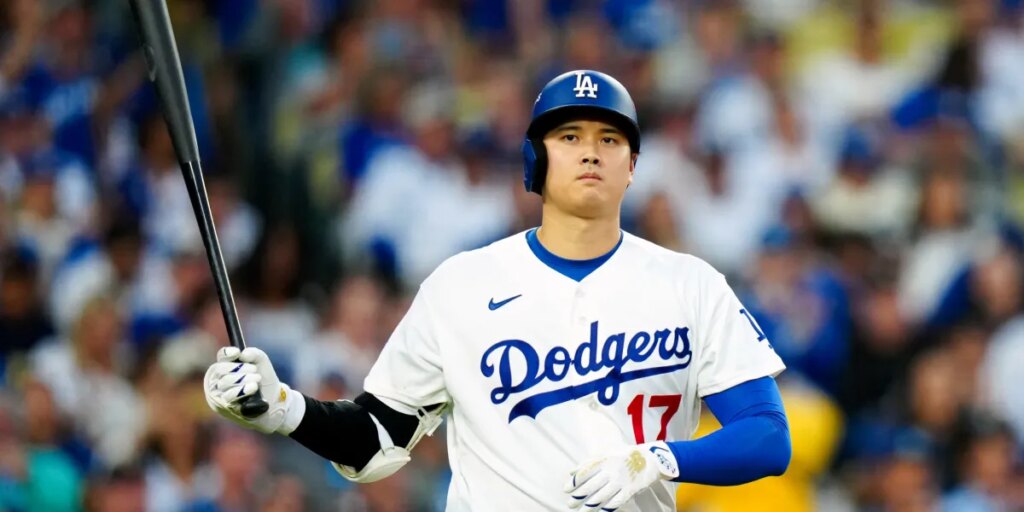
Kalshi told Fortune that the hospitality group, which was unnamed but operates 25 bars, including several near Dodger Stadium, made the trade on the platform if the city’s MLB team did not advance to the World Series. The Dodgers lost in the NLCS to the Milwaukee Brewers last week, and the position returned almost twice the original bet. The stake helped the business make up for the revenue it would have gotten had the Dodgers played more playoff games.
The use of prediction markets as a financial hedge is likely to grow, a sign that these platforms are not just alternatives to online sportsbooks or prop bet forums, but a financial and decision-making tool.
“You could imagine that there are other risks that businesses face that if there were a market available which functions similarly to the insurance market, then those businesses might want to participate in that kind of a market,” Joshua Mitts, a law professor at Columbia University who studies prediction markets and securities law, told Fortune.
The example of the restaurant group making a trade as a hedge for the Dodgers’ playoff performance “is functionally quite similar to a form of bespoke insurance,” he added.
Prediction markets are surging in popularity: Trading volume on the platforms doubled between May and July of this year, according to Pew Research Center data, topping $58 billion on Kalshi and nearly $22 billion on Polymarket, driven primarily by sports. Some of the appeal of prediction markets is their looser regulations and fewer restrictions, a result of the sites being classified as financial exchanges, rather than gambling platforms.
The evolving use of prediction markets
Small businesses in search of an unconventional risk management tool appear to be among the markets’ growing usership. In June, a New York City bar, The Jeffrey, promised patrons that the bar would cover every person’s tab up to $100 if the Knicks won an NBA finals game. The bar then placed a $5,000 bet on Kalshi that the then-underdog Knicks would win, and a $13,500 payout meant the bar not only paid off its patrons’ tabs, but also reaped a $8,500 profit.
Last month, an unnamed third-party insurance company placed five trades on Kalshi that could pay out $3 million should Louisiana State University win this season’s national championship, matching what the college’s football program would owe coach Lane Kiffin in bonuses. Earlier this summer, a Los Angeles ice cream shop reported making nearly half its monthly rent, up to $1,500, betting on when cold fronts would roll into town, hedging against slow demand.
Platforms have caught on to their evolving purposes. In August, independent financial economist Lauris Zminsky launched his app Blanket in partnership with Kalshi, an AI engine that can suggest specific yes-or-no markets on the platform that could offset a risk for a specific business.
“It’s a reasoning tool. It’s a discovery tool that funnels you towards Kalshi.” Zminsky told Fortune at the time. “What if you actually can take this up a notch and build a tool that is not only probably useful for the Kalshi team and their endeavors—to scale their S&P insurance hedging initiative—but a self-service tool where anybody can come in if they own a small business?”
Prediction markets as insurance
Prediction markets lend themselves well to risk management because they are able to incorporate such a large sample, especially for sports-related financial hedging, Dartmouth College economics professor Eric Zitzewitz explained.
“There’s so much data, there’s so much repetition, there’s so many games all the time that they can be very well-calibrated,” he told Fortune. “You’ll pay fees when you do that—so you’ll be paying something for the insurance you get from these markets—but you should be getting fair underlying prices.”
This use case is most effective for yes-or-no outcomes, such as weather or a game, Mitts noted, as opposed to a hedge based on the knowledge of certain information, which could make a business owner a “systematic loser” if a competitor has better intel. They will also likely work best in major metropolitans, where there is a large market for trading, while still serving an idiosyncratic purpose, such as one mom-and-pop shop’s risks.
The mass sampling and real-time information gathering on prediction markets can extend their utility to informing business decisions, according to Zitzewitz. For an e-commerce retailer, for example, looking at prediction market users’ trades on future Amazon credit card receipts could present an accurate forecast of consumer spending in the month to come.
“It’s probably a better signal for you than GDP growth,” he said. “And it’s certainly fresher.”
While the lack of regulation may be drawing users to prediction markets, the platform’s Wild West qualities may also prevent them from being reliable insurance proxies, Mitts argued.
Insurers have extensive resources to prevent insurance fraud and catch fraudsters. But the inherently decentralized structure of prediction markets and evolving regulatory environment mean these platforms do not have the same resources or guardrails to prevent abuse.
“We don’t have a small number of companies who are state-regulated and who are doing things in very organized ways,” Mitts said. “This is a bit of a free-for-all.”
The post Prediction markets are now ‘bespoke insurance’ for businesses, and a Los Angeles restaurant group’s $60,000 hedge on Kalshi is the latest example appeared first on Fortune.