The National Labor Relations Board has far too much power over economic relationships that individuals and businesses should be free to arrange themselves.
On Monday, the Supreme Court declined to hear a case challenging a president’s authority to fire members of the NLRB. That leaves in place a lower court’s ruling that such firings are permitted, but it allows an important constitutional problem to fester.
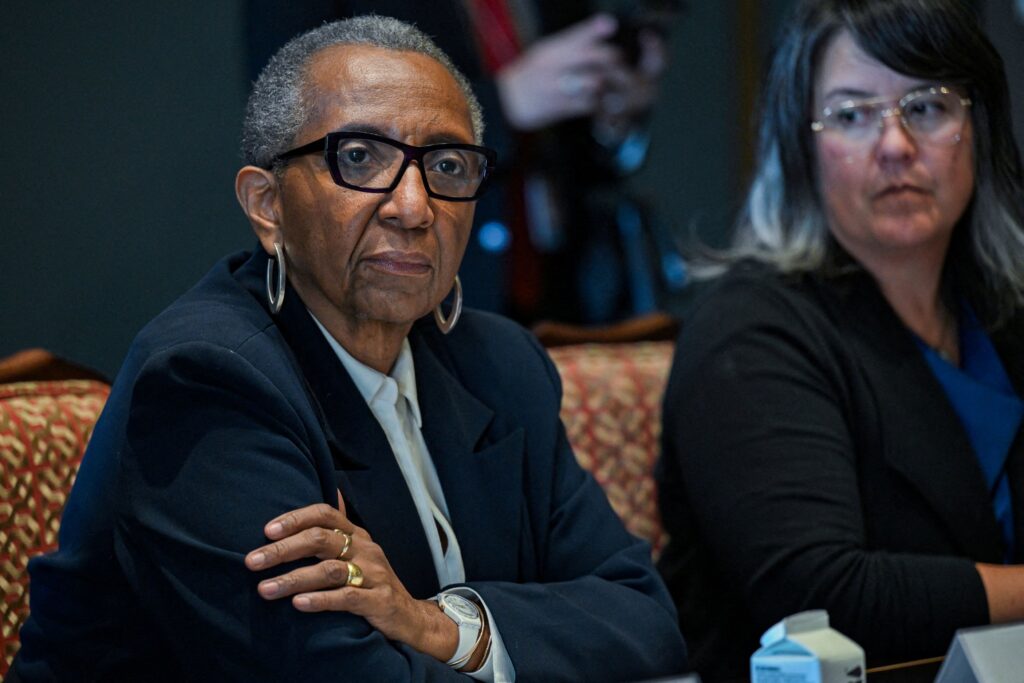
The case involved Gwynne Wilcox, who was appointed to the NLRB by President Joe Biden in 2021. When President Donald Trump took office last year, he fired her. His goal was to tee up a constitutional challenge over the president’s removal powers. Federal law says NLRB members can be fired only for cause, but Trump and conservative legal thinkers, going back decades, believe the Constitution requires that any official in the executive branch be fireable by any president for any reason.
Trump won that argument in June when the Supreme Court allowed him to terminate a Democratic member of the Federal Trade Commission, making Wilcox’s challenge superfluous. Except for the Federal Reserve’s Board of Governors, the Supreme Court now holds that there is basically no such thing as an “independent agency” under the Constitution.
The Wilcox case hinged on what kinds of powers the NLRB exercises. The U.S. Court of Appeals for the D.C. Circuit ruled that because NLRB members “wield substantial executive power,” the president as head of the executive branch must be allowed to remove them at will.
Wilcox contended that NLRB members actually wield legislative and judicial power. The truth is, both sides are correct. The NLRB fuses legislative, executive and judicial power and gives it to unelected bureaucrats who wield unimaginable influence over what American workers and employers are allowed to do.
The NLRB exercises control over some of the most fundamental economic decisions made by citizens. Who counts as an employee? Who may bargain for whom? What may employers tell their workers? When may workers reject a union? What must employers negotiate over?
A free economy ought to leave these decisions to workers and employers themselves, subject to clear rules enacted by Congress. Instead, Americans face unending regulatory uncertainty, with rules that change every four or eight years depending on which party controls an administrative board.
The old-fashioned theory behind “independent agencies” came from the Progressive Era belief that modern governance required technical expertise and that the Constitution’s separation of powers was an outdated hindrance to efficiency. The argument never made sense for labor relations, which is not a science and does not lend itself to technical answers.
Are graduate students “employees” and thus eligible for unionization? No, the NLRB said in a few decisions from the 1970s. That flipped to yes under President Bill Clinton. Then back to no under President George W. Bush. Then back to yes under President Barack Obama. And it could flip back to no if the Republican majority under Trump rules on a pending case.
Regardless of what the answer should be, this is clearly the kind of political question that the founders would have expected legislators to address. The ping-ponging is bad for democratic accountability and the free market. Universities, businesses and other enterprises deserve to know the rules before they make investments and hire workers.
Biden fired the NLRB general counsel, a job that comes with significant enforcement powers, and installed a pro-union replacement who was widely seen as implementing Biden’s agenda. To some extent, the Supreme Court is just making official in law what has long been true in practice. Now it will be just as easy for Democrats to fire pro-business NLRB members as it was for Trump to fire pro-union ones.
However, as Justice Neil M. Gorsuch noted with his concurrence in the FTC case, making agency heads fireable does not solve the constitutional problem. Agencies such as the NLRB still have legislative and judicial powers, but they now answer to the executive. That remains a problem for the separation of powers. It’s a problem that the Supreme Court helped create, Gorsuch wrote, by allowing power to accrue in the formerly independent agencies in the first place.
The NLRB can suppress or compel speech, force workers to financially contribute to organizations they oppose, enforce rules that it writes itself and adjudicate alleged violations of those rules before its own judges and without a jury. That’s a lot of power for five unelected bureaucrats, three of whom are of the president’s party at any given time. Gorsuch’s charge — to “return, all the way, to the Constitution” — demands more restrictions on an agency that is now, unequivocally, answerable to the president.
The post The NLRB’s problem is bigger than who can fire its members appeared first on Washington Post.