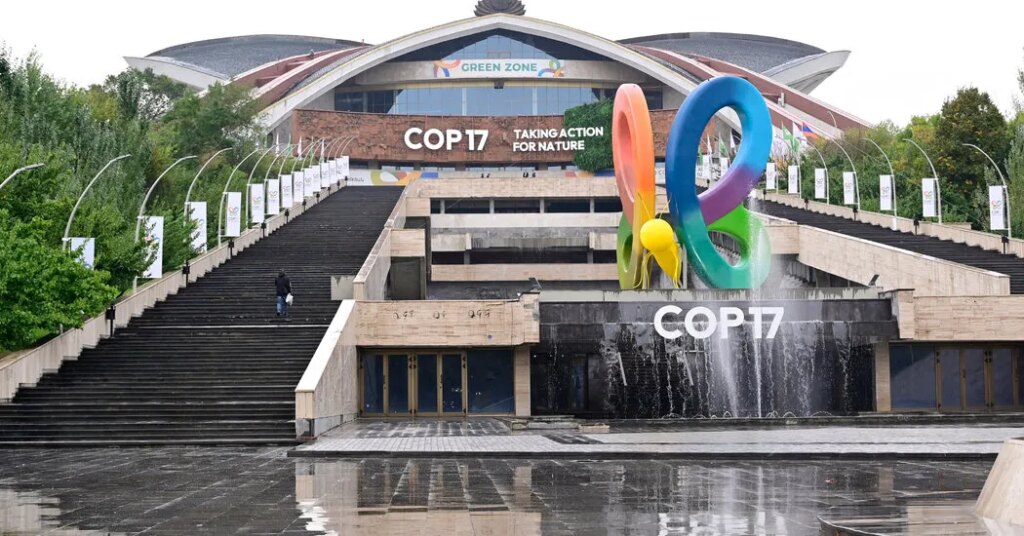
Representatives from nearly 200 countries are gathering in Armenia to grapple with a pressing problem: halfway to a looming deadline, the world is off track to fulfill global pledges to protect wildlife and ecosystems.
Under the auspices of the United Nations, delegates are expected over the next two weeks to discuss how countries are falling short of a 2022 landmark global agreement and what can be done to correct the course.
With wars raging, alarms rising about artificial intelligence and international cooperation flagging, the timing and politics are not easy. But that does not diminish the stakes, experts say.
As people transform the Earth’s lands, oceans and atmosphere, the planet’s biodiversity is declining at rates unseen in human history. From plants and insects to whales and great apes, species are suffering from habitat loss, over-harvesting, climate change, invasive species and pollution. As ecosystems are disrupted, scientists say, so is their ability to provide clean water and abundant food to humans.
In 2022, countries committed to a historic agreement, known as the Kunming-Montreal Global Biodiversity Framework, that laid out a mission to halt and reverse biodiversity loss by achieving 23 targets by 2030. The most heralded was a pledge to protect 30 percent of the planet’s land, inland waters and oceans, known as 30×30. They also promised to make agriculture sustainable and stop the over-harvesting of wild species.
But unless countries speed up action significantly, they won’t hit the targets by 2030, according to a progress report released Thursday by the body that oversees the treaty.
“Nature won’t thrive on good intentions,” António Guterres, the outgoing United Nations secretary general, said at a news conference. Some progress had been made, he said. For example, nearly 90 percent of countries have national targets that reflect the global targets. But, he said, “we are far from what is necessary.”
While the report refrained from singling out individual countries, it noted that nations in Africa, Western Europe, Latin America and Asia were more likely to report their plans than those in Eastern Europe, the Caribbean and Pacific islands.
Overall, the biggest gaps are in targets related to the relationship between nature and economic systems, such as a pledge to reduce subsidies that are harmful for biodiversity and to scale up incentives for conservation and sustainability.
The numbers are enormous. In 2023, the latest available figure, $2.4 trillion in public money flowed to environmentally damaging activities, according to the United Nations. Redirecting that money would unlock much-needed capital to finance conservation work and help industries operate more sustainably, experts say. But only 39 percent of countries even set plans to identify their harmful subsidies, a deadline they were supposed to meet by 2025.
The flagship 30×30 target is also off track, according to the report, although conservation groups and academic scientists say that it remains achievable. An analysis by the Campaign for Nature, an advocacy group, found that current proposals, if enacted, would bring protected lands and inland waters to around 27 percent. But for oceans, the number comes to only around 13 percent. And ecologists stress that the percentage alone is insufficient; the where is just as important.
Advocates and policy experts acknowledged that the U.N. process can feel inefficient and unenforceable. But they said there isn’t a better way to try to force big changes that transcend national borders.
Aside from the Vatican, the United States is the only country that is not a party to the global biodiversity treaty. Typically, it sends a sizable delegation anyway and exerts influence from the sidelines. The State Department did not respond to a question about the size of the U.S. delegation in Yerevan, but registration records indicate a dozen people, compared to more than 35 during past gatherings. In a written statement, the State Department said delegates would “promote American interests in voluntary, responsible conservation efforts that drive economic growth.”
Upon taking office in 2025, President Trump canceled the Biden administration’s efforts to conserve 30 percent of the United States, which opponents called a land grab.
Some state, tribal and local representatives are traveling to Yerevan, notably from California, which is recognized as a global biodiversity hot spot and has its own 30×30 effort.
“California is more committed than it’s ever been to protecting and preserving our own world-renowned biodiversity, and supporting others across the world,” said Wade Crowfoot, the state’s secretary for natural resources.
Mr. Crowfoot said he intends to share California’s work, learn from other attendees and help in a broad effort to push countries to move faster on implementing their pledges.
The question of how to pay for conservation work is always among the thorniest at these gatherings. The countries that are richest in biodiversity tend to be less wealthy financially. They often don’t appreciate wealthier countries telling them not to exploit their own resources, especially since those countries have, in many cases, enriched themselves by doing just that.
According to an analysis by the Paulson Institute and others, the gap between what countries are spending to protect nature and the amount needed is about $1.3 trillion a year.
The post Nations Meet in Armenia as Goal to Protect Nature Remains Out of Reach appeared first on New York Times.