As Pete Buttigieg relentlessly campaigns for Democratic midterm candidates, the potential presidential contender keeps warning about an economic catastrophe like one he’s seen before.
He fears artificial intelligence will ravage jobs and communities in the way factory automation and other economic forces shook his home state of Indiana in prior decades.
“That’s a lesson for us to remember as AI threatens to change, disrupt and sometimes end many people’s jobs and careers,” the former transportation secretary said in an MS NOW interview last month.
Buttigieg is among a growing number of Democrats with a potential eye on the White House seizing on Americans’ fear of job-killing AI as a possible signature issue for the party.
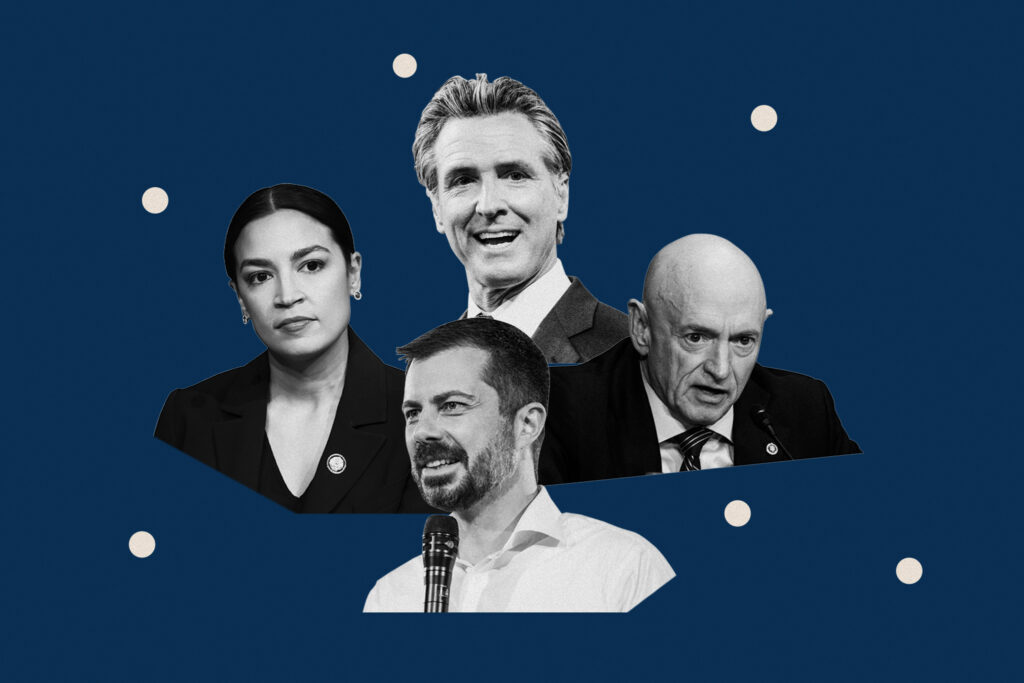
California Gov. Gavin Newsom, Rep. Alexandria Ocasio-Cortez (New York), Maryland Gov. Wes Moore and Arizona Sens. Ruben Gallego and Mark Kelly have all recently talked about protecting workers from being left behind in an AI future.
The attention from prominent Democrats reflects a spreading belief inside the party that a winning agenda for 2028 must tackle Americans’ deep worries about AI and draw a sharp contrast to Republicans. Polls show that the vast majority of Americans believe AI will lead to fewer jobs, but President Donald Trump and his MAGA allies have largely said AI is a boon to the U.S. economy and Americans’ livelihoods.
“We’re seeing the birth of a new issue,” said Democratic pollster and strategist David Shor, head of data science at Blue Rose Research. Politicians are just now catching up to Americans’ litany of anxieties about AI, especially about its potential threats to jobs and prosperity, he said.
While Democratic politicians have been relatively unified in warning about AI’s potential to destroy jobs and increase inequality, they’re scrambling for a coherent strategy on what to do about it.
Part of the problem is the huge uncertainty about what AI’s effects on the economy will be.
Gene Sperling, an economic policy adviser to the past three Democratic presidents, says educated predictions range from AI will create more far jobs than it destroys to unemployment will soar to levels the U.S. has never experienced before.
“Never in the history of humanity has there been a policy issue with so many divergences of potential outcomes,” said Sperling, whose AI policy ideas have influenced Democratic politicians.
For now, Democrats are trotting out a wide range of AI-related economic policies and talking points.
Newsom and Moore have touted AI-related worker protections, including safeguards against AI firing people without human oversight. Ocasio-Cortez has criticized AI “oligarchs” she says are hoarding economic prosperity. Buttigieg, Gallego, Kelly and Rep. Ro Khanna (California) are among the possible 2028 contenders suggesting government-steered job programs can offset future AI-related unemployment.
Kelly hears all the time from Arizona residents who are “worried AI will replace their jobs and wondering what kind of future their kids will have,” he said in a statement. “We have a chance to get this right and create more opportunity and security.”
Democratic donor Reid Hoffman, co-founder of LinkedIn, said he supports the search for a winning message on AI.
“I’m pleased to see Democrats focus on what matters,” said Hoffman, who believes Washington and the AI industry aren’t taking public concern about the technology seriously enough. “If AI generates extraordinary wealth while disrupting work, companies and investors shouldn’t capture all the upside while workers and communities absorb the costs.”
Shor, the Democratic pollster, says that Americans appear receptive to aggressive government intervention on AI and other economic issues. That includes government job guarantees similar to some Democrats’ existing proposals, heavily taxing AI and income guarantees, he said.
Other Democrats believe it’s a mistake to pursue sweeping interventionist AI policies. The fissures mirror in some ways the party’s struggles to deal with gig work, a prior technology-led workforce disruption.
Some divisions within the party are spilling into public. After former vice president Kamala Harris, who is considering another presidential run, appeared to support a collaboration between government and AI industry leaders, some prominent progressives said she was too trusting of the tech industry. (At an event this week, Harris urged stronger government regulation of AI.)
There’s little evidence so far of AI causing widespread job losses, making it challenging for anyone to devise detailed policies to address the potential problem.
But Sperling and others who have discussed the issue with possible 2028 candidates said it’s bad politics and policy to wait to tackle the threat.
“This feels like a freight train coming down the track and we don’t have that much time to adjust to it,” said Alex Bores, a New York state lawmaker. His unsuccessful primary campaign for a congressional seat this year drew national attention to his proposals for AI regulation and spending for and against him by AI industry groups.
To Bores, polls showing most Americans don’t trust either major party on AI is an opening to make regulation of AI’s risks to jobs and safety a defining issue for Democrats in 2028. “It has enough impact that you can grab voters from other parties if you put forth a real plan,” Bores said.
That’s a view held by former president Barack Obama, who has said Democrats who want to run for president must come up with a coherent AI agenda quickly and make it a central issue in campaigns.
Surveys show that Americans have other worries about AI, including a revulsion to data centers and newer concerns about AI leading to large numbers of human deaths. Still, AI is far from a top issue for most voters, polls show.
Fears of job-killing AI, however, may be more potent because they tap into the deep well of existing pessimism in the United States about the economy, the cost of living and future prosperity.
Sperling, who also leads Georgetown University’s Economic Dignity Lab, pointed out that the U.S. unemployment rate is relatively low. He said he can’t imagine how Americans will react if AI starts to measurably whack jobs.
“The amount of fear and worry will make this the dominant economic theme of our time,” he said.
The post Democrats eyeing the presidency can’t stop talking about this issue appeared first on Washington Post.