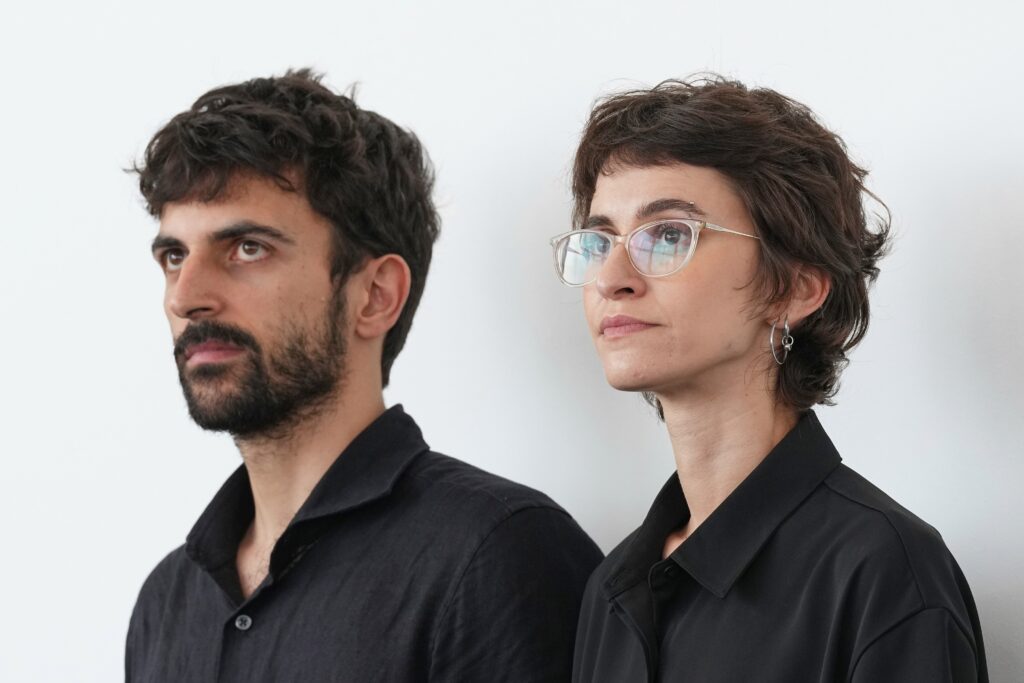
In 2023, shortly after Israel began its military campaign in Gaza, Israeli filmmakers and journalists Yuval Abraham and Rachel Szor started conducting interviews with soldiers and intelligence officers in Tel Aviv.
The resulting documentary, “NAZA,” takes a look at the technology used by Israel in Gaza to identify military targets. Anonymous sources in the film said the technology also has been used to kill Palestinian civilians.
The war, a response to the Hamas-led attack on Oct. 7, 2023, that killed about 1,200 Israelis, has killed more than 74,000 Palestinians, according to Gaza’s Health Ministry, which does not distinguish between civilians and combatants. Israeli officials, including Prime Minister Benjamin Netanyahu, have condemned the film and threatened to revoke the citizenship of Abraham and Szor.
After a September debut at the Venice Film Festival, where the film received a 25-minute standing ovation, “NAZA” arrived in U.S. theaters, ahead of Israeli elections at the end of the month. It follows Abraham and Szor’s Oscar-winning documentary “No Other Land,” which looked at villages in the West Bank that Israel’s Supreme Court said could be demolished.
For much of “NAZA,” Abraham sits on rooftops in Tel Aviv, posing direct questions to 24 soldiers — whose identities remain secret — who had roles in the war in Gaza. The first public screening in the United States, which took place at the New York Film Festival, was protested by a small group with the Israeli-American Council.
“Different people have different reasons to speak,” Abraham said in New York. “For some of them, they felt a need to talk — especially in Hebrew — to penetrate walls of denial, of justification, of silence in Israeli society.”
Many of the findings in the film, related to Israel’s artificial intelligence technology and how it was used in Gaza, were published in the Guardian, which produced “NAZA,” along with the Israeli-Palestinian +972 Magazine and the Hebrew-language publication Local Call.
Three years after the Oct. 7 attack, and a year into President Donald Trump’s Gaza peace plan, the people of Gaza face bleak conditions, The Post reported. Hundreds of thousands live in tents, plagued by infectious diseases, while hospitals remain overwhelmed. “NAZA” includes phone footage from Gaza captured in October and November 2023 as Palestinians looked for family members under rumble.
“You don’t need to hear from Israeli soldiers to understand the horrors of what is happening in Gaza,” Abraham said. “Part of the reason they persist is, still, a lot of people are denying them. Part of our hope is, by making this film, we are making that denial a little bit harder.”
Here’s what to know.
What does NAZA mean?
“NAZA” is an acronym for “nezek agavi,” which means “collateral damage.” The figures in the film use “NAZA” to describe the number of civilian casualties calculated before a strike. One subject in the documentary said the NAZA metric doesn’t distinguish between a child and an adult.
Another soldier said that targets resulting in fewer than 20 civilian deaths didn’t require special authorization. One interviewee said they once received approval for an operation targeting one Hamas militant even though 500 civilian deaths were anticipated. The military denied that this strike, “or anything close to that number,” took place.
“At the start of the war, we bombed everything,” one soldier said. “NAZA wasn’t an issue.”
Why are the interview subjects anonymous?
In “NAZA,” a soldier said that if they were visible in the film, the Israeli government would retaliate against them. The subjects wouldn’t speak unless anonymity was granted, Abraham said. Granting anonymity to protect sources is common in investigative journalism.
“This film would not have been made in any other way,” Abraham said in September. “Because the crimes are ongoing, we felt that it was important to make it. And we understand there is a complexity there.”
The Israeli military criticized the film’s anonymous testimonies, describing the claims as “general and unverifiable.” Abraham and Szor said the testimonies were vetted.
What military technology does the film focus on?
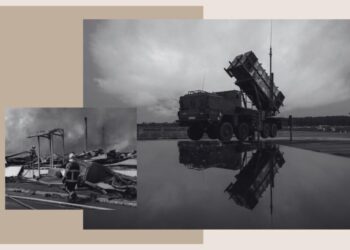
The interviewees in “NAZA” contend that Israel used advanced systems, often involving artificial intelligence, to kill suspected Hamas militants. One subject recalled working on and using an AI tool to create a database of Palestinians in Gaza that suggests targets connected to Hamas. Another system, described by a source in “NAZA,” recommended buildings to target.
(“An algorithm has never decided on a strike,” the Israel Defense Forces said a statement about the film.)
Palestinians were surveilled, an interviewee said, by hacking into the cameras and microphones on their cellphones: “You feel a bit like God because you hear everything they say.”
One said they did this to determine when a targeted individual arrived home. Intelligence officers used the phrase “Where’s Daddy?” to refer to hacking the phone of a child, before launching an airstrike on the family. “You hack her phone, and then you kill her,” one subject said.
What do the interviewees think about the war?
When prompted by Abraham, one interviewee said the war has resulted in a genocide, the same conclusion as that reached by a United Nations commission last year. “We have to describe these things as they really are,” they added.
Several described a sense of importance around “completing the mission,” with one adding that they don’t hate Arabic people. Many said they didn’t believe they were supposed to speak up. “I’m just a small cog,” one said.
Toward the end of “NAZA,” one interviewee contrasted what’s happening in Gaza with the Holocaust. The film draws out this comparison by noting a retrospective on documentarian Claude Lanzmann — who directed “Shoah,” the 1985 film that contains over nine hours of interviews with Holocaust survivors — taking place in Tel Aviv at the time. “I still see the Nazis as evil,” one interviewee said, “but what does that mean I am?”
How do Israelis feel about the film?
The Israeli military issued a lengthy rebuttal to “NAZA,” claiming the documentary “presents a distorted, misleading, and disingenuous picture of the IDF’s target planning and striking process.”
Netanyahu described the film as part of “global antisemitic incitement” and said he intended to seek legislation to revoke the filmmakers’ Israeli citizenship.
More than 2,000 people, including Israeli filmmakers Ari Folman and Nadav Lapid, signed a petition in support of Abraham and Szor. (Another petition, by the International Documentary Association, which called for the Israeli government to withdraw its “threats against [the] filmmakers,” has been signed by actors Mark Ruffalo and Javier Bardem.)
Dozens of right-wing protesters gathered around the home of Szor’s parents in central Israel last month after “NAZA” premiered. Abraham fears he won’t be able to return home. After “No Other Land” premiered in 2024, Abraham’s family home was attacked. But he told the Guardian that the targeting of his family doesn’t compare to what the Palestinians experience.
“Imagine if a Palestinian journalist in Gaza tried to do what we did and called up senior Israeli officials,” Abraham said. “There is no comparison. They would most likely be murdered.”
The post What to know about ‘NAZA,’ a documentary that looks at Israeli war technology appeared first on Washington Post.