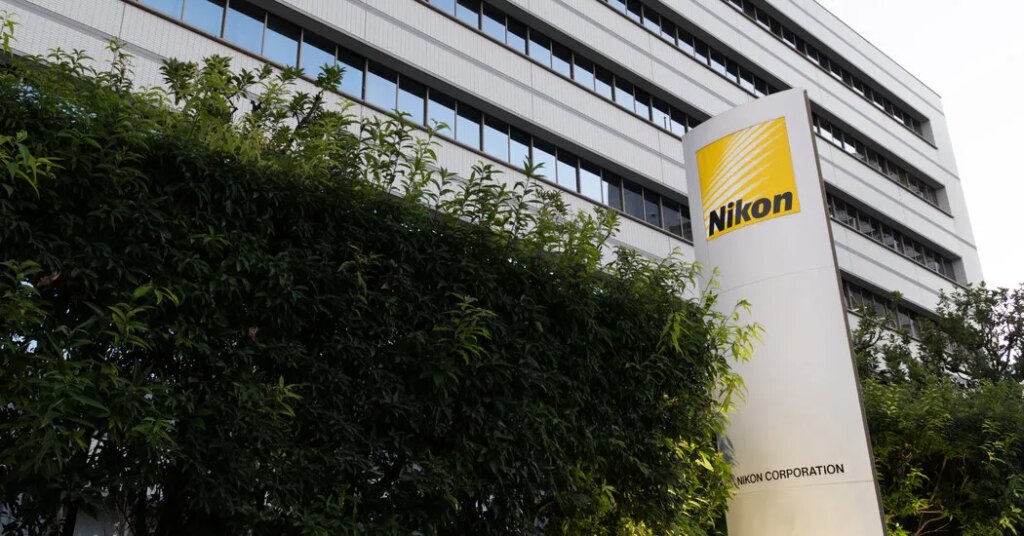
After weeks of controversy, Nikon announced on Friday that it had rescinded the first-place award it gave in its annual Small World in Motion contest after determining the winning video broke its rule against generative artificial intelligence use in submissions.
The Nikon Small World in Motion is an annual video contest that awards the best footage captured through the lens of a microscope. The competition began in 1975, originally accepting only photo submissions, and a separate contest was created for videos in 2011.
“After thoroughly re-evaluating the video and supporting materials and consulting with members of our judging panel, Nikon has determined that the winning video did not comply with the competition rules regarding generative AI.,” the company wrote in a statement posted on its website.
The New York Times was one of many media organizations that featured the winning video, among others, in its coverage of the competition’s results, which were announced on Sept. 16.
The competition’s rules and guidelines explicitly state that “A.I. generated videos are not permitted and Sponsor holds the right to request the original video for verification.”
“This decision is based solely on the submitted video’s eligibility under the rules outlined for this competition,” Nikon’s statement said. “It should not be interpreted as a judgment of the entrant’s professional reputation, scientific contributions, or intent.”
The competition rankings have been updated on the Nikon website, making Nguyen Nam Nhat, a microbiologist based in Vietnam, the new first-place winner.
The original winner, Ning Xu, an optical engineer at the National University of Singapore, submitted a video that purported to show the cilia of a child with primary ciliary dyskinesia, a respiratory disorder. Cilia are microscopic, hairlike structures that sweep mucus out of airways like the lungs, nostril and throat. Dr. Xu did not immediately respond to a request for comment.
Dr. Xu previously claimed that his use of A.I. fell within the regulations of the contest, which allow for “enhancement of microscopy-generated source data, not for image generation from scratch,” Nikon wrote in an email to The Times before the prize was rescinded.
Doubts and concerns surrounding the video started simmering on the social media platform Bluesky after one poster questioned if the video was real.
“What in the world am I looking at here? @Nikon?” the post read. Dozens of replies, many of them from biologists themselves, expressed doubt that the video didn’t contain A.I.-generated components, if not completely fabricated by A.I.
Commenters shared concerns that the microscopy shown wasn’t physically plausible, pointing out inconsistencies with the sizing of the cilia.
In the weeks leading up to the disqualification, an increasingly vociferous campaign arose against Dr. Xu’s video. More than 100 comments accumulated under a LinkedIn post from Nikon announcing the winner, many of them questioning the authenticity of the video and demanding explanations from Nikon.
Scientists pointed out that organelles like the nuclei and mitochondria of the cell disappeared and reappeared randomly, which could be a telltale sign of A.I. use.
A.I. use in scientific imaging is not new, said Aydogan Ozcan, an expert in computational imaging and microscopy at the University of California, Los Angeles. “It helps scientists, including in my own lab, to improve the resolution and contrast of microscopic images,” he said. “But the rule is very simple: You need to disclose it.”
Problems can also arise when A.I. hallucinates structures that aren’t actually there.
While the controversy is upsetting to some, Dr. Ozcan says that this could be an opportunity for scientists and the public alike to standardize ethical A.I. use in scientific imaging.
“I consider this a wonderful way to bring people together and discuss this openly,” he said. “It’s great education.”
The post Big Controversy Upends a Contest About Microscopic Videos appeared first on New York Times.