WILSON, N.C. — John Ashe thought of the acres of tobacco that once sprawled across his hometown as he delivered a sobering message about where those farms stand today.
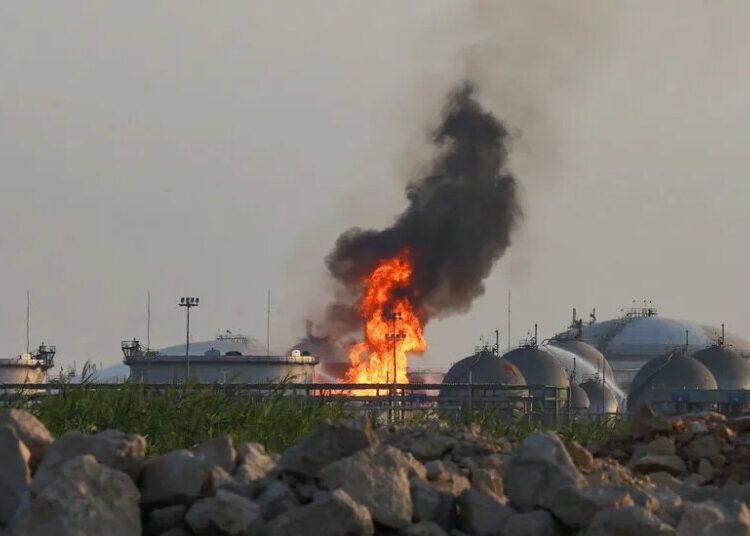
They had already dwindled in size and number, but tariffs and the Iran war were making things worse. The prices of the fuel and fertilizer he needs were doubling, sometimes tripling.
“It’s killing everybody, not just farms, but everybody,” Ashe, a fourth-generation tobacco farmer, said on a recent day in eastern North Carolina.
He laid out those realities as his rationale for supporting the Senate campaign of Roy Cooper, the state’s former governor and a man he thought would make running the farm easier. Ashe, 58, wasn’t sure how many of the neighbors in his conservative patch of the state would agree.
But he thought Cooper had a good shot, given his political success as a Democrat in what Ashe called a “funny state,” which in recent decades has embraced Democrats as governors but most often shunned them in races for the U.S. Senate and president.
“It amazes me that he’s done so well,” said Ashe, a Democrat who has occasionally voted for a Republican.
It has been nearly 20 years since North Carolina sent a Democrat to the Senate. Only one Democrat — Barack Obama in 2008 — has carried the state in a presidential race since 1980.
This year, Cooper has turned his first federal bid into Democrats’ best chance to flip a Senate seat. Polls have consistently shown him leading his opponent, Republican Michael Whatley, most recently by double digits. The gap between Cooper and Whatley has led Republicans to both publicly and privately admit that North Carolina may be slipping out of their grasp.
To get to this point, Cooper has pulled from the traditional playbook for a Democrat running in a battleground state. The Tar Heel State mixes urban and suburban centers that have drawn out-of-state residents for technology and banking jobs with more conservative rural areas dependent on agriculture.
Cooper summarizes his political résumé as a moderate willing to work with Republicans on anything that would help North Carolinians. He talks frequently about his time leading the state with a GOP-controlled legislature, which at times had Republican supermajorities that could override his vetoes.
Some Democrats in other Senate battlegrounds are veering to the left to bring in the voters fed up with the middle-of-the-road stance that Cooper preaches. Across Ohio, Maine and Michigan, candidates are calling American politics “rigged,” pitching progressive policies such as Medicare-for-all and distancing themselves from the Democratic establishment.
But Cooper isn’t budging from the approach he has stuck with throughout his political career.
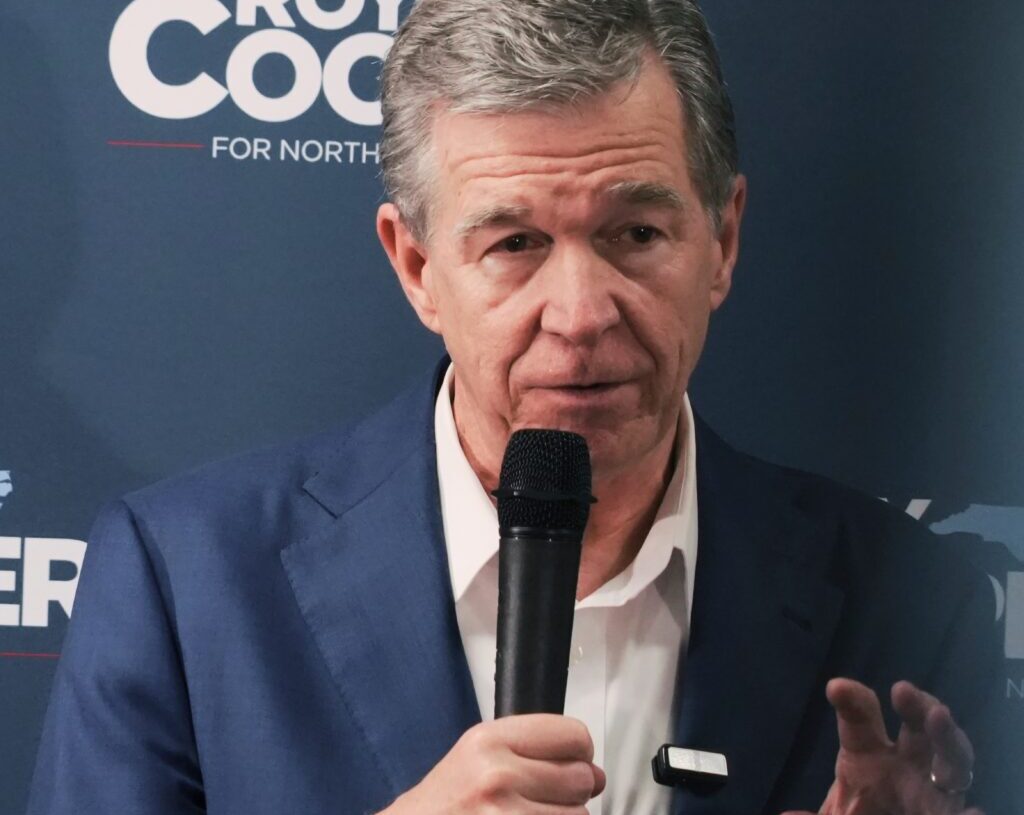
“I’m not a socialist, and I’m not a right-wing Republican, okay,” Cooper said Friday at a campaign stop with Ashe and other tobacco farmers. “But I’ll work with anybody to try to make stuff cost less.”
The former two-term governor has steeped his campaign in that slogan — “make stuff cost less” — as he has toured North Carolina to hammer the Trump administration over high prices.
DJ Griffin, a spokesperson for Whatley, cast Cooper’s centrist approach as bluffing. He pointed to the former governor’s vetoes of anti-trans legislation and bills that would have required North Carolina sheriffs to cooperate with federal immigration agents and help them detain local inmates.
“While he says he’s a moderate, he wants to work with the socialists,” Griffin said.
Of President Donald Trump, Cooper tells voters he could “work with this president when I need to but stand up to him when I need to, as well.”
If elected, Cooper would represent North Carolina alongside Sen. Ted Budd (R). He praised the possibility of North Carolina being among the few states with senators from both parties.
“People are getting tired of this ultra-partisanship that we are seeing across the country,” Cooper told reporters in Wilson. “If we can elect more people who understand that achieving consensus can be a good thing, I think that’s positive.”
On the campaign trail, Cooper spotlights working with one particular group as evidence of his craftsmanship: Republicans opposed to expanding Medicaid.
North Carolina lawmakers fought over the program for more than 10 years before agreeing to expand it during Cooper’s second term as governor. He tells voters about bringing together leaders from across the state and the political divide to pass the legislation, which enrolled hundreds of thousands of low-income residents into Medicaid.
“It took too long, but I finally got that legislature to come around and do it,” Cooper said at a stop on his affordability tour in Elizabeth City, in the swing Pasquotank County.
Some Republican lawmakers had not expected that the Medicaid negotiations would be successful, given the years of political wrangling.
State Sen. Phil Berger (R), who leads his chamber, said at the time that if anyone had predicted that outcome a decade before, “I would have tried to figure out what planet you had come from.”
As she listened to Cooper talk about Medicaid during the Elizabeth City event, Mary Jackson could see why it had a leading role in his campaign pitch.
At least where she lives, in nearby Weeksville, Cooper can’t afford to alienate voters, said Jackson, a 68-year-old retired teacher and Democrat. She knew many of her neighbors cast red ballots, but she also believed people who grew the corn, soybeans and potatoes that dot the farmland around her were struggling. If Cooper kept his centrist approach and reached out to them, as he had in his gubernatorial bids, he’d have better odds, she thought.
“It’s not his first rodeo,” Jackson said.
But she was wary of polls showing Cooper with a large lead, especially as she sees television ads attacking him while she watches football with her husband. To Jackson, her state’s races always felt as if they came down to the wire.
“It always tightens up,” Jackson said.
Republicans attack Cooper on crime
Cooper’s record on crime has been Republicans’ biggest talking point against him.
Whatley, former chairman of the Republican National Committee, and his allies have tried to pierce Cooper’s image as a moderate by saying he was soft on crime while in elected office.
In mid-September, while stumping for Whatley during a rally in Gastonia, Trump called Cooper “the man who made North Carolina the talk of the country” for its “violent crime.” Republicans have poured millions of dollars into ads accusing Cooper of being lax on public safety, including one that falsely blamed him for a murder that happened in South Carolina.
Cooper’s campaign has pushed back by citing his record prosecuting criminals while he was the state’s attorney general. He also ran campaign ads saying that he stood up to Democrats on criminal justice policy. One public safety ad this cycle noted that Cooper “bucked his party to oppose defunding the police, worked with Republicans to strengthen bail laws and partnered with President Trump to crack down on fentanyl.”
For months, Whatley has campaigned on a close alignment with Trump and his conservative agenda, a contrast to Cooper’s emphasis on crossing the aisle.
Trump handpicked Whatley, who has been a close ally to the president since his 2016 campaign, to run for Senate. Whatley, who also chaired the state GOP for years, has not distanced himself from the party or its unpopular president.
In Gastonia, Whatley joined Trump onstage halfway through the hour-long rally, effusively praising his administration and declaring, “I am still with that guy.”
Whatley’s allegiance to Trump, who carried North Carolina three times, may not be as beneficial as it once was, given the president’s low approval ratings. As anxiety over the race brewed, at least two Republican groups have pulled their ad spending.
Still, Whatley’s campaign is sticking beside the president. Griffin, Whatley’s spokesperson, said the candidate had talked with Republicans in Washington and felt “confident that we’re going to have the money” to reach voters across the state in the final few weeks.
Cooper not taking a win for granted
Many in politics are treating a Cooper win as all but assured. But he’s urging voters and prospective donors not to assume that.
Late last month in Elizabeth City, Cooper warned that Republicans could “catch up at the end” by winning over undecided voters. He urged supporters to help him canvass. He told the three dozen people gathered there to tell other voters that Whatley was a longtime Washington insider who walked closely with Trump.
The next day in Raleigh, Cooper began his remarks with an apology for the continuing barrage of fundraising texts and emails, which he was signed up for, too.
“My back pocket is constantly buzzing with me asking myself for money,” he joked.
“We love it!” someone shouted back.
Throughout the evening, the Raleigh crowd broke into chants of his name, “Roy! Roy! Roy!” Supporters waved white and blue campaign signs and mini North Carolina flags.
In that atmosphere, tucked in a deeply blue pocket of the state, it was easy to feel good about Cooper’s odds, said Bev Orozco, a 63-year-old Democrat.
She had a lot on her mind that she wanted Cooper to tackle if he was elected. For starters, she worried about the cost of her health insurance premiums, which doubled when the enhanced Affordable Care Act subsidies expired this year.
But she stopped herself from getting her hopes up too high, saying she knew her state and noting how it often falls short of turning blue.
“It’s so hard to know,” Orozco said.
The post How Roy Cooper became Democrats’ best chance to flip a Senate seat appeared first on Washington Post.