Israel’s coming election is best watched from a palace roof in Argos.
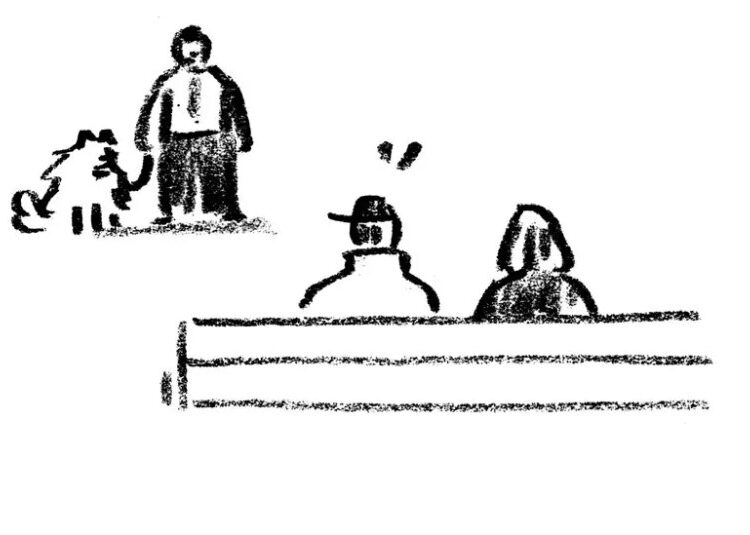
Aeschylus’ “Agamemnon,” the first play of the Oresteia trilogy, begins there, with a watchman waiting for the beacon announcing Troy’s fall. His first words: “I pray the gods to quit me of my toils, / To close the watch I keep, this livelong year.” He is not asking for more news. He is asking for the watching to end.
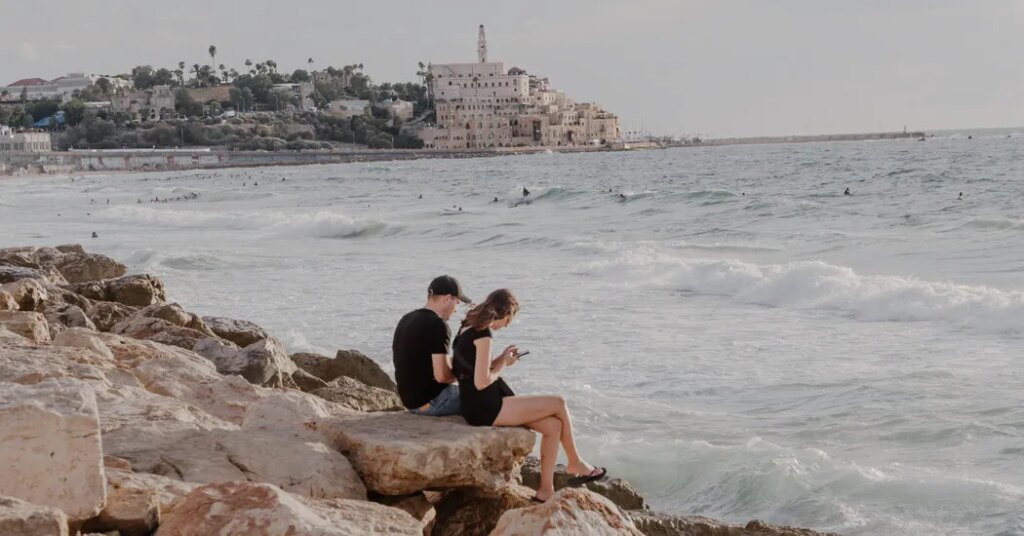
In Israel, the watching never seems to end. The last act before sleep is to reach for the phone on the night stand to check for news. If you wake during the night, you check it again. Before morning coffee, the day begins in the same place: Has something happened in Iran? Has a reserve call-up been announced? What did the government do while you slept?
Being glued to a phone, of course, is now part of the human condition. It is especially acute for Israelis. Before the smartphone era, the beeps signaling the hourly news bulletin on the radio could silence a whole bus. The instrument is new; the habit is not. Israelis check for trouble the way people elsewhere check for rain. But nobody decides the weather.
On Oct. 27, Israelis will vote in their first national election since the catastrophe of Oct. 7, 2023, when Hamas-led attackers killed 1,200 people and kidnapped 251 others. The election will pass judgment on responsibility for that day and could help decide Prime Minister Benjamin Netanyahu’s political future. Beneath it all lies a more intimate question: Can Israelis recover the ordinary privilege of not having to watch their government all the time?
Israel has never entirely been off alert. A state of emergency declared in May 1948 remains. There is something absurd about a national emergency old enough to have grandchildren. Israelis work through wars, plan holidays around missile threats and resume dinner after leaving the shelter. Life goes on; vigilance never turns off.
More than two centuries ago, the French Swiss political thinker Benjamin Constant argued that representative government allowed citizens to entrust the work of governing to others while retaining the duty to watch those who govern. One of democracy’s quietest promises is that politics need not occupy every hour of private life. For many Israelis that promise has broken down: They cannot stop watching.
There is, however, a limit to the freedom not to watch. Israelis may be entitled to intervals of inattention, but not to ignorance of what their government does in their name. In Gaza, the Israeli military has killed tens of thousands of Palestinians, wounded many more and displaced most of the population. In the West Bank, Israeli forces kill and wound Palestinians, raid and demolish homes, close roads and subject daily life to a shifting regime of checkpoints and permits. Armed settlers assault Palestinians, burn their property and drive communities from their land, with soldiers repeatedly standing by and at times taking part in the violence.
Mr. Netanyahu has long cast himself as the nation’s watchman. He has said others underestimate danger, but that he sees it in time. A 2014 speech at Yad Vashem distilled a claim he has made for decades. Warning about Iran’s nuclear program, he asked why leaders before the Holocaust had failed to “detect the danger in time.” The warning signs had been visible, he said, but reality was “cloaked in a bubble of illusions.” The implication, then and since, was that Israelis could trust him to see what others did not.
On the night of Oct. 6, 2023, Mr. Netanyahu slept. A modern state is built to stay awake while its leader sleeps. Sleeping was not the failure. But the hour of his awakening and what he might have done remain among the unanswered questions of Oct. 7. Mr. Netanyahu blamed security chiefs for not waking him. “If they had woken me, everything would have been different,” he said recently. He also claimed that security officials had let him sleep because they feared he would put the military on alert and risk provoking Hamas.
In his telling, the system failed because it did not summon the one man who would have understood the danger. It is a remarkable defense: Failure becomes another argument for indispensability.
Recent reporting complicates that defense. Days before the attack, the president of the United Arab Emirates, Sheikh Mohamed bin Zayed al-Nahyan, warned Mr. Netanyahu that the Hamas leader Yahya Sinwar was preparing a major operation, according to a report in the Israeli newspaper Haaretz. Mr. Netanyahu, according to this account, replied that Israel was prepared and believed Hamas intended to act in the West Bank. Senior Israeli security officials said they were never told of the warning. Two people familiar with the matter later confirmed the warning to The New York Times, but Mr. Netanyahu denied that the conversation took place and sued Haaretz for libel. He has also denied reports that Egyptian officials had warned Israel and the prime minister about Hamas’s plans.
Gadi Eisenkot, Mr. Netanyahu’s principal challenger in the election and a former Israel Defense Forces chief of staff, answered the complaint about not being awakened with five words: “Who failed to wake whom?”
That exchange risks obscuring the larger failure. Israel’s security institutions had been watching and still failed to understand what they saw. Israeli intelligence had obtained Hamas’s detailed invasion plan more than a year earlier and later observed parts of it being rehearsed. The deeper error was strategic. For years, Mr. Netanyahu’s governments treated Hamas’s rule in Gaza as containable, allowed Qatari money to help sustain it and found Hamas’s rivalry with the Palestinian Authority strategically useful. The bubble of illusions was his, too. No amount of watching can compensate for a government incapable of testing its assumptions, revising strategy and acting on what it knows.
Many of the dangers Mr. Netanyahu has cited were real. Iran did seek nuclear capabilities; Hezbollah did build an enormous missile arsenal; Hamas was never a harmless governing authority. But real danger can still become politically useful. That logic survived even Oct. 7. The massacre shattered Mr. Netanyahu’s central promise that only he could keep Israelis safe, yet the catastrophe itself became a reason he could not leave. War postponed inquiry. Emergency made the idea that Mr. Netanyahu should resign seem irresponsible. Elections could wait. Accountability could come later.
Even the question of who will investigate Oct. 7, and how, has become something Israelis must watch. The government has resisted a state commission of inquiry. After the Yom Kippur war, the Agranat Commission largely spared Prime Minister Golda Meir in its interim findings; she resigned 10 days later.
The emergency of 1948 is older than Mr. Netanyahu and will outlast him. No election can end the vigilance imposed by the dangers Israel faces. But its citizens can decide whether their own government must also be watched hour by hour.
On the morning of Oct. 28, whatever the result, Israelis will reach for the phone before coffee. The government that emerges will have to earn the right to be ignored for a few hours at a time.
Yonatan Touval is a foreign-policy analyst and writer.
The Times is committed to publishing a diversity of letters to the editor. We’d like to hear what you think about this or any of our articles. Here are some tips. And here’s our email: [email protected].
Follow the New York Times Opinion section on Facebook, Instagram, TikTok, Bluesky, WhatsApp and Threads.
The post Israelis Are Exhausted. There Is a Way Out. appeared first on New York Times.