The largest single donation in the history of American higher education — $3 billion — is going to Carnegie Mellon University.
Although the university is based in Pittsburgh, the donation from the hedge fund executive Kenneth C. Griffin will largely go toward the development of a campus in Miami.
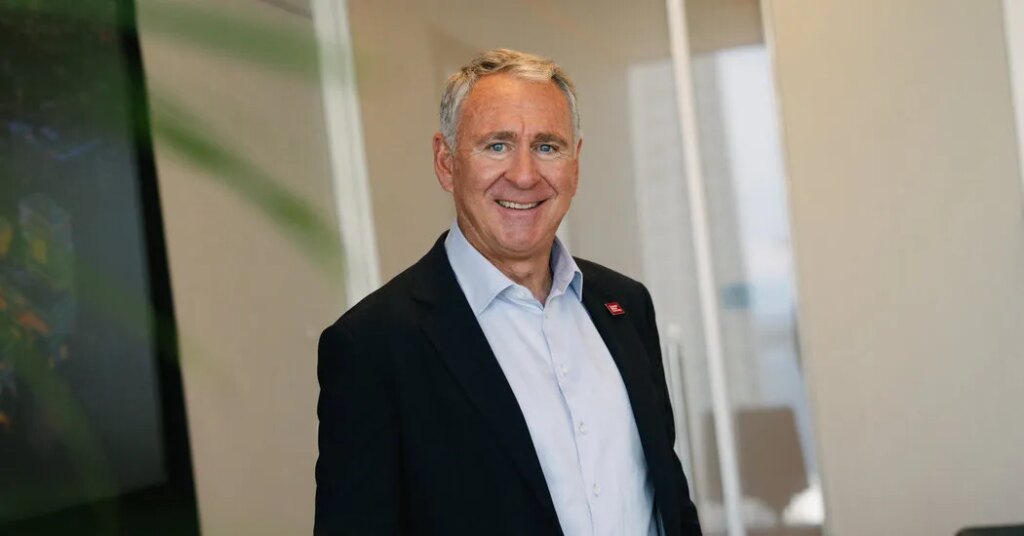
“This is going to make a really important change in Carnegie Mellon’s ability to touch more lives, impact more people and make a difference for our country,” Mr. Griffin said in an interview in a Miami skyscraper.
The contribution, which the university disclosed Wednesday after more than two years of secret talks and planning, eclipses the record $2 billion gift to Oregon Health & Science University that the Nike co-founder Phil Knight and his wife announced last year.
Some $2 billion of Mr. Griffin’s contribution involves a new 35-acre outpost in Miami’s artsy Wynwood neighborhood, where students are expected to enroll beginning in 2028. The university, which already has locations in Qatar and Rwanda, is forecasting that the Miami campus will eventually accommodate more than 3,500 students.
The campus is the latest top university outpost planned for South Florida, where wealthy residents have long argued that the region needs to expand its ranks of well-trained college graduates to attract and retain businesses. Vanderbilt University, for instance, is planning a campus in West Palm Beach, and Northwestern University runs a graduate business program in Coral Gables.
Mr. Griffin is not an alumnus of Carnegie Mellon — he went to Harvard — and moved his company’s headquarters from Chicago to Miami only about four years ago.
But he suggested that Carnegie Mellon had ambition that its peers perhaps lacked, ticking through the university’s record in fields like computer science, artificial intelligence and even drama, and its willingness to embrace an operation in Miami.
“One of the critiques of many of our institutions of higher education is they have not meaningfully expanded their impact or scale over the last 50 years,” Mr. Griffin said, though many university leaders point to their records of increasing student aid and expanding enrollments, especially in graduate programs.
The rest of the money has been earmarked for the campus in Pittsburgh, to which Mr. Griffin’s company, Citadel, previously donated. According to Carnegie Mellon, half of the Pittsburgh money will go toward the School of Computer Science, with the balance available as “flexible support for the university’s highest priorities.”
Mr. Griffin, for whom the computer science school will be named, will have significant say in those priorities since he is joining the university’s board.
Mr. Griffin’s name is also on the Graduate School of Arts and Sciences at Harvard, as well as the financial aid office of the undergraduate college there. But despite giving more than $500 million to Harvard, Mr. Griffin publicly broke with the university after the Oct. 7, 2023, attack by Hamas on Israel and the subsequent campus turmoil.
Speaking at a conference in 2024, Mr. Griffin said that until Harvard resumed teaching people “to be leaders, to be problem solvers, to take on difficult issues, I’m not interested in supporting the institution.”
Mr. Griffin said this week that he had lately made some modest gifts to Harvard and that the university had been “taking steps to address some issues that are really important to me,” such as antisemitism.
“Is this a repudiation of Harvard?” Mr. Griffin said of the Carnegie Mellon contribution. “I think that misses the point. This is about: How do we ensure that one of the greatest universities in the country has a greater impact on more students?”
He said he expected to “support Harvard for decades to come, but for me, I think Carnegie Mellon has the DNA that we need right here, right now in Miami.”
Single donations of $1 billion or more are scarce in higher education.
In 2018, Johns Hopkins University announced that Michael R. Bloomberg had committed $1.8 billion. Six years later, Hopkins said Mr. Bloomberg was giving another $1 billion, taking his lifetime total to well more than $4 billion.
A 2022 gift of $1.1 billion from John and Ann Doerr underpinned a Stanford school, and in 2024, Ruth Gottesman gave $1 billion to cover tuition in perpetuity at the Albert Einstein College of Medicine in the Bronx.
Last week, the University of Oregon announced a $1 billion contribution from the Knights for a new engineering college.
Carnegie Mellon has its roots in private wealth: In 1900, the industrialist Andrew Carnegie seeded what ultimately became the university with $1 million. At the time, that was roughly the equivalent of 1,300 average households’ annual incomes.
Despite that head start, Carnegie Mellon has a more limited endowment than many other top institutions. At the end of June 2025, according to the most recently published data, it stood at about $3.5 billion. Harvard’s, by contrast, was worth about $57 billion.
Farnam Jahanian, Carnegie Mellon’s president, said he expected the Miami campus would not be organized around academia’s traditional boundaries, like majors and departments. Rather, he said, officials are planning the campus to respond to four “grand challenge areas”: human health and biological discovery; national security and economic competitiveness; energy and climate resiliency; and manufacturing and industry.
Dr. Jahanian signaled that Carnegie Mellon, where tuition is approaching $70,000 a year, planned to use part of the donation to make the university more affordable for students, but he did not detail its plans.
As he nursed a Coca-Cola from McDonald’s, Mr. Griffin insisted that he had not known the threshold for the biggest gift in American higher education when he began talking with Carnegie Mellon.
“The milestone was: What’s it going to take to support Carnegie Mellon University as one of the greatest universities in America?” he said. “And: What’s it going to take to create the bandwidth to bring them here to Miami?”
The post Donor Gives $3 Billion to Carnegie Mellon, the Largest University Gift Ever appeared first on New York Times.