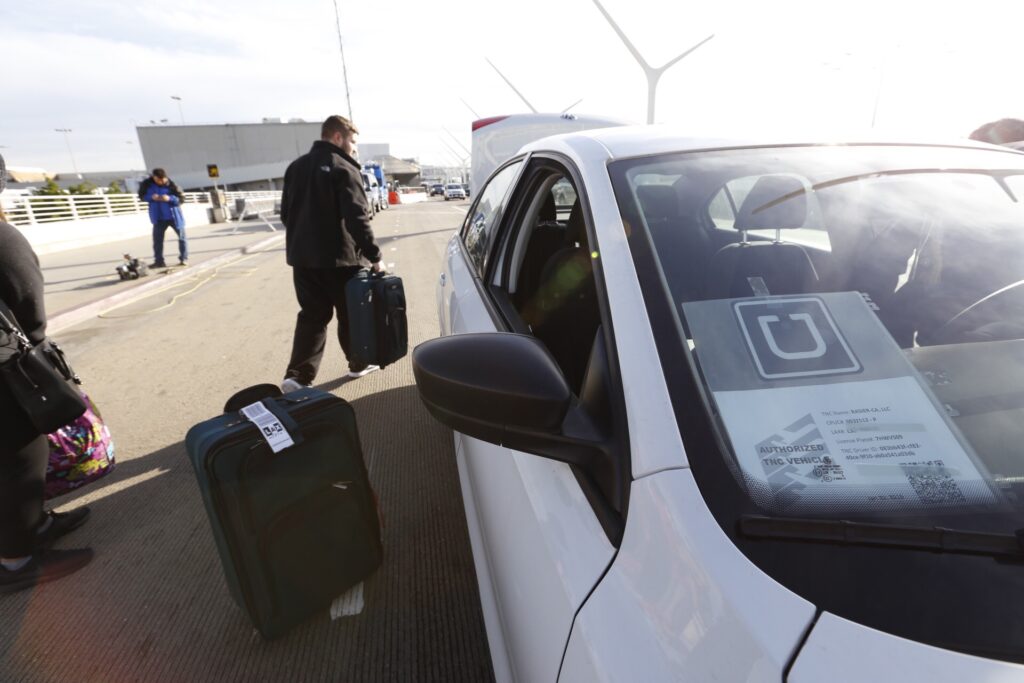
Need a ride from the airport home? You better hope it’s not raining.
During a recent trip, as I often do, I checked Uber and Lyft fares right after getting off the plane. By the time I walked to the rideshare pickup area, prices on both apps had skyrocketed. Rideshare platforms rely on machine learning models that preemptively raise rates in response to weather, crowds or sudden spikes in demand.
High-tech markups aren’t limited to travel, of course. I recently wanted to treat my daughter — an overwhelmed public school elementary teacher — to an in-person game for her beloved Baltimore Ravens. After searching for decent lower-bowl seats that didn’t cost as much as a month’s worth of groceries for a family of four, I gave up.
Ticket resale algorithms have driven prices so high that attending a sporting event has become unaffordable for many families.
Last year, I ordered an electric three-compartment buffet warmer. I wanted a second one because I was hosting a large Christmas dinner, but a few weeks before the party, the online price rose by 53 percent. I decided to wait until after the new year to buy the additional unit.
Even when you try to cut back your spending, it’s a battle. Just try canceling a subscription. It makes your blood pressure rise. Signing up takes a single click, but trying to leave triggers an obstacle course of retention prompts. Or, you can’t even figure out how to cancel.
Budgeting is becoming more complicated. When prices change by the minute based on algorithms tracking your location, shopping habits or desperation, stretching a dollar becomes a very frustrating exercise not to swear.
As retailers increasingly adopt digital price tags, surveillance pricing and complex subscription traps, consumers need a “Shoppers’ Bill of Rights,” according to Groundwork Collaborative, a progressive economic policy and research organization.
Groundwork Collaborative argues in a new report that laws written to safeguard consumers in an era of paper price tags and cash registers are failing in a modern economy dominated by algorithmic dynamic pricing, artificial intelligence and digital tracking.
“I think the rights and the protections that consumers have in the retail space have eroded considerably … and I don’t think our consumer laws have kept up,” said Groundwork’s president and chief executive, Lindsay Owens, in an interview.
When prices are constantly fluctuating, it makes it hard to comparison shop, she noted.
“If you feel exhausted and embattled when you’re shopping, if you feel like these price tags aren’t random, you’re right,” she said. “They’re rigged and corporate America’s reinvention of the rip-off is taking a toll on shoppers. It’s emptying their wallets and it’s depleting them of another valuable resource: their time.”
State leaders are starting to push back against predatory pricing. In April, Maryland Gov. Wes Moore (D) signed landmark legislationmaking the state the first to ban food retailers and delivery services from using dynamic pricing or customer-surveillance data to inflate prices.
“At a time when our people are being squeezed by the cost of everything, especially groceries, Maryland is not just pushing back, but pushing forward,” Moore said about the law.
And in New York, the legislature passed the One Fair Price Act, which bans companies from using personal browsing history or location data to set personalized rates. It’s awaiting Gov. Kathy Hochul’s (D) signature or veto.
Similar legislation to New York’s proposal was passed in Colorado. It was vetoed by Colorado Gov. Jared Polis (D).
But without federal rules, consumers will have different levels of protection depending on where they live. State-level efforts to protect consumers are not enough, Owens said.
“I don’t think that shoppers should be subjected to gouging as soon as they cross state lines,” she said. “We do need federal standards. I think the 12 different rights outlined in the Shoppers’ Bill of Rights, taken together as a whole, would go a really long way to balancing the scales for shoppers in this country and would save us a lot of time and money.”
While Groundwork’s proposal outlines a dozen protections, half target the most egregious high-tech pricing tricks, from hidden checkout fees to subscription traps. Read the full report to check out all 12. Here’s a look at the first six.
Up-front pricing transparency. At the very first point of contact, businesses should display the full final cost, including all mandatory surcharges, service costs and fees. Shoppers shouldn’t be surprised by hidden add-ons at checkout.
Barring pricing based on your personal data. There should be a ban on businesses using information such as your web browsing history or location to set higher, individualized prices. Last year, Instacart ended a technology program that led customers to pay different prices for the exact grocery items ordered from the same store at the same time.
Limits on dynamic price spikes. Stores would be restricted from rapidly fluctuating the prices of everyday goods in response to sudden surges in demand or environmental conditions when supply costs remain unchanged.
Hassle-free subscription cancellation. Ending a recurring subscription or membership must be just as simple and fast as signing up. Multistep retention traps would be prohibited.
Make it easier to fix stuff. Have you ever tried to fix something only to find there’s no replacement part? You suspect that’s by design. This point from the report is right on the money: “Companies restrict the parts, tools, software, and information needed to make repairs, pushing consumers toward expensive manufacturer-authorized service — or forcing them to replace perfectly fixable products altogether.”
That AI bot should work for you. You get a prompt while shopping online that says an AI tool can help you find what you’re looking for at a good price. But what if the AI personal shopping agent is really designed to get you to spend more? It should be clear if the bot is working in your best interest.
Navigating prices right now is mystifying, and without stronger consumer protections, corporations will continue to find new ways to gouge everyday shoppers.
The post Here’s how to fix algorithmic pricing appeared first on Washington Post.