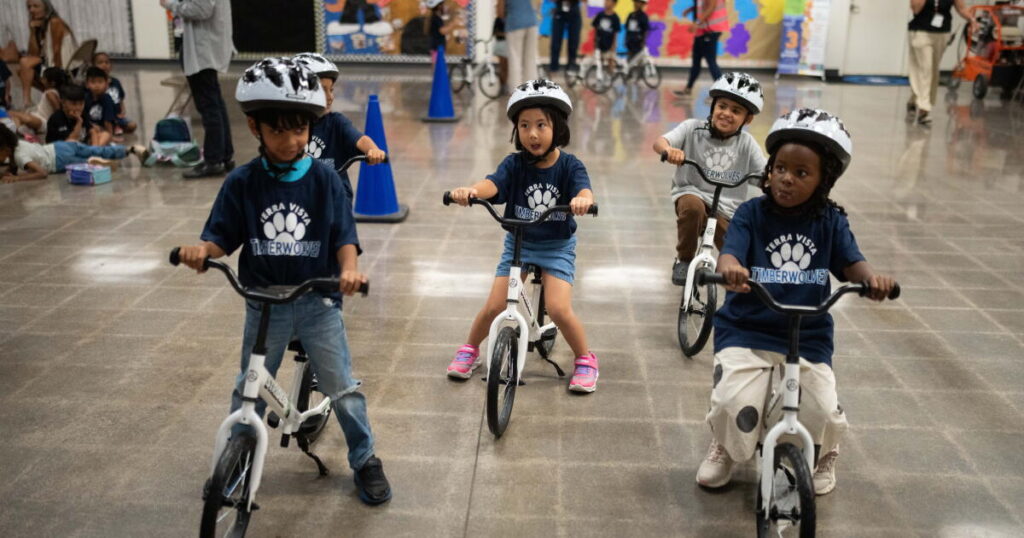
For generations, kids have learned how to ride a bike — a quintessential childhood milestone — in driveways, on sidewalks and in neighborhood streets. Now, they’re learning in school gyms and playgrounds.
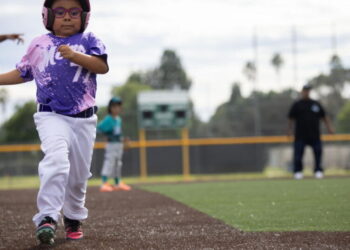
On a recent September day, kindergartners at Terra Vista Elementary School in Rancho Cucamonga were fitted with helmets and assigned a black-and-white balance bike. Off they went, propelling themselves with their legs and practicing gliding on the pedal-free bikes. The kids started and stopped on a circular path outlined by orange traffic cones, with adults watching and directing nearby.
For every nervous face, there was another with a smile. For every squeal, there was a laugh.
All Kids Bike, a program within a nonprofit organization, has brought a learn-to-ride curriculum into nearly 2,000 U.S. elementary schools. They’ve made bike-riding part of physical education for children who otherwise might have to wait for an adult or older sibling to teach them — or whose neighborhood and socioeconomic status might stop them from getting the chance.
When schools apply for the program, All Kids Bike can pair them with donors that fund the costs. In Rancho Cucamonga, the city provided $45,000 to gift the equipment and the curriculum to Terra Vista and four other schools.
The eight-lesson curriculum gradually moves children from simply walking with and getting comfortable on a properly fitted bike to balancing with both feet off the ground. Then, adults add pedals and the students progress to full-fledged cycling.
Riding bikes teaches kids confidence
The activity is perfect for kindergarten physical education classes, says Drew Raney, a PE teacher in Wasco, Calif. For schools’ youngest students, gym class focuses on exploring movement, learning to share space and equipment, following directions and having fun. The learning can happen with rainbow parachutes, scooter boards, Hippity Hops — and now, bicycles.
For Raney, who teaches the All Kids Bike program at his school, some of his favorite moments come when students begin lifting their feet and riding in stop-and-go spurts.
“Once you see students start to kind of glide around, that’s when you can start to see that confidence shoot up because they’re taking those first steps and they’re putting themselves out of their comfort zone,” he said.
In Seattle, district physical education manager Lori Dunn sees learning to ride a bike as more than simply mastering a recreational skill. The process requires balance, core stability, sequencing and body awareness, she said, with each step building on the one before it.
The process also can teach children how to handle frustration as they wobble or fall.
Hopefully, bike riding someday will be “just like basketball or dodgeball or whatever other sport there is,” becoming such a basic skill that it is simply part of PE, said Lisa Weyer, executive director of the Strider Education Foundation, which operates All Kids Bike.
Biking PE gives kids access to lifelong skills
Some schools also pair the curriculum with other programs to teach road and pedestrian safety and expand access for children with disabilities. For example, Seattle public school students learn how to cross streets, make eye contact with drivers and recognize unsafe behavior.
The program also can give children a sense of freedom and independence, Weyer said, while getting them away from screens and into active play.
The lessons can stick with students long after the bikes are put away, Raney said.
“I have now third-graders that are running up and they still remember three years ago, ‘That’s our bike teacher!’” he said. Some students still remember the chants from the end of the lessons.
Mumphrey writes for the Associated Press. Jae Hong contributed reporting.
The post Schools are teaching kindergartners how to ride a bike in gym class appeared first on Los Angeles Times.