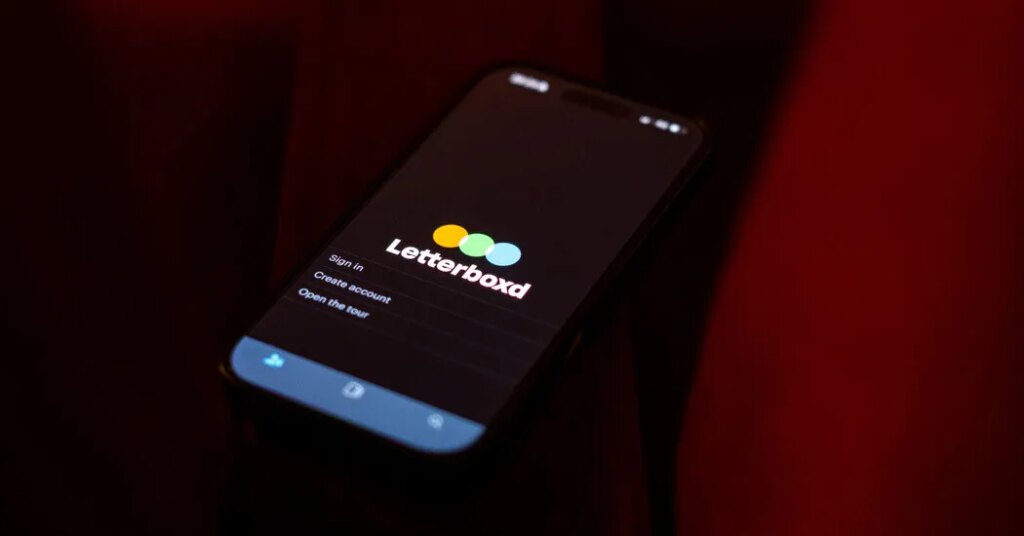
Letterboxd, a social network for movie lovers where both everyday fans and auteurs like Francis Ford Coppola and Rian Johnson share reviews, lists and cinema tidbits, has surged in popularity in recent years.
Now, four years after a sale to a Canadian technology holding company called Tiny, it is attracting interest from suitors enamored by the site’s obsessive audience and the subscription and advertising revenue streams it provides.
A number of suitors have submitted expressions of interest, including The New York Times Company, Sony Pictures Entertainment and A24, the independent film studio, according to seven people familiar with the sales process who spoke on condition of anonymity to discuss confidential matters.
Any deal is expected to value Letterboxd at more than $300 million — roughly 20 times its projected earnings this year of roughly $15 million, three of the people said.
Letterboxd was founded in 2011 by Matthew Buchanan and Karl von Randow, two designers from New Zealand who lamented the dearth of online communities around film. The site, elegant and simple, is driven by core features like lists, reviews and personal diaries’ tracking the movies users have watched.
There are “challenges” that encourage the site’s members to take an active role in a largely passive medium, including “Horror x 52,” where users log different types of horror films they have watched over the course of a year. Another is the Criterion Challenge, which has Letterboxd fans watching dozens of movies from the Criterion Collection, a prestigious selection of the best in contemporary and classic film from around the world. And there are jokes aplenty. “R.I.P. Odysseus, you definitely would’ve loved Google Maps,” read one 4.5 star review of “The Odyssey” this summer.
Letterboxd users have wide-ranging tastes, embracing blockbusters, indies and foreign-language films alike. “Things got weird,” Rian Johnson, the director of “Knives Out,” wrote in his introduction of a list of 10 musicals from the 1970s. His list is one among millions, an ever-expanding canon of on-screen identity (“Queer Femme Desire”), geography (“Top 100 Iranian Films,”) and experience (“Films I Watched in a Mental Hospital”).
That combination of knowledge, fun and community has sent its traffic soaring at a time when the Hollywood box office is rebounding and art house theaters and indie studios like A24 and Neon are thriving. The company has 30 million users, up from 1.8 million in 2020.
This year, Tiny enlisted the investment bank LionTree to explore sale of its controlling stake; it bought 60 percent of the company in 2023 in a transaction that valued Letterboxd at more than $50 million. The co-founders still own a significant minority stake in the business.
Puck, Semafor and Variety earlier reported Letterboxd was up for sale.
The range of suitors for Letterboxd can be attributed to the attractive economics of online communities and the centrality of digital subscriptions to modern media companies, said Ken Doctor, a media analyst and local news entrepreneur.
Letterboxd relies primarily on user-generated content including reviews, ratings and summaries that do not cost the company anything. Most users participate for free, but the site also has a membership business with two paying levels — “pro” ($19 per year) and “patron” ($49 per year) — that give members a series of bonus features, like the ability to select custom posters for their profiles. Tiny does not provide a breakdown of its subscriber base. The company also sells advertising on the site.
“That is the gold standard of the internet,” Mr. Doctor said of an engaged audience willing to buy subscriptions that advertisers will pay to reach. “If you can find that, you can build a big business around it.”
That combination is attractive for suitors like Sony, A24 and The New York Times.
Sony has signed up more than 21 million paying subscribers to its Crunchyroll anime streaming service, and it offers a season pass to its Alamo Drafthouse theater chain. A24’s membership business, AAA24 (all-access A24), gives subscribers exclusive access to new merchandise, a quarterly print zine and theater tickets; the company does not disclose its subscription numbers. A24 also puts out content like podcasts and newsletters for fans. The New York Times Company has 13.35 million subscribers who pay for access to news, games, recipes and product recommendations.
Letterboxd’s new owners will have to walk a tightrope, keeping the site’s quirky, independent spirit alive while integrating the site with its larger corporate operations.
That could be delicate for movie studios like Sony and A24, which would have to take care to avoid conflicts of interest since their films are reviewed on the platform. The New York Times, which employs its own reporters and critics to write about films, would also need to distinguish between its existing coverage and the red carpet interviews that the Letterboxd staff conducts with the site’s signature tricolor microphone.
The future of the company’s founders, Mr. Buchanan and Mr. von Randow, is undecided, although both are expected to play a role in whether to sell, and to whom, one of the people said.
The post Letterboxd Considers a Sequel Under New Ownership appeared first on New York Times.