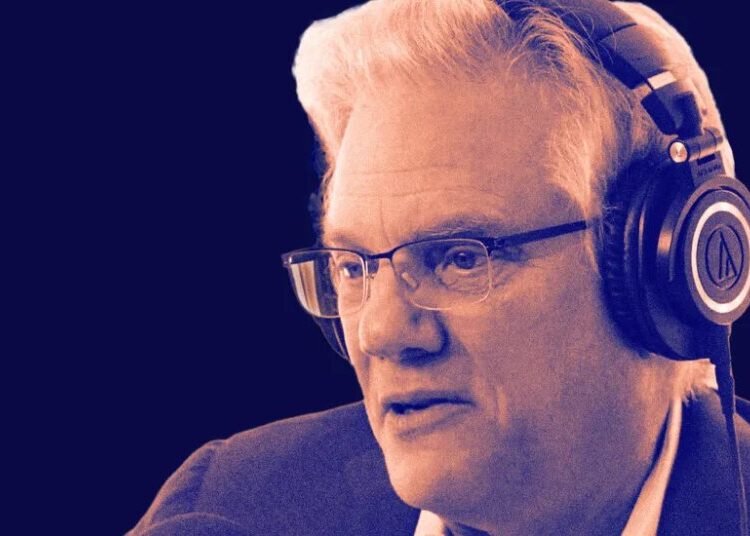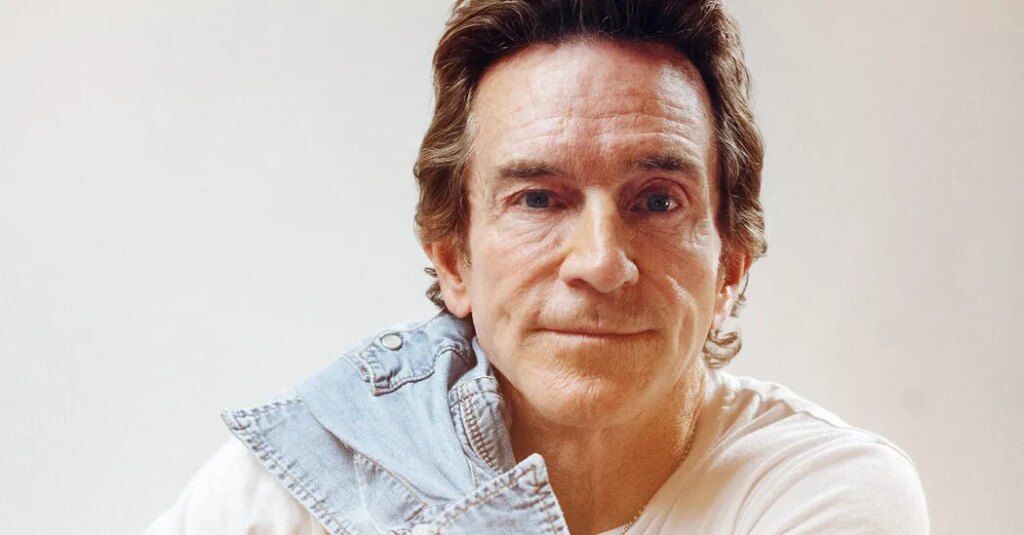
When Jeff Probst began hosting “Survivor” in 2000, he was an unlikely change agent for early reality television, as a relatively inexperienced entertainment journalist with an unfulfilled desire to make movies of his own. “Survivor” — a game show that called itself a social experiment while openly embracing sensationalist conflict — was an equally unlikely vehicle for shifting the landscape of entertainment.
And yet, in the two and a half decades since, the CBS show has become the standard-bearer for unscripted competition, and also a worthy competitor to many scripted dramas, too. In addition to being its face, Probst, who took over as showrunner and executive producer in 2010, has become its conscience, creative visionary and moral center. At this point, man and show are essentially inseparable.
Along the way, Probst, now 64, made it his mission to pull “Survivor” to more family-friendly territory, reframing it as a collection of inspiring, interwoven character studies in the guise of a game and creating a stark contrast between its values and those of the ever-expanding reality TV ecosystem.
The 50th season last year marked a celebratory capstone, as beloved characters from past seasons returned to compete. On Wednesday night, Season 51 of “Survivor” began what Probst calls the “Open Era”: A cast of rookies are subject to rules that can be resurrected from past seasons, or abandoned.
For Probst, it was about embracing the constant second-guessing from the show’s most faithful Monday morning quarterbacks, many of whom now sign up to play. “The reason we’re still on is that passion from our fans,” Probst said on Popcast, The New York Times pop culture chat show. “Nothing makes me happier than when I see somebody say, I discovered ‘Survivor’ during Covid. I’ve got some opinions.”
In conversation with Jon Caramanica and Joe Coscarelli, Probst spoke about evolving from host to showrunner; how the show lives alongside, and sometimes in conversation with, its imitators; and finding the hero’s journey within both the show’s competitors and himself.
JON CARAMANICA Over the course of 20-plus years, we’ve talked a lot about the reality TV era, and I think that you have established something of, dare I say, a moral beachhead. I wonder if you could discuss how you think of the ethical responsibilities of hosting “Survivor.” And do you draw a connection between your personal evolution and the evolution of the show?
JEFF PROBST In the early seasons, the approach to casting and storytelling was different than the kind of storytelling we’re doing now. You would cast for type. And friction was part of where we were at — we wanted friction in our storytelling, arguments and finger-pointing.
I always saw the game as a device. So when I was given the reins, the three things I really wanted to do was make it more cinematic; I wanted it to dive deep into Joseph Campbell’s “Hero’s Journey”; and I wanted it to be a family show. I knew that would change who we put on the show and the types of stories that we told.
CARAMANICA What did that reflect about where you were in your life? Were you overcoming something?
PROBST Well, I’ve always sort of been seeking that in my own life — what is my adventure? I had a chip on my shoulder about being called a host. It’s laughable now, because I don’t feel that way, but the reason I got into hosting, the reason that I’m in front of the camera, was never about being a star or being on TV. It was about controlling the story.
JOE COSCARELLI You wanted to produce live onscreen?
PROBST Yeah. So when I became showrunner, I wanted people desperately to know, I’m not just the host. I’m embarrassed about it now, but that’s where I was. I was on my hero’s journey, and one of my obstacles I had to get past was that part of my ego.
CARAMANICA When I look back at the earliest seasons of “Survivor,” the Jeff Probst on camera is what I would describe as more frictive.
PROBST It could have been related to the chip on my shoulder or me trying to prove myself. Ultimately, especially those first many, many seasons, I’m in service of the show, and the show is run by Mark Burnett, who gave me the greatest break of my life. If he wants me to push back a little more, that’s my job. It’s not really my nature. It really isn’t. I don’t love conflict, but I’m good enough in the moment to find moments of conflict if you told me, “Try to get a fight going or an argument.”
CARAMANICA The earliest era of “Survivor” was a much friskier era in American culture. Reality television was a bit lawless. I wonder if you thought, I’m watching television and this is the dominant mode right now?
PROBST I don’t think so. I’ve never watched other shows for influence on “Survivor.” But you’re bringing up, just in general, a part of my history on the show that I had to reconcile and come to terms with, which is: I’m not always proud of the decisions I’ve made, not always proud of the things I’ve said on the shows. There were things I said 20 years ago I would never say today. So I’ve had to find grace for myself, because the good and the bad of being on camera on a show like “Survivor” for 25 years is you see a lot of yourself.
COSCARELLI You’ve done some of that work on the show itself, talking through gender, sexuality and race with the contestants. Post-Black Lives Matter, in 2020, there was a D.E.I. initiative from CBS that 50 percent of the cast was going to be people of color. We’re in this moment now where D.E.I. is extremely controversial culturally and politically. What’s the status of that policy?
PROBST Nothing has changed. And if you watch our show, you know that we’re so diverse — and it’s not just skin color or ethnicity. It goes much deeper than that. It’s one of the biggest positive changes ever. Our stories are so much more interesting now because we have people from completely different walks of life.
I feel no pressure. No one ever says, can you count the numbers again? But Jesse Tannenbaum, who runs our casting team, knows: There’s no stopping, not because we’re told to do it. This is what we need. We need diversity. It’s for narrative. All those differences matter in the story when you throw people together and force them to rely on each other while conspiring against each other. The more diverse, the more interesting.
CARAMANICA Do you get anxious, especially since everything’s being filmed, of your language choices? When you have those difficult conversations about gender, sexuality, race, how much are you internally policing your language, or are you thinking to yourself, Maybe I can be imperfect because the only way I’m going to find the right thing is to walk through the wrong thing?
PROBST What happens in those moments is everything slows down. I can see it coming. I hear the trigger word or the reaction to a moment. I think, we’re going there. And I try to slow down, measure myself. What’s my job? Stay out of the way of the moment. And then be there, if needed, not to say who’s right or wrong —
COSCARELLI But as guardrails or context.
PROBST Yeah, not even guardrails — it would be context. And hope that I handle it in a way that I’d be proud of. But also aware, when it’s over, if I make a mistake, it’s going to air, because that’s the deal we have.
CARAMANICA So you’re an unforgiving editor of yourself?
PROBST 100 percent. Ask any editor. I’ve never, ever said, please don’t air this, please let’s redo that, everybody’s gone. I mean, if there’s an angle that’s not flattering and you’ve got another one, please take that one! [Laughs] But no, I’ve done and said many things that you could pull up.
COSCARELLI And if it’s important to the story, you leave it.
PROBST It has to be in there, because I can’t hold the player to a different level than I am. That’s me: I’m from Kansas, I am this age, I’m straight, I’m white, I’m all those things you could say. They’re all true.
COSCARELLI I want to talk about the existential questions raised in last night’s premiere of Season 51, coming off 50, which was this big fan-favorite nostalgia play. There’s this push and pull between fan service and evolution, new fans versus old, progress versus nostalgia. How do you think about those things a quarter-century in?
PROBST When it comes to fans, you have to listen to what they say and try to get at the spirit of the note. It’s not always literally what they are saying, but there’s always something there. And I think sometimes fans get frustrated if they hear me say that, that it means we’re not listening. We are listening.
COSCARELLI If anything, I heard, “I’m listening to everything. I see all of your comments, I hear all of your negative feedback.” And, correct me if I’m wrong, I sensed a little frustration in you. Were you annoyed? Was that the impetus to say, OK, in the “Open Era,” it’s all on the table — you guys figure it out?
PROBST No, I’m really not annoyed. I find it fun and engaging. When the purists say you should have nothing in the game, I don’t really think much of it. The game is no fun if there’s nothing to play. It’s a small subset of purists, and I think they just want to talk and have their voice heard. But they haven’t really thought through it.
COSCARELLI I’m curious how you feel about people who are first and foremost known as “Survivor” players who’ve made a career out of being on other reality shows on different networks, like “The Traitors.”
PROBST Early on when it started happening, I was very territorial. Part of it, I will admit, was for show.
COSCARELLI A little kayfabe, a little professional wrestling?
PROBST Exactly, I’m going to make a moment of this. “Oh, you’re going to be on that show? All right, lose my number.” So part of it was put on, part of it was not.
We were known for finding people that you’ve never met that you can’t stop watching. We spend a lot of time and a lot of pressure to find great people. And let’s be honest, there are other shows that wait for shows like “Survivor” to find 20 new people and go, we’d love to have those four.
That’s how I used to feel. Then I quickly put myself in the shoes of a Carolyn [Wiger] or a Cirie [Fields] or a Parvati [Shallow], and realized, why did we like them? Because they’re super compelling. You should use your abilities to make money.
So now, for real, I don’t have any issues. To any future former players, I don’t have issues, with this one caveat: If you get to a point where there’s nothing special left about you, then you’re of less value to us.
COSCARELLI Mark Burnett, the creator of the show, is criticized by some for helping to build the myth of Donald Trump that led to him becoming president. One of the other crucial figures in CBS history, Les Moonves, the president and C.E.O. from 2006 to 2018, was fired after accusations of sexual abuse and harassment. Does this outside, behind-the-scenes controversy tarnish the legacy of this as a family-friendly show in your mind?
PROBST No. Wouldn’t even occur to me. I think “Survivor” is one of the all-time great family shows. All-time. And if you look at our audience, it’s little, tiny kids — 6, 7 years old — and it’s 88-year-old grandparents and everyone in between. To me, it’s even a weird notion that there’s a question in there. That’s how surprised I am at that.
COSCARELLI You don’t think the suits have anything to do with —
PROBST I don’t think the average person knows who Les Moonves is, or cares anything about his career or what he did. That’s his stuff. But he had no influence on me. I only had two meetings, I think, my entire career with Les. I couldn’t be more proud of “Survivor.” It’s basically my life’s work, and I’m proud of it. And maybe it’s just my own ego and bias that I can’t see anything else. But you want my truth? That’s my truth.
COSCARELLI And the new ownership, David Ellison taking over at CBS — a lot of anxiety about what’s happening at “60 Minutes,” the way they’re changing that show.
PROBST I’ve had no — I’ve only heard that he said, “Keep doing what you’re doing.”
COSCARELLI So you have not sat down and spoken with David Ellison about “Survivor”?
PROBST No. The only other thing I know from the new regime that’s happening is we’re doing a “Survivor” animated movie that’s coming out in 2030. So there is no shortage of “Survivor” love. I’ve been given nothing but: keep going. I don’t get involved in politics. Nobody cares what I think about anything. I only know my relationship.
COSCARELLI Another new element of the world that “Survivor” is having to deal with are these semi-legal prediction markets for betting, Polymarket, Kalshi, etc. You have always dealt with people wanting to spoil the show, bloggers and such. In Season 50, most people had a pretty good idea based on these websites of who the winner was going to be, even though you guys had not counted the votes until that live finale. How are you thinking about the role that these betting markets are playing around your show?
PROBST I’m really not happy, because the winners in this are the companies. They get a fee every time you make a bet. So in that sense, they don’t really care about destroying our show and 800 people’s work and millions and millions of dollars. They don’t care. They’re making money. I get it. Great company. I’m surprised there’s no regulations around it.
So I think there’s two ways: One is, we accept it, and if you want to know who wins “Survivor,” you can probably go find out. There’s spoilers everywhere. Most fans don’t want to know, that’s the fun of watching the show. Or we figure out a way to bet on “Survivor.” And I have some ideas of how you could do that. And it’s something we’re talking about. It’s not a simple way to do it, but it could be really fun and increase how fans that have pools together work.
COSCARELLI A fantasy league, something official?
PROBST Yeah. I’m not saying we’re doing that, I want to be clear.
COSCARELLI But you’re open to it.
PROBST I’m just saying those are the two options. You either accept it or you get in on it. I’m sure there’s a lot of people at CBS that say, do we want to introduce the concept of betting to a kid? Probably not. But you’re asking me really interesting questions. I’m giving you my really honest answers.
COSCARELLI It does seem like you’re now in dialogue with shows that “Survivor” influenced that are now influencing “Survivor.” I’m thinking especially of MrBeast and what he’s done on YouTube, what he’s since done on “Beast Games,” his Amazon show. You did a crossover — you were on his show, he was on your show. Are you trying to keep up with the times, in the sense that a 10-year-old kid is far more likely these days to know who MrBeast is than to know Jeff Probst?
PROBST Nope. And I’m not saying this is smart. MrBeast wasn’t even my idea. Lori DelliColli, our publicist, it was her idea. She went, “Why aren’t we doing something with him?” So we called him and he said, let’s do something. It was never, “Oh, that’s going to get a lot of kids to watch.” Kids are already watching.
COSCARELLI What happens to “Survivor” after you? Who else could host?
PROBST The thing you need is, you have to really understand what our format is. But then you’d have to find a way to persuade the network and them that you have to bring your own juice to this. Because if you put on a blue shirt and put a choker on and start calling challenges and say “dig deep” and all this stuff that I do, it’s not going to work. I don’t want to leave, but I’m saying, imagine a new point of view on a format this good. It could be great. And I hope there’s not somebody at CBS going, “He understands, it’s the perfect time to tell him …”
I have a great life, everybody leaves me alone, they let me try these ridiculous ideas. So I don’t want to go anywhere. If something happened to me, then it’d be somebody else’s thing to figure out, but that’d be my advice: Don’t hire another guy like me.
Credits
Popcast is hosted by Jon Caramanica and Joe Coscarelli and produced by Sophie Erickson, Kate LoPresti and Felice Leon. This episode was filmed by Zebediah Smith, Dave Mayers and Pat Gunther and edited by Amy Marino with help from Rebecca Blandon. Our theme music is by Elisheba Ittoop. Nick Pitman is our audio engineer and Amanda Webster is our photo editor. Brooke Minters is our executive producer. Special thanks to Sarah Bonn, Dahlia Haddad, Mike Cordero, Nicole Huber, Aaron Byrd, Carl Mazurek, Zach Caldwell, Maddy Masiello, Brad Kimbrough, Craig Hettich, Andrew Wilcox, David Malitz, Elena Bergeron, Sia Michel, Nina Lassam and Sam Dolnick.
The post Jeff Probst Made ‘Survivor’ His Life’s Work. He’s Not Done Yet. appeared first on New York Times.