This as-told-to essay is based on a conversation with Mark Rober. It has been edited for length and clarity.
I still have the same crazy, zany ideas I had as a kid. But after becoming a mechanical engineer, I have this skill set that allows me to bring those ideas to life.
As a kid, I liked putting a slinky down the stairs. As an adult, I can build an infinity slinky staircase.
Engineering is a superpower that really exists. It allows you to just will anything into existence. That’s what I want to show kids. I want to give them the experience of getting curious, failing, and engaging with the world around them.
My career path emerged from my interests
I never thought much about my career path. Instead, I just pursued what really, really interested me. In high school, I liked physics class and making videos, even though the equipment wasn’t very good. I never enjoyed public speaking, but I had the chance to do it a lot, and I enjoyed creating the message.
When I was working as a mechanical engineer at NASA, I’d still make animations on the nights and weekends. Those side projects ended up being the illustrations that NASA used for the Mars rover.
The skills I learned at NASA, like breaking down a problem, are the same ones I use to create toys today. I would say making toys is arguably harder than being a space engineer. At NASA, when you have a problem, you can throw money at it. As a toy engineer, you’re incredibly constrained. Playing in that sandbox and making something that’s still incredibly fun is more challenging than putting a rover on Mars.
I would never take away my son’s autism if I could
My son, who is 19, is autistic. We still do the same nighttime routine with his stuffed animals that we’ve done for years. He loves repetition, so my same jokes slay every night. As a dad, what more do you want?
We live in a capitalist society, where success is often tied to your contribution to the GDP. I think a better definition of success is, are you leaving the world better than you found it? There are some people who are very successful by conventional standards, but they’re not inspirations to me. They’re not leaving the world better.
My son and his buddies, though, are like giants among us mere mortals. My son is so joyful and pure. It’s been such a privilege to know him. We never, ever shed a single tear that he was autistic. We just leaned into it. Today, if someone gave me a button that would take away my son’s autism and give me a billion dollars, I wouldn’t get within 100 feet of it.
My mom’s legacy outlived her
My mom, Caroline, had a very rare, aggressive form of ALS. She died about six months before I made my first YouTube video, 15 years ago.
She used to like the proverb “A society grows great when old men plant trees whose shade they know they will never sit in.” She fell in love with the work of being a mom and raising great kids. Unfortunately, she never got to sit in the shade of the trees she planted. And yet, she’s still had the biggest impact on me, out of anyone in my life.
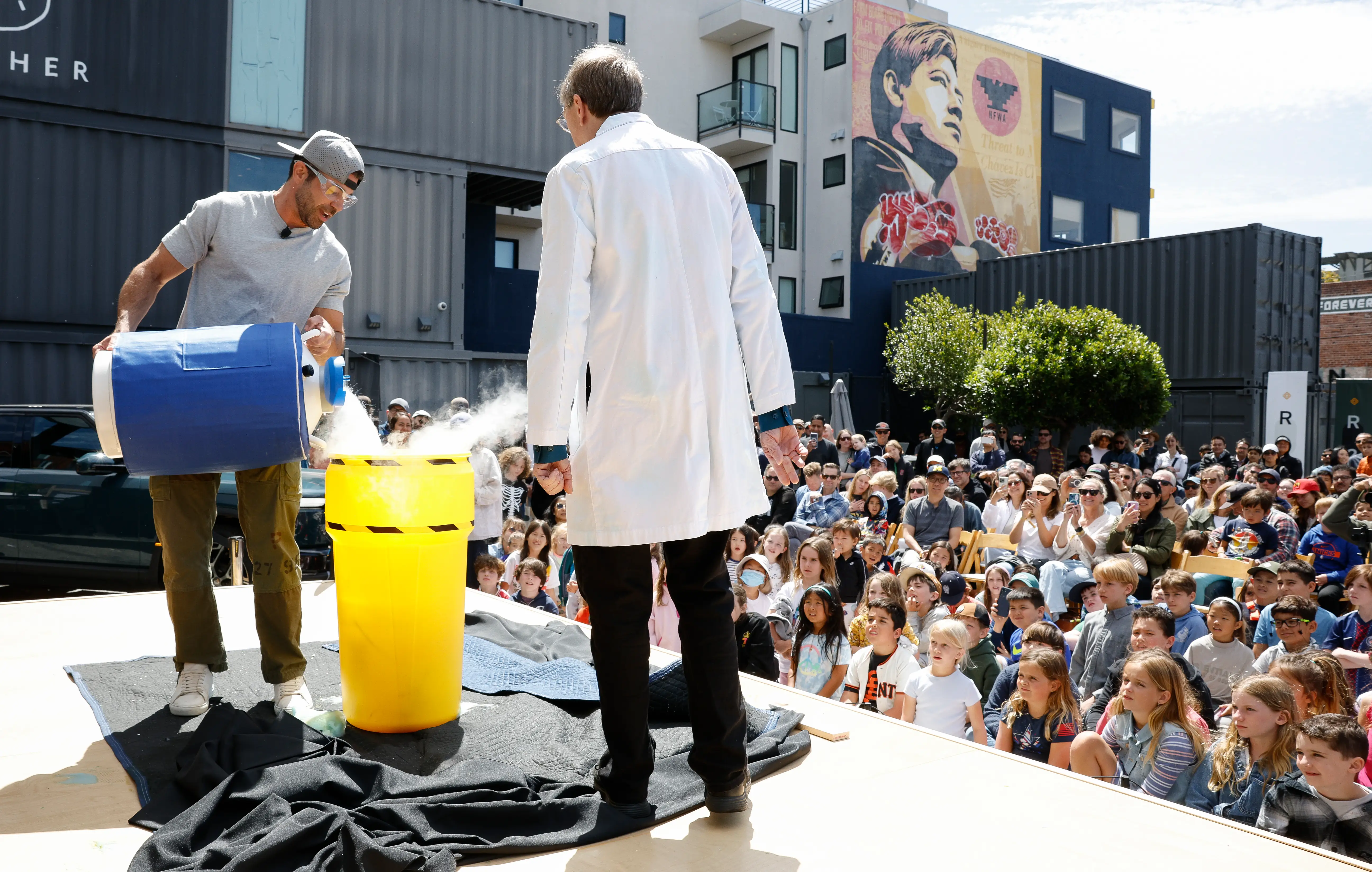
It’s just impossible to know the true measure of your impact. I just want to infect as many young brains as possible with curiosity about the natural world. In the age of AI, kids will have the answer to any question in their pockets. Moments that spark curiosity will become more important and precious — and I want to help kids and parents have more of them.
Video games can teach us about embracing failure
When a kid finishes watching my videos, I want them to look around the room and ask a question. I hope they build stuff and try things, knowing it probably won’t work the first time. Hopefully it doesn’t — because if it does, you’re not taking enough risks.
I always include the failures in my videos. They happen every single time. Kids need to see that even I don’t get it right the first time. That’s part of the process.
I grew up playing Super Mario Bros. When I died in the game, I didn’t give up; I learned from it and got excited to try again. There’s something to be said for approaching life challenges that way.
Sometimes we internalize life failures. But failures aren’t bad — they just increase the stakes, and give us a chance to try again. No one likes a video or a book without tension. We need conflict and challenge. Those aren’t bugs of this life; they’re a feature.
Read the original article on Business Insider
The post Mark Rober: I make sure kids see when my experiments fail. They should know successful people don’t always get it right. appeared first on Business Insider.