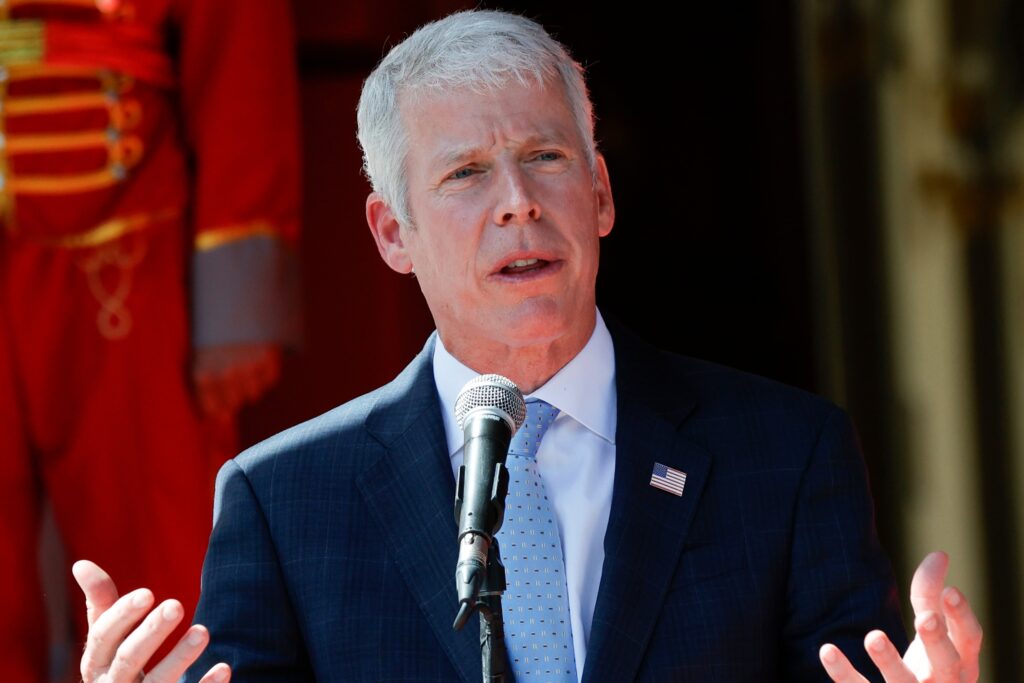
U.S. Energy Secretary Chris Wright said Sunday that a nuclear agreement with Iran might not be achievable anytime soon and that U.S. military action was still needed to deal with the threat from Tehran.
“There may not be a nuclear agreement,” Wright said on ABC’s “This Week.” “It may be simply destroying their capabilities to do it.”
A deal “may await a next administration in Iran,” Wright said. “We simply don’t know.”
After months of war, the United States and Iran signed a June ceasefire and memorandum of understanding aimed at setting the stage for a broader peace deal. Trump administration officials expressed optimism that would include limits on Tehran’s nuclear program in exchange for sanctions relief.
Yet the ceasefire quickly collapsed — and there has been little movement toward a broader deal or resolving immediate concerns, such as increasing traffic in the vital Strait of Hormuz as the war’s impact creates headwinds for President Donald Trump’s Republican allies in Congress ahead of November’s midterm elections.
About a fifth of the world’s oil supply flowed through the strait before Trump launched the Iran war alongside Israel in February. Traffic through the waterway has slowed sharply since then, leading to higher costs for American consumers involving gasoline and other goods.
Wright also acknowledged Iran was continuing to do “everything they can to cause trouble” in the region but said the U.S. Navy’s presence was there to “deflect that” and guide commercial vessels safely through the strait.
The government in Tehran has remained emboldened despite the Feb. 28 killing of its supreme leader, and Trump is no longer demanding regime change.
Trump and Vice President JD Vance have in recent days sought to downplay the war.
The president on Friday referred to it as “small potatoes.”
“It’s not a big thing,” he told reporters in the Oval Office. Vance on Thursday said he “wouldn’t call it a war.”
Asked on ABC whether the U.S. was still at war, Wright referred to it as a “conflict.”
Fighting between the United States and Iran has escalated over the past week after a month of relative calm.
U.S. Central Command, which oversees operations in the Middle East, said Saturday it attacked three Iranian oil tankers in response to an attempted missile attack by Iran on two U.S. Navy warships.
Iran said Sunday it struck an unmanned U.S. surface vessel it claimed was attempting to enter a protected area of the Strait of Hormuz. The U.S. military dismissed the claim as a “total lie,” according to the Associated Press.
Since the collapse of the ceasefire, the U.S. ramped up strikes on Iran and reimposed a blockade on all ships attempting to enter or leave Iranian ports.
Iran has escalated attacks on countries in the region where U.S. troops are stationed, including Kuwait and Jordan, as well as on ships attempting to navigate the strait without Tehran’s permission.
The Trump administration has said it is focusing on squeezing Iran’s economy as a means of applying pressure to Tehran, a strategy Treasury Secretary Scott Bessent has dubbed “Operation Economic Outcast.”
“We are putting maximum economic pressure on Iran and isolating them,” Wright said in a separate appearance on “Fox News Sunday.”
The post U.S. energy secretary says Iran nuclear deal ‘may not’ happen anytime soon appeared first on Washington Post.