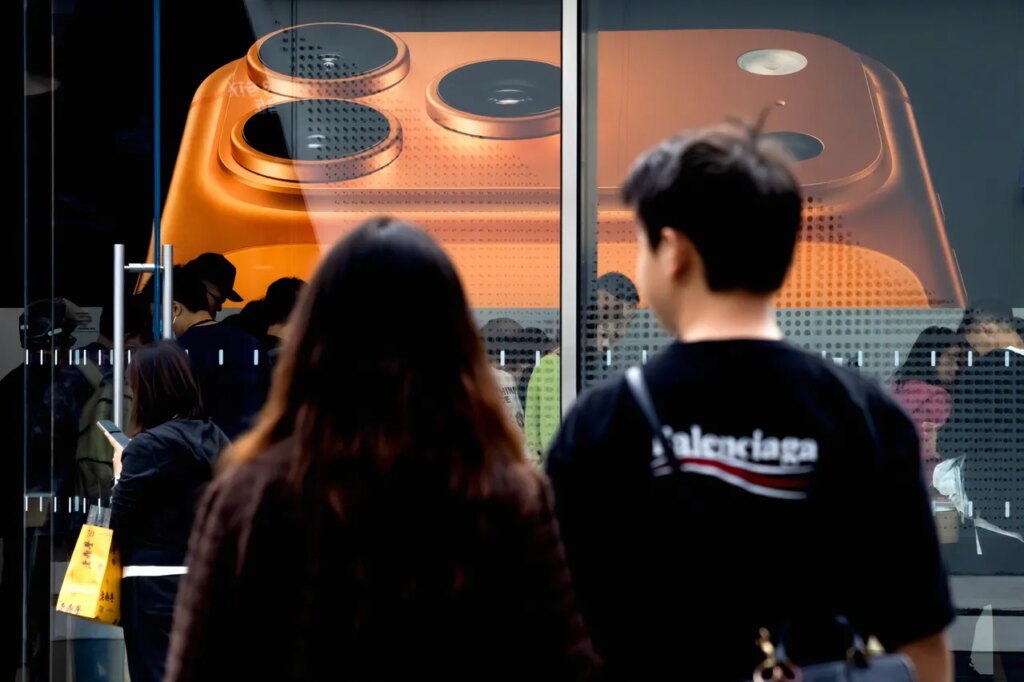
Every year around this time, Apple announces new iPhones. The products go on sale soon after, usually ranging from a base model to more premium and more expensive Pro models. But this year will likely be different—not just because the company has a brand-new CEO.
Apple’s iPhone event will be held on September 9 at 10 am Pacific (1 pm Eastern), announced last week with the title “Surprise and Shine!” If you tune into the livestream, expect the announcement of an iPhone 18 Pro, 18 Pro Max, and, if all the rumors and widely held analyst expectations are true, the first look at an Apple foldable device.
Based on leaks and the ongoing tech rumor mill and its decent track record for figuring these things out, Apple is expected to prioritize its more expensive, premium devices this year and hold off on announcing its base model iPhone 18. That cheaper model is rumored to launch in the spring of 2027, potentially alongside an iPhone 18e and maybe a second-generation iPhone Air.
Why the drastic change in strategy? It may be due to the ongoing memory shortage, which has made just about everything more expensive. Apple hasn’t been spared. In June, former Apple CEO Tim Cook acknowledged that Apple would raise product prices to keep up with manufacturing costs.
“Our assumption is that they’re going to be launching three models in the fall, the premium side of the models of the 18 series,” says Nabila Popal, a senior director of data and analytics at IDC. “Then the mid/budget devices will be launched in the spring.”
Popal says it’s a smart strategic move because Apple is aiming to spread out its revenue between a usually very strong fourth quarter and a typically much weaker spring quarter the following year. Apple’s portfolio has also expanded, and the iPhone Pro and Pro Max lineup are more enticing for people already prepared to spend the money on a new iPhone.
When components become more expensive, companies have three real options: Eat the costs, raise prices, or, as Apple seems to be doing, lean into it. By moving its cheaper options to a later date, Apple can drum up excitement for its bigger, better, pricier offerings. When it charges more for those, it is likely to be less off-putting than making a cheap phone even more expensive. It’s part of a “premiumization” of devices, as Popal calls it, that Apple hopes to leverage and build hype for its pricier options.
Shawn DuBravac, chief economist at the Global Electronics Association, tells WIRED he is optimistic about what these kinds of rising prices ultimately mean for customers.
“Throughout the history of time, the deflationary pressures of technology have always flowed to the consumer,” DuBravac says. “I’m confident that will be the case again. It just will take some time for the markets to solidify.” In other words, new technologies launch with a high price, but manufacturing efficiencies and competition inevitably drive costs down for consumers.
That may not be the case anytime soon for folding phones, which are seeing higher prices than ever. Samsung’s entire 2026 Galaxy Z folding smartphone range saw price increases, as did Google’s new Pixel 11 Pro Fold, and Motorola’s Razr 2026 models. Apple’s folding iPhone is rumored to cost around $2,000.
To help mitigate those high costs, Apple is turning to financing options and trade-in programs. In July, the company launched an iPhone leasing program that lets people pay a monthly fee to rent the newest iPhones, then swap them out when a new device releases. The program will undoubtedly help more people afford the newest devices, but ownership advocates have criticized it, saying it keeps you from truly owning and managing your device. It also fits Apple’s broader effort to turn all of its products into a subscription service.
“The way most consumers buy Apple phones is through financing or trade-in programs,” Popal says. “We can expect a lot more aggressive trade-ins to help cushion that.”
Thanks to the memory crisis and price increases, all smartphones are getting more costly to make. Less expensive phones become less appealing for manufacturers to prioritize, and leading smartphone brands have started to see them as far less economical to produce.
On the flip side, demand for refurbished devices has been climbing for a while now, with sales of used devices growing even as new phone sales slow down. More people are looking to save money or purchase more eco-friendly products.
“The days of the cheap smartphone are over,” Popal says.
The post There May Not Be an iPhone 18 This Year appeared first on Wired.