LOMPOC, Calif. — Wearing an extra-large tan prison uniform, the man who seduced legions of U.S. Navy officers with prostitutes and bribes shuffled into a visiting room at a remote federal penitentiary on the Pacific coast. He squeezed his hulking frame into a tiny plastic chair. A grin twinkled across his face. He had some secrets to tell.
In an exclusive interview with The Washington Post, Leonard Glenn Francis — the legendary con man better known as Fat Leonard — revealed for the first time, in cinematic detail, how he bamboozled U.S. authorities in 2022 by escaping house arrest and fleeing to Mexico, Cuba and Venezuela before he was caught and returned to the United States 15 months later.
Federal officials have never fully explained how Francis, a defense contractor who once played a critical role supporting Navy operations in Asia, absconded from home detention in San Diego nearly four years ago, despite warnings from prosecutors that he was “an extreme flight risk.” By court order, the 350-pound maritime tycoon was supposed to be under 24-7 surveillance as he awaited sentencing for bribery, fraud and conspiracy.
Yet according to Francis, he vanished with astonishing ease.
Early on Sunday morning over Labor Day weekend, while a private security guard was AWOL, he sheared off the electronic monitoring bracelet clamped around his ankle and hopped in an Uber. Within 30 minutes, he had safely crossed the Mexican border and sped to an airfield in Tijuana, where a private jet he had chartered was waiting to fly him to Havana in style.
Meanwhile, in San Diego, the lifelong Elvis fan left in his home a mannequin of the King of Rock-and-Roll wearing a watchman’s hat — as a farewell taunt to U.S. officials, who didn’t discover he had disappeared until a few hours later. “I did it so they would find Elvis on guard,” he chuckled.
Compounding the insult, Francis, a Malaysian citizen, had acquired a passport under their noses. Court officials thought he only had expired travel documents. But Francis said he simply asked someone to apply for a new passport on his behalf from the Malaysian Consulate in Los Angeles, which made his run for the border a breeze.
“It wasn’t rocket science,” he said of his escape. “There was a lot of negligence on the government’s part.”
In a three-hour interview, the 61-year-old businessman also answered lingering questions about his role as the mastermind of the most extensive corruption scandal in U.S. military history, a contracting scheme that lasted for more than two decades. Investigators found that he plied hundreds of U.S. Navy officers with cases of champagne, humidors of Cuban cigars and five-star hotel suites while he overbilled the government for resupplying ships during port calls in Asia. Ten Navy officers admitted to federal authorities that they leaked him classified information in exchange for prostitutes and other bribes.
Asked how he had gotten away with the graft for so long, Francis bragged that his practice of “wining and dining” Navy personnel with lavish meals and sex parties was an open secret. He said senior brass embraced it because his Singapore-based company, Glenn Defense Marine Asia, held $200 million in federal contracts and provided reliable service.
“I was doing what the Navy wanted me to do,” he said. “Everybody was aware of what was going on, and I just delivered.”
Now held at Lompoc, a federal prison about 150 miles northwest of Los Angeles, there was another subject Francis was keen to discuss: his bid for presidential clemency.
Like several other internationally known fraudsters — including crypto-racketeer Samuel Bankman-Fried, a fellow inmate in a separate part of the prison complex here — Francis said he and his lawyers are preparing an appeal to President Donald Trump to grant a pardon or commute the remainder of his prison sentence.
Francis said he is seeking leniency in part because he has kidney cancer and worries he will die before his scheduled release from prison in late 2030. “I don’t know how much time I have left,” he said.
Francis was diagnosed with Stage 4 kidney cancer in 2017. Doctors at first estimated he had only months to live, but he said “a miracle drug” boosted his immune system and prolonged his life. He described himself as among “the walking sick” in prison. “I’m borderline. I could go down anytime.”
To some, the idea of Fat Leonard obtaining an Oval Office pardon might seem far-fetched. He admitted his crimes 11 years ago when pleaded guilty to bribing “scores” of Navy officers and defrauding U.S. taxpayers of $35 million. His escape made a federal judge look foolish for placing him in home detention in 2018 so he could undergo cancer treatment.
But his pitch for a pardon hinges on an argument that has proved persuasive with Trump time and again: that Biden-era Justice Department officials treated Francis unfairly and made serious legal errors that tainted the Navy corruption investigation.
In comparison, Francis received a 15-year prison sentence, even though prosecutors acknowledged that he had been an invaluable cooperating witness who provided a “staggering” amount of help to investigators.
Of 40 people who were criminally prosecuted or court-martialed in the scandal, he is the only one still behind bars.
“At the end of the day, most of those guys walked away and I was left to take the hit because of the Department of Justice,” he told The Post. “DOJ literally screwed up the entire case.”
Kelly Thornton, a spokeswoman for the U.S. attorney’s office in San Diego, declined to comment on Francis’s bid for a pardon or his description of how he pulled off his escape.
Asked for comment on Francis’s prospects for a pardon or reduced sentence, the White House issued a statement attributed to an unnamed official: “The White House is not tracking this individual’s supposed request. President Trump is the ultimate decision-maker on all clemency-related actions.”
Francis has some defenders, including a former federal law enforcement official who has taken up his cause.
John Smallman, a retired Naval Criminal Investigative Service (NCIS) special agent who cultivated Francis as a confidential source during the 2000s, credited him with providing counterterrorism support to the Navy and protecting its ships in foreign ports. Smallman acknowledged that Francis was a “dirty” businessman, but he said his sentence was too harsh given that most senior Navy leaders were let off the hook.
“I do think he stole money from the U.S. government, but the people who allowed this to happen should have been held accountable at some level, too,” said Smallman, who also served as an FBI agent and is advising Francis on his pardon application. “They were equally as guilty as he was.”
More than 90 admirals came under investigation or were questioned about their ties to Francis, according to law enforcement records. Just one admiral was found guilty of a crime; he received an 18-month sentence.
Emails from ‘Matahari’
As a Post reporter, I wrote dozens of articles about the Fat Leonard scandal after it erupted in 2013 when U.S. authorities who had uncovered evidence of his bribes lured him from Malaysia to San Diego and arrested him in a sting operation. I also spent nearly a decade researching and writing a book about Francis’s corruption of the Navy. I had tried countless times to arrange an interview to hear his side of the story. For 12 years, I got nowhere.
In January, I tried again after the U.S. Court of Appeals for the 9th Circuit denied Francis’s bid for a reduced sentence. With his court appeals effectively exhausted, I figured he had nothing to lose.
After an exchange of letters and emails, Francis agreed to an on-the-record interview in May at Federal Correctional Institution Lompoc, a low-security prison for nonviolent offenders. Prison officials approved my visit but refused, without explanation, requests to photograph Francis and record the interview.
It was surreal to finally meet him face-to-face. He looked strikingly different from the last time he appeared publicly in court. He had shed some weight and stopped coloring his hair; now it was dull gray instead of shiny black. The Malaysian had also shaved the sides of his head and grown a theatrical handlebar mustache that made him resemble a Wild West gunslinger.
“Like Wyatt Earp, my Tombstone look,” he laughed, explaining that it was a prison survival tactic to make him appear more menacing. “There’s some handsome characters in here.”
Though this was our first encounter in person, I had a long and complicated history with Francis as a source.
In the fall of 2013, I mailed a letter to him in jail asking for an interview. I enclosed a front-page Post story I had written, the first substantive national news coverage of his case.
He didn’t reply. But I later heard that he treated the article like a prized possession, waving it around to impress other inmates and jail staff. Unlike many criminals, he relished his notoriety and media coverage. But his attorneys advised him to keep silent while his case slowly unfolded in court.
As the scandal mushroomed, I continued to mail him my articles. After a few years, I finally received a response: a cryptic email and phone call from an intermediary.
“Mr. Francis,” I was informed, had been reading my stories with interest. He regretted that he was not in a position to be interviewed. But he wanted to stay in touch. To be helpful, the intermediary shared a photograph of Francis wearing a Glenn Defense baseball cap and gave permission for The Post to publish it with any articles.
More time passed. In 2017, I received an email out of the blue from an anonymous Gmail account. A different sender shared some additional flattering photos of Francis, along with a peculiar request.
I had been reporting how Francis came by his Fat Leonard nickname and that, according to court documents, he weighed 350 pounds. But the sender asked that I put his physique in context by noting that he was unusually tall — 6 feet 3 inches — and wore size 15 shoes.
To add to the intrigue, the sender signed the email “Matahari,” a misspelled reference to a Dutch exotic dancer who spied for the Germans during World War I. According to legend, the spy sometimes posed as a femme fatale of partially Malaysian ancestry.
I strongly suspected Matahari was really Francis and that he was playing a little spy game of his own. It would soon turn into a public relations nightmare for the Navy.
By that point, Francis was secretly cooperating with the Justice Department and had provided hard evidence against more than 60 admirals, including testimonials from prostitutes, emails, credit card receipts and photographs. It later emerged that he had a trove of incriminating evidence hidden in different locations in Malaysia and Singapore. But he was unhappy with the slow pace of the investigation and what he viewed as the Navy’s determination to cover up senior leaders’ misdeeds.
Sensing frustration in the tenor of Matahari’s messages, I began emailing specific questions for Francis about prominent Navy officers whom I had been reporting on independently. Matahari responded sporadically with helpful documents, including archives of personal email correspondence with the officers and guest lists from Navy dinners Francis hosted that cost as much as $800 per person.
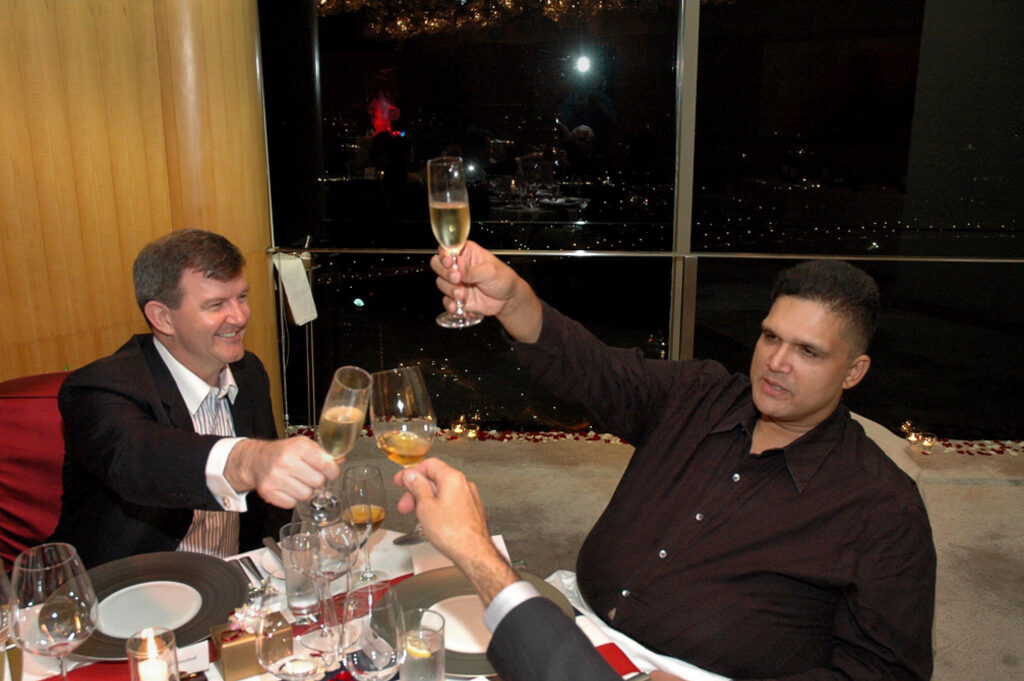
But the juiciest evidence Matahari provided was visual: dozens of chummy photos of Francis posing with senior Navy brasswho had been trying to downplay their relationship. Some of the pictures showed admirals boozing it up with Francis and scantily clad young women at his parties.
After confirming their authenticity, The Post published many of the photos over the years, which embarrassed the Pentagon and the Navy, which maintained a steadfast public silence about the scandal. My articles also cited dozens of the documents that Matahari provided without specifying how I obtained them.
Eventually, Francis admitted to me that he was behind the whole masquerade. During our prison interview, he gave me permission to disclose that he was Matahari. He said he was proud of the surreptitious role he played in holding Navy leaders accountable and that he no longer feared retribution for doing so.
“I guess it can’t hurt me now,” he said.
Detention at a mansion with a pool
Francis was such a valued witness for the Justice Department that prosecutors and court officials allowed him to serve home detention in a $7,000-per-month gated mansion with a swimming pool in San Diego that he paid for. He lived there comfortably for nearly two years with three of his children, servants and a bulldog named Puteri while he underwent cancer treatment.
The court’s Pretrial Services division was responsible for tracking Francis’s whereabouts via his electronic ankle bracelet and making periodic visits to check on his welfare. A private security guard was also supposed to be stationed on the premises around the clock.
But the restrictions on his liberty had yawning gaps. The court allowed him to hire his own guards, and they had a habit of taking long breaks from their watch station in the garage. Moreover, Francis never had to worry about court officials surprising him with an impromptu visit. “I always knew when they were coming: every month at 1 p.m.,” he recalled. “They weren’t too smart.”
By the summer of 2022, however, Francis was becoming consumed by anxiety. After years of delays, his sentencing was scheduled for late September and he feared authorities would send him back to prison.
Though his cooperation agreement with the Justice Department allowed for the possibility of a substantially reduced sentence, Francis said he worried that prosecutors handling his case had lost favor with the judge after the court determined they had committed misconduct.
He had also squandered some of his goodwill with U.S. officials by giving interviews to a British podcaster. Francis sought out the podcaster because he had covered the case of another Malaysian businessman — Jho Low — who is accused of embezzling billions of dollars from a development fund and remains an international fugitive.
During the 2021 podcast, Francis suggested he had exaggerated his medical condition and withheld evidence from investigators. His provocative comments raised concerns about his credibility and deterred prosecutors from calling him as a witness during the bribery trial of the five Navy officers in 2022.
Francis told The Post that he saw the writing on the wall when prosecutors refused to extend his sentencing date later that year so he could undergo abdominal surgery. On top of that, back in Malaysia, his mother, Felicia, was struggling with the aftereffects of covid. He said he feared he would never see her again and began plotting his getaway.
“Before then, I never had that urge to escape because I had it good here,” he recalled. “I really didn’t have a game plan. I was just trying to get out.”
He said he explored several options. First, he contemplated making a dash for Los Angeles International Airport and hopping a long-haul commercial flight to Malaysia. But he decided that was too obvious and risky because the authorities could track him on the passenger manifest and alert the airline that he was a fugitive on the run.
A Ukrainian woman whom he described as his live-in girlfriend in San Diego suggested that he hightail it to Russia, following the example of Edward Snowden, the U.S. intelligence contractor who received political asylum from Moscow in 2013 after he leaked a trove of top-secret files.
Instead, Francis tentatively settled on a route sketched out by another longtime girlfriend who was part Brazilian. That woman urged him to fly to Venezuela, where he could try to slip undetected across the border into Brazil and live on a remote farm in the Amazon. (An acknowledged lothario, the twice-divorced Francis has a history of juggling romances, including with three other women who are mothers to his five children.)
A ‘giant’ presence
Traveling to Venezuela wouldn’t be easy. The country had hostile relations with Washington and faced crippling U.S. sanctions.
But international logistics were Francis’s specialty. He also had experience traveling to dodgy places. From his San Diego mansion, he said, he hired a private aviation company based near Mexico City to send a Gulfstream jet to pick him up in Tijuana. The firm even arranged for an Uber to fetch him in San Diego early on the day before Labor Day and take him across the border.
The company, which Francis declined to name, refused to fly to Venezuela because the cash-strapped government there had a history of seizing aircraft for ransom. Instead, it agreed to fly him to Cuba, which appealed to Francis for two reasons: The Caribbean nation had a history of refusing to extradite people to the United States and it offered direct flights from Havana to Venezuela.
After leaving Tijuana, the Gulfstream had to stop twice in Mexico to refuel and find an immigration agent willing to stamp Francis’s brand-new passport without asking questions. When he finally arrived at the airport in Havana that evening, he said he told Cuban authorities he was a tourist. They waved him through.
Francis said he breathed a sigh of relief but knew the Americans would soon mount a global search for him. He checked into a hotel and tried booking a ticket to Venezuela, but flights were full and he couldn’t get a seat for a week.
On Sept. 6, 2022, two days after his escape, his room to maneuver shrank sharply. The U.S. Marshals Service announced that Francis was a fugitive and offered a $40,000 reward for information leading to his arrest. Instantly, his escape became international news and his mug shot appeared on websites and television channels everywhere.
“I was getting desperate,” he recalled. “I really didn’t have a game plan. I was just trying to get out.”
Francis read the news on a burner phone he had taken to Cuba. He hunkered down in his hotel. A few days later, he emerged and attempted to catch a flight to Margarita Island, a Venezuelan resort destination in the Caribbean.
When an immigration agent examined his passport at the Havana airport, Francis saw an alert pop up on the computer. Interpol, the global law enforcement network, had issued a Red Notice identifying Francis as a U.S. fugitive. Francis said he remained calm, hoping the Cubans wouldn’t care that he was wanted by their archenemies, the Americans. After a brief delay that Francis presumed was triggered by the Interpol notice, the agent allowed him to board.
When the plane touched down on Margarita Island, around 4:30 a.m., Francis braced for another fraught encounter in the passport line. Once again, he said, an alert flashed on the computer screen. But the Venezuelan border agent also seemed unbothered that the Americans were after Francis and let him enter without a fuss.
A few hours later, he boarded a connecting flight to Caracas. He found a place to stay in the capital while he plotted his next move. At first, he said he felt safe in Venezuela. Given his noticeable girth and the fact that his face was all over the news, however, he knew he couldn’t remain incognito for long.
“It’s hard,” he recalled. “I’m such a big guy in Venezuela. I’m like a giant. Everybody is so slim there.”
‘We got you’
Francis weighed his options. Now that he had made it to Venezuela, sneaking into Brazil through the jungle seemed much less practical. He said he decided to pursue his other girlfriend’s idea and paid a visit to the Russian Consulate in Caracas.
He told a Russian diplomat that he wanted to apply for political asylum. But the official seemed unsure what to make of Francis or whether his intimate knowledge of U.S. Navy admirals would curry favor in Moscow.
“They didn’t entertain me seriously, so I just left,” he said.
He said he also applied for asylum in Venezuela and was more hopeful that would pan out. Meanwhile, he decided to return to Margarita Island, thinking he could blend in more easily with the crowds of tourists there.
But when he arrived at the Caracas airport on Sept. 20, after 16 days on the lam, Venezuelan authorities took him into custody based on the Interpol Red Notice. A booking photo showed him wearing a blue tropical-print shirt, haggard and unshaven.
But Francis said Venezuelan officials weren’t sure what to make of him either. Some saw him as a high-value prisoner who could be traded to the Americans for a steep price. Others viewed him as a rich businessman who could be milked for money.
Still others suspected he was a CIA plant, sent by the Americans to spy on them. Interrogators, he said, tried to pump him for dirt on two Republican senators from Florida — Marco Rubio and Rick Scott — whom the regime viewed as political nemeses. Francis said he knew nothing.
For a few days, he was passed back and forth between the Venezuelan police and intelligence services. “The Venezuelans were very confused about me and what value I had as a pawn,” he said.
“They were assessing who I was. Some of them thought I was a CIA officer and called me ‘gringo.’ I said, ‘No, I’m just trying to go home’” to Malaysia.
At first, he said, he was imprisoned in an underground cell that he described as “a dungeon,” with “cockroaches and rats everywhere.” But after a few days, as his perceived value rose, his captors began treating him better.
Suddenly concerned that his kidney cancer needed to be kept in check, the Venezuelan authorities admitted him to the top hospital in Caracas to give him an extensive series of medical tests. For a week, according to Francis, President Nicolás Maduro’s personal physician supervised his treatment.
“They cared because I was valuable,” he said.
Once they were satisfied that his medical condition was stable, Venezuelan officials transferred him to El Helicoide, a notorious detention center in Caracas that housed hundreds of political prisoners. But Francis was housed in a VIP wing and treated better than most inmates, he said. He remained there for 14 months.
In December 2023, Venezuelan security officials began dropping hints that Francis might be released soon and even allowed to return home to Malaysia. He received another medical screening and his guards compelled him to record a video attesting that he had been treated well and not tortured, he said. “I was optimistic that maybe I’d get out.”
A few days before Christmas, a parade of generals and senior officers arrived at the prison. Francis’s hopes rose further when guards said they were taking him to the airport.
But instead of gaining his freedom, Francis was being deported to the United States. The Venezuelan government had secretly negotiated a prisoner swap with the White House, in which they agreed to hand over Francis and 10 detained Americans in exchange for a Maduro ally who was being prosecuted in Miami on money laundering charges.
The prisoner exchange took place on Canouan, a small Caribbean island. Venezuelan guards handed over Francis to U.S. marshals, who shackled him aboard a transport plane.
Just before the plane took off to return to Miami, Francis recalled, he was greeted in the cabin by a senior State Department official, Roger Carstens, who had negotiated the swap.
“Okay, we got you!” he told Francis.
Francis had little to say about his recapture, then or 11 months later, when marshals led him into a San Diego courtroom to face the music from an unhappy judge. U.S. District Judge Janis Sammartino complained she had been kept in the dark about how Francis had bolted from house arrest — and made clear she was still miffed two years after it happened.
“Neither you nor the government have explained how this escape occurred,” she told Francis before sentencing him to 15 years, with credit for time already served. “There must be consequences for this action.”
The post An Elvis dummy and a Gulfstream jet: Fat Leonard reveals how he fled the U.S. appeared first on Washington Post.