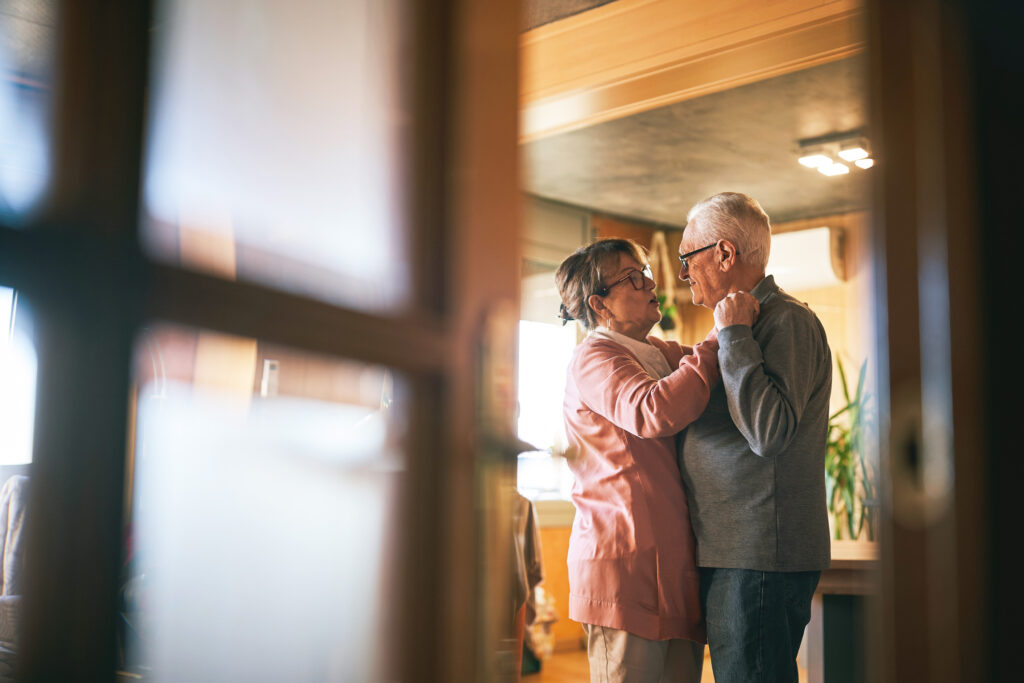
After a lifetime of work and responsibility, retirement promises a luxury many people haven’t had in years: time. Time to travel. Time to slow down. Time to finally enjoy life — and the chance to do so with the person you’ve built it with.
At least, that’s what Denise Taylor expected.
The 68-year-old from Gloucestershire, England, spent decades running a fast-moving career as a business psychologist, career coach and consultant. Along the way, she built a marriage that was, above all, fun. The couple traveled whenever they could, spent weekends swing dancing and rarely missed a music festival.
When she and her husband finally retired, she imagined simply doing more of what they already loved doing together. “It never occurred to me that retirement was going to be any different,” Taylor said. “I honestly thought we would go forward. Wouldn’t it be jolly, because we could have more holidays without having to worry about whether he could get the time off work? Then we could go to music festivals, and we could have weekends away and it was all the pleasant stuff.”
Instead, the newfound freedom revealed that they seemed to lack a shared vision for the future. “We were just drifting apart,” Taylor said, and in 2018, they ended their 21-year marriage.
While some couples grow closer after leaving the workforce, others find themselves confronting tension that busy schedules once kept hidden. “Retirement often acts sort of as a magnifier of existing dynamics,” said Theresa Pauly, an assistant professor at Simon Fraser University who studies social relationships and aging. It can highlight differences in how you prefer to spend your time, cope with stress or find purpose.
Yet while many people focus on preparing financially for this new chapter, few anticipate how much the transition can affect their relationship. Here are the most common challenges experts said to watch for — and how to navigate them.
Loss of confidence and identity
Like millions of other Americans, Kathy Moehring and her husband were forced to retire earlier than expected in 2020, when the coronavirus pandemic upended their working lives.
What followed were, at first, practical challenges for their marriage: sorting through retirement benefits, making pension decisions and figuring out where to live next.
Then came a less tangible adjustment.
“You lose purpose,” said Moehring, a 70-year-old who spent more than a decade leading community programs and outreach efforts in Alameda, California. Along with a steady paycheck, jobs provide things to do, places to be, projects to finish and goals to pursue.
Without that, some retirees expect their partner to provide the structure, validation and meaning that an entire career once supplied, Pauly said, which can eventually breed resentment.
The best way to prevent this, according to Pauly, is to create your own sources of momentum. While that could be as simple as continuing to wake up at your usual time, Moehring said she found hers through pursuing hobbies such as going to the gym, attending a weekly chorus group and volunteering with Grandma Stand, where older adults sit at lemonade stand-style booths offering free advice, encouragement or a listening ear to strangers passing by.
“It’s truly the most personally satisfying and gratifying thing I have ever done in my life,” she said.
Too little time apart
Minor pet peeves about your partner that you barely noticed before — how they chew, narrate every thought out loud or stand in the exact spot in the kitchen where you need to be — can become impossible to ignore when you’re suddenly together 24/7.
At the same time, it becomes much easier to instinctively offload every frustration or bad mood onto the person who is now your constant companion — a dynamic that research shows can drain both individuals and the relationship.
“You can’t expect one person to meet all of your needs,” said Gottman-certified marriage and family therapist Dana McNeil. Which is why many couples who thrive in retirement rely on a seemingly contradictory solution: more time apart.
For Moehring and her husband, who have been happily married for 27 years, that includes separate routines and social circles: She spends afternoons with women from her choir, meanwhile he keeps his own rhythm ice skating, working early shifts at Trader Joe’s or riding his motorcycle.
But just as important as time apart, Pauly noted, is how couples choose to come back together. Research suggests emotional connection can be a stronger predictor of retirement-era marital satisfaction than the number of years a couple has been together. (Which is to say, quality matters more than quantity.)
“[My husband] would go out of his way to make sure that we did things together,” Moehring said. Not the passive kind of bonding that happens in front of the TV, but through intention: a reservation at a new restaurant or a romantic walk through the park after a snowstorm.
Conflicting financial expectations
Retirement marks a shift from making money to living off what you’ve saved, Pauly said. Some people see this new chapter as long-delayed permission to splurge and soak in the rewards of their labor. For others, losing regular income triggers an instinct to conserve.
Post-retirement, one partner may dream of relocating to a pricey beachfront town, while the other cares more about annual international trips. Or maybe one prioritizes financially supporting their adult children, while the other wants to save up everything for health-related emergencies.
Neither vision is wrong, but the challenge is making sure you’re planning for the same future. That, according to Pauly, requires honest, ongoing communication, where you’re talking openly about the trade-offs and deciding as a team which compromises (Downsizing a house? Moving closer to the kids? Cutting back on travel?) are worth making.
A good place to start would be suggesting to your partner that you talk about what each of you expects your living experience and financial life will look like, said McNeil, to establish where each of you stand and how you can best work together as individual decisions come up.
Different goals for retirement
Perhaps the biggest surprise is realizing you and your partner may not define an ideal retirement the same way. Do you see this phase as reinvention — a chance to learn, grow, and pursue long-delayed ambitions? Or an opportunity to slow down and settle into a quieter routine?
Taylor said that she fell into the former. Leaving behind 70-hour workweeks opened space for pursuits she had long set aside, including going to the gym regularly, traveling and writing.
With a full-time career, “I just never had the energy to write,” she explained. Any writing she did had to be tied to a research report, a client, a project. “I couldn’t just write what was in my head.” In retirement, she finally could — eventually publishing a nonfiction passion project that brought new social and professional opportunities.
Based on years of conversations, she assumed her husband was looking for the same active lifestyle. Instead, Taylor said, he seemed to be happy settling into a more relaxed life at home — occasionally meeting friends at the local bar, working in the garden or watching television. Taylor started to realize that their interests and expectations for daily life no longer aligned.
“I remember saying, Is this it for the rest of my life?” Taylor said. “I just thought, I don’t want another 20 years like this.”
After her divorce, Taylor went back to school to pursue a doctorate in psychology, and has since written more books focused on creating meaning later in life, including her most recent, “ThriveSpan: Walking Gently Into What Matters Now,” where she reflects on her experience.
While it’s easy to assume the person you married decades ago is the same person sitting across from you today, McNeil pointed out that even long-term spouses change. Interests, values and priorities shift as you gain more life experience — which you only learn about when you discuss them with each other directly.
For that reason, McNeil encourages couples to regularly ask each other questions such as, “What excites you now? What’s your sense of purpose? What’s your favorite way to wind down? What do you hope the next five years of your life look like?” She referred to this as “updating your love maps,” which allows you to stay in tune as you both evolve.
“I can look back now and think, ‘Why didn’t you think about these things?’” Taylor reflected. It’s a deeper conversation she wishes she had sooner — but perhaps one worth having at any stage of a relationship, before it’s too late.
The post Four major relationship hurdles that can happen after retirement appeared first on Washington Post.