For decades, the Venezuelan government has seen only one side of the United States. As a socialist dictatorship took hold of the country, a succession of U.S. administrations responded with crushing economic sanctions, criminal prosecutions and finally, in January, the brazen military operation that captured and removed President Nicolás Maduro.
With Maduro’s ouster, the relationship became largely transactional. Venezuela had oil. The U.S. wanted it. President Donald Trump said he would “run” the country.
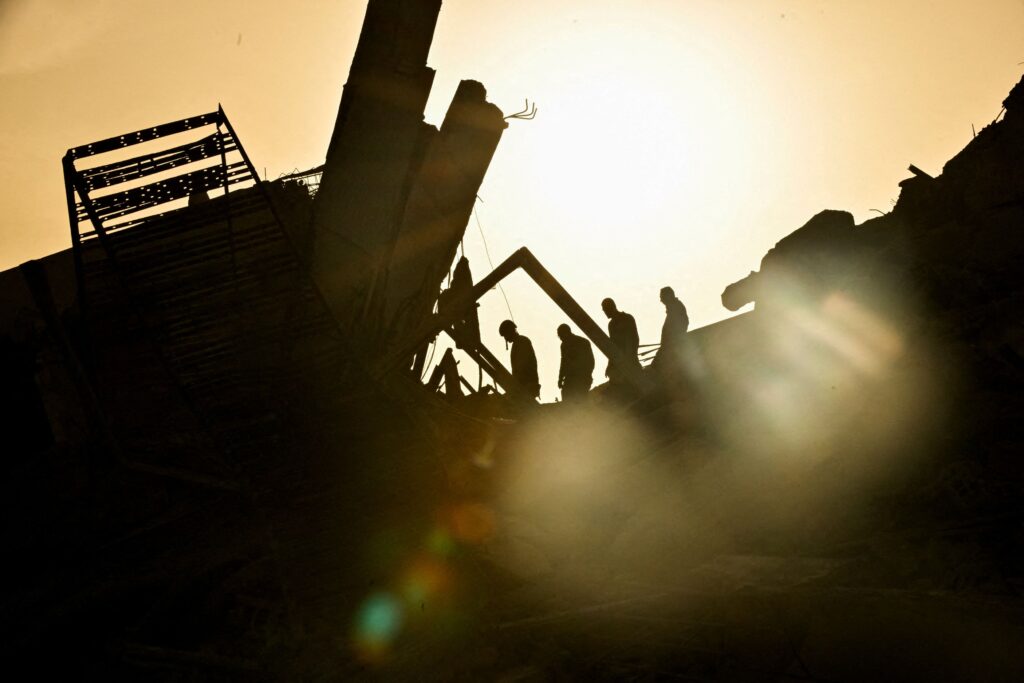
Now, amid the rubble of the earthquakes that have devastated the South American nation, politicians and analysts see a chance for Washington and Caracas to turn the relationship into something resembling allyship — a diplomatic thaw that would represent one of the fastest geopolitical turnarounds in contemporary history.
“This can be an opportunity to demonstrate to everyone who has doubts that the cooperation of the United States is not just about business,” said Maduro critic Freddy Guevara, a former first vice president of Venezuelan National Assembly. “It’s also about human beings and, ultimately, democracy.”
The U.S. appears to want to seize that opportunity. Within hours of the back-to-back quakes Wednesday evening, Trump described Venezuelans as “our new and great friends,” and pledged help for the “great people of Venezuela.”
Secretary of State Marco Rubio said Thursday morning that he had spoken with interim president Delcy Rodríguez, Maduro’s vice president. Throughout the day, officials announced a torrent of help, beginning with search-and-rescue teams from Fairfax County, Virginia, and Los Angeles to join the search for thousands of people still missing, $150 million in aid, and a military deployment to handle logistics and transport. The U.S., Rubio said, will stick around to assist with what is expected to be a lengthy recovery.
“We have a whole-of-government response,” Rubio told reporters. “It will be big. It will be fast. And it will be effective.”
If successful, analysts said, it could achieve what Maduro’s toppling has not: improving the everyday lives of Venezuelans.
The U.S. removed the authoritarian leader but left the rest of his repressive security apparatus in place, including officials whom Washington has accused of narcotrafficking. The Trump administration has pressured Rodríguez to open Venezuela’s oil industry to more foreign investment, and American investors have flocked to the country aiming to cash in. But most people’s interactions with the government are unchanged, and for them the economy hasn’t improved.
“Diplomatically, things are better, but nothing else,” said Ronald Figuera, a commercial salesman in Caracas. “The economy is on the floor, and inflation is in the clouds.”
There are risks to U.S. aid commitments in Venezuela. One is that the U.S. fails to deliver what it promised. The administration has dismantled much of the bureaucratic framework, including the Bureau for Humanitarian Assistance and the U.S. Agency for International Development, through which international relief was once distributed.
Neither of the hospital ships that the U.S. ordinarily dispatches for disaster relief was immediately available. The USNS Comfort was undergoing repairs in Mobile, Alabama, and the USNS Mercy was docked in Portland, Oregon, according to a U.S. official who spoke on the condition of anonymity to provide details on the status of the vessels.
U.S. Southern Command said it would bring “unmatched airlift, logistics, and lifesaving capabilities” to bear in Venezuela.
“This is the earliest test as I can understand it of a post-USAID world,” said Michael VanRooyen, director of the Harvard Humanitarian Initiative. “Without the core of what was its humanitarian architecture, it’s a test of whether the U.S. has the ability to provide such aid outside of that structure.”
The challenge, he said, would be to disentangle what is actual relief work from what is merely optics.
“If done poorly or if done badly,” he said, “this could all look like exploitation and opportunism.”
That the relief appears poised to move forward at all is a significant departure from recent U.S.-Venezuelan relations. When torrential rains unleashed flash floods and landslides that killed tens of thousands of people in what is now La Guaira state, the U.S. was ready to deploy 450 troops to help rebuild a local highway. Hugo Chávez, who rose to power castigating U.S. “imperialism,” rejected the assistance.
This time, the worst of the disaster is again concentrated in La Guaira. But the difference in how the government responded to the prospect of U.S. aid is notable, political analyst Eugenio Martinez said.
“There is a parallelism between what happened in 1999, and the resulting consequences, when international aid was refused for ideological reasons, and what is happening at this moment, when it’s opening its arms up to receive any type of assistance, regardless of the ideological leanings of the country offering it,” he said.
Another peril, analysts said, is the potential for corruption. If aid becomes an opportunity for graft rather than relief — a possibility in a country with a history of cronyism — people could grow even more disillusioned with their political leadership.
“Aid is doubled-edged,” said Meg Frost, a political scientist at the University of Rhode Island. “It rebuilds trust only when it signals a government that is both competent and honest. In a low-trust, high-corruption setting, relief delivered [or not] through an opaque process can deepen distrust instead.”
But the disaster presents an opportunity, said David Smilde, a scholar at Tulane University, to change the base dynamic of a relationship long defined by antagonism. In La Guaira, the U.S. will be working in a bastion of Chavismo, where many have long seen the U.S. as a hostile imperial power.
“It’s a critical juncture point,” he said. “With an effective strong response, America could really consolidate its position and its popularity. As long as it’s not a repeat of tossing paper towel rolls at people, like Trump did in Puerto Rico.”
Tara Copp contributed to this report.
The post Quakes give U.S. opportunity to transform Venezuela from foe to friend appeared first on Washington Post.