This personal reflection is part of a series called The Big Ideas, in which writers respond to a single question: What drives us? You can read more by visiting The Big Ideas series page.
I did not set out to become a chef. I grew up in the rural Jutland region of Denmark, on a farm on the outskirts of a tiny village. In my community, the brand of your car and the size of your television were much more important than the food you ate. At home, we rotated the same five dishes every week. Almost all of them included potatoes and some sort of minced meat. Sauces came powdered in packets, and Friday night pizza came frozen from the discount supermarket. Reflecting on the sensory aspects and flavors of food was just not a part of life. Until I was 14, the only restaurant I had ever visited was McDonald’s.
When I was growing up, I was introverted, sensitive and painfully shy. I spent most of my time trying to avoid the bullies at school, hiding my scrawny lunch sandwiches and sketching in my notebook. After I was beaten up and locked in a cupboard for hours one day, my mother moved me to another school, where my constant sketching was even encouraged by a few teachers who could look beyond math and spelling skills. But art, or gastronomy for that matter, wasn’t anything I ever associated with my day-to-day life. Drawing was more a way to give my dreams and fantasies concrete form.
My only positive food memory from those years was picking strawberries with my grandmother and eating them with cream. This was the simplest culinary technique imaginable, but I vividly remember the feeling of joy. Recognizing this emotional power, that food can make us feel things in palpable ways that other art forms can’t, would go on to drive my creative life.
I only applied to culinary school because my best friend did, and because my grades weren’t good enough for anything else. But I became obsessed with flavors and textures. For me, discovering these elements was like going from black-and-white to color television. For years, I focused only on honing my craft. Day after day, competition after competition, I perfected my skills.
After working at a few top restaurants, I founded a Christmas charity where I cooked for vulnerable families and children. It felt like making roast pork for these children was more important than cooking at my day job. So, I quit my job to focus on creating food that could make a difference. It led me to create Alchemist, a restaurant where we practice what I call “holistic cuisine” — an experience that combines gastronomy with elements from theater, visual art, music, science and technology.
What drives me is not only how something tastes, but what emotions it can evoke. At its core, gastronomy reflects our human need for connection and meaning. It goes further than sustenance in its ability to move and challenge us. And unlike most other art forms, it does not remain at a distance. It becomes part of us.
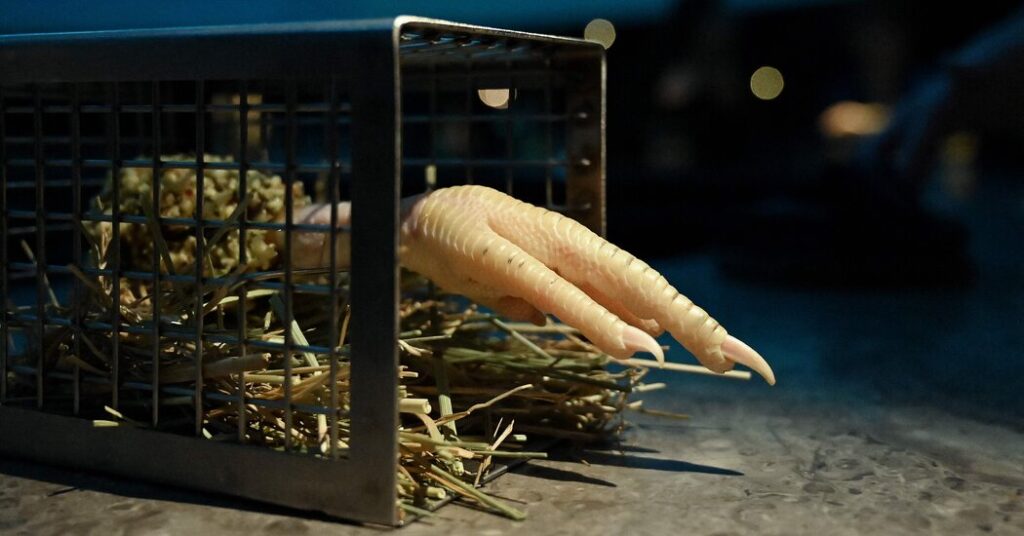
Alchemist’s dishes tell stories and raise awareness of social issues, animal welfare and climate change. They resonate with guests through strong, sometimes provocative, presentations. One example is a dish called “Plastic Fantastic.” It is made with cod cheeks taken from otherwise discarded cod heads, and edible “plastic” created from dehydrated cod skin bouillon and algae. When served, guests are told that roughly one-third of fish caught off the Danish coast contain plastic. At first, the texture feels a bit unpleasant and like cellophane. Then it dissolves, allowing the flavors to emerge in their complete clarity.
When something gives you the ability to fully digest a message, you don’t just understand it intellectually; you feel it. And that feeling stays with you. My desire to bring this type of dining experience to more people is connected to my belief that at its highest form, cooking should be considered a fine art. This classification is something that Denmark has been exploring since January.
Jutland, where I come from, is reputedly the birthplace of “janteloven,” which is a Scandinavian concept that you should not think you are special. And when you work in the food industry, calling yourself an artist is not something you do lightly. That’s why, for a long time, I avoided this term.
But the more I immerse myself in the artistic world, the harder it is for me to see a fundamental difference between what I do and what many contemporary artists do when they use physical materials, space, emotions and sensory experiences to prompt us to reflect on our world.
Recognizing gastronomy as an artistic discipline is not about elevating chefs for the sake of status. It is about creating the conditions for new ideas to emerge and enabling the next generation to use food not only to please, but to question, disturb, comfort, remember and imagine.
I feel that if cooking were treated as art, it could allow a new generation to explore ideas without knowing where they will end. This mind-set has the potential to bring new experiences to a broader public. It could expand our understanding of food and help make the creative power of cooking more accessible.
Food is one of the few things that we all have in common. It connects us across cultures, backgrounds and languages. It shapes memory and the body itself. Food’s ability to engage our senses and emotions has inspired me deeply, and I would love to see it democratized and accessible for everyone. I dream of a future where gastronomy is not only something we consume, but something we experience, reflect on and carry with us.
Rasmus Munk is a chef and the founder of the restaurant Alchemist in Copenhagen. He was voted The Best Chef at The Best Chef Awards in both 2024 and 2025.
The post A Message We Can Digest appeared first on New York Times.